How Pond Algae Led To A Nobel Prize And A New Way To Study The Brain
· GlobeWire Daily Science Desk · Source: news.abplive.com
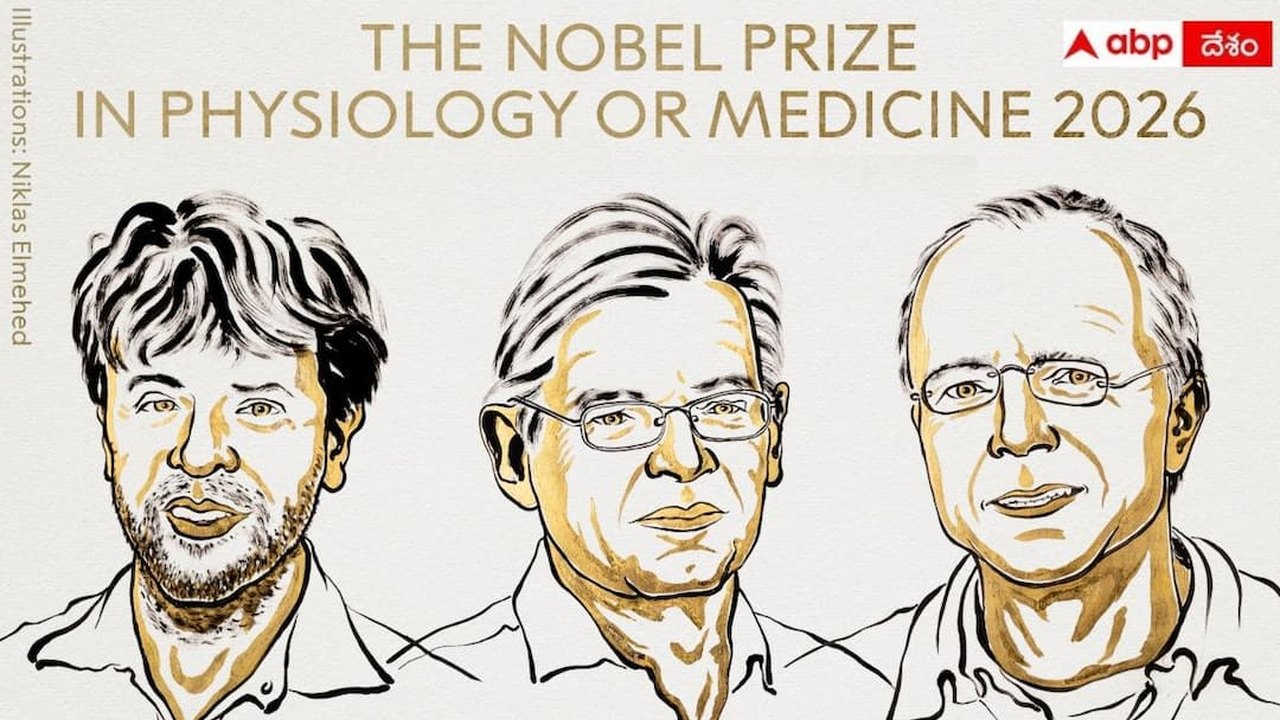
Image: PTI — Creative Commons
From Pond Algae to Neuroscience Breakthrough
Research into how a tiny, single-celled pond alga senses light has culminated in a Nobel Prize in physiology or medicine for scientists Karl Deisseroth, Peter Hegemann, and Georg Nagel. The laureates were honoured for their pioneering work on light-gated ion channels and optogenetics, a technology that allows researchers to control nerve cell activity using light.
Peter Hegemann of Humboldt University of Berlin and Georg Nagel of the University of Würzburg initially sought to understand how the single-celled alga Chlamydomonas detects light to navigate its environment. They discovered that the alga relies on a single protein called channelrhodopsin, embedded in its outer membrane. When light hits a small molecule within the protein called retinaldehyde, it changes shape. This shift opens a tiny passage in the cell membrane, allowing positively charged particles like sodium to flow inward and signal the alga to swim.
The Birth of Optogenetics
Nerve cells naturally control their activity using the movement of charged particles, or ions, across their membranes. Recognizing this parallel, the researchers realized that introducing channelrhodopsin into nerve cells could enable scientists to activate them simply by shining a light on them. Karl Deisseroth, a psychiatrist and bioengineer at Stanford University, joined Hegemann and Nagel to help realize this application.
To achieve this in laboratory animals such as mice, scientists deliver the gene for channelrhodopsin into target nerve cells using a modified, non-disease-causing virus. Once the cells produce the protein, researchers can shine precise beams of light into the brain via thin optical fibers, activating only the targeted cells without disturbing neighboring tissue.
Practical Implications and Applications
Optogenetics has provided researchers with a high-resolution tool to map brain functions such as memory, sleep, sensation, and movement. For instance, a 2012 MIT study involving Deisseroth used optogenetics to reactivate specific memory-associated cells in mice, causing them to exhibit fear responses reminiscent of prior experiences.
Beyond basic research, optogenetics is currently being explored for clinical applications:
- Retinal Degeneration: Early-stage clinical trials are investigating whether introducing light-sensitive proteins into surviving retinal cells can restore partial vision after rods and cones are lost.
- Neurological Conditions: Researchers are studying its potential future use in treating conditions such as Parkinson's disease and epilepsy.
Verified Facts Versus Unknowns
Readers can verify the foundational science and Nobel recognition through official scientific summaries and the original reporting published via ABP Live. Confirmed facts include the underlying mechanism of channelrhodopsin in Chlamydomonas, the basic principles of optogenetic neural activation, and its active evaluation in early retinal clinical trials. Unknowns remain regarding the ultimate safety, efficacy, and feasibility of adapting optogenetic therapies for complex human neurological disorders like Parkinson's and epilepsy.
For further details, readers can consult the original report at [ABP Live Science News](https://news.abplive.com/science/how-pond-algae-led-to-a-nobel-prize-and-a-new-way-to-study-the-brain-1870014).
AI-assisted reporting; source claims are attributed and have not been independently verified.
More to read
 Experimental Male Contraceptive Pill Aims for On-Demand Use Within 30 Minutes
 Scientists Recreate the Liberty Bell’s Historic Tone Using Modern Acoustic Modeling
 Shrinking the Footprint: How Managing Battery Demand Can Cut Billions of Tons of Carbon
 SpaceX Starship Reaches Orbit and Deploys 26 Satellites in Major Test Flight
Trending on GlobeWire Daily
Selected from recent coverage and related topics; not live search rankings.
 India Post Announces 24 Staff Car Driver Vacancies in Tamil Nadu Circle for 2026
 Four Years After Historic UN Biodiversity Deal, Global Targets Face Severe Implementation Gaps
 Fanzart Seeks Business Development Specialist for On-Site Role in Ranchi
 Hollywood Coalition Backs Federal Film Tax Incentive While Pushing for Broader Market Overhauls
 American India Foundation Seeks Chief Finance and Operating Officer for New Delhi Leadership Team
 Unison Leader Argues Public Sector Workers Are Left as 'Afterthought' Compared to North Sea Oil Focus