Scientists Recreate the Liberty Bell’s Historic Tone Using Modern Acoustic Modeling
· GlobeWire Daily Science Desk · Source: arstechnica.com
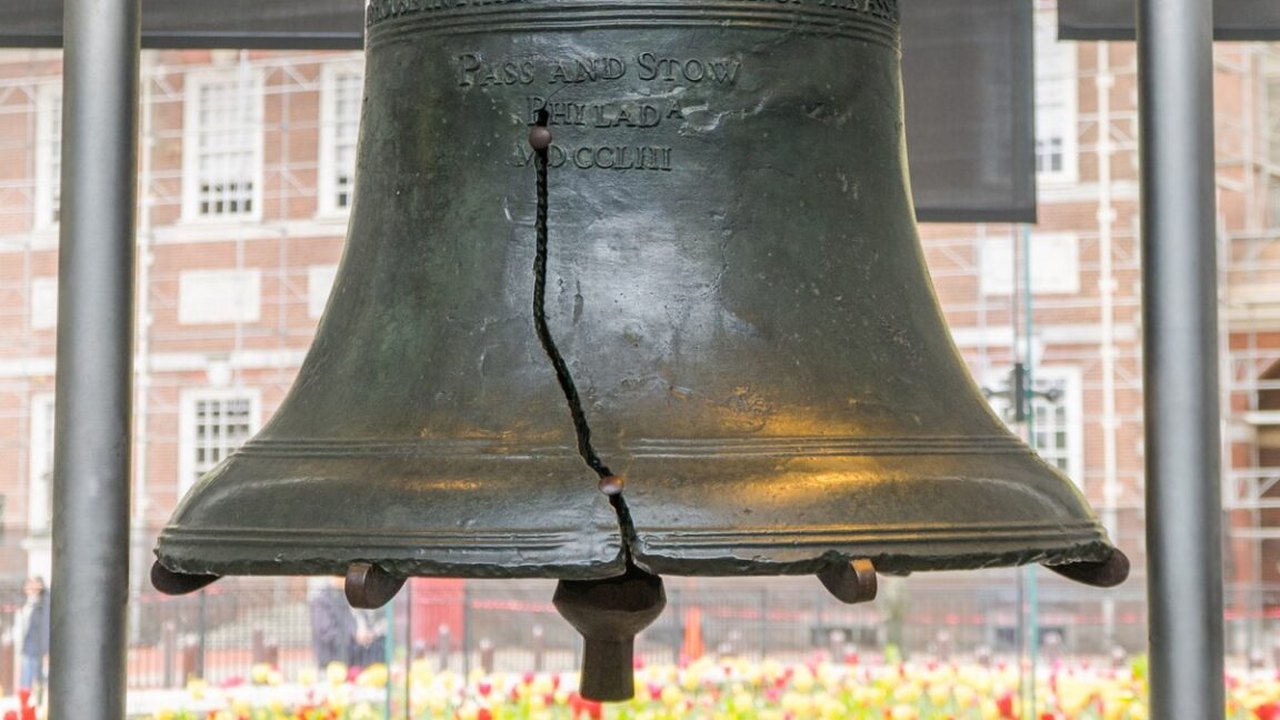
Image: arstechnica.com — Creative Commons
A Long‑Silenced Icon Finds Its Voice
The Liberty Bell has not rung since 1846, yet a team of researchers at Penn State University has used acoustic analysis of a full‑size replica to estimate the frequencies the original bell would have produced. Their findings were presented at an Acoustical Society of America meeting in Philadelphia and later published in Physics Today (2026). The work offers the most detailed, data‑driven reconstruction of the bell’s sound to date.
Historical Context and the Mystery of the Crack
Historians agree that the bell’s famous crack appeared sometime between 1817 and 1846. An 1846 Public Ledger report described a February 23 ringing that further widened the fissure, after an earlier attempt to file down the sides proved ineffective. The bell’s rim had also cracked shortly after its arrival in Philadelphia in 1752, prompting two recasts by John Pass and John Stow. The second recast was deemed acceptable, and the bell served civic functions until it fell out of regular use after the Revolutionary War. A 1975 metallurgical study identified the alloy as “extremely brittle,” a factor that made the bell prone to cracking and to souvenir‑collector damage.
From Replica to Data: The Experimental Approach
To move beyond speculation, co‑author Sean Collier and colleagues Jon Young and Aaron Stearns turned to a 20th‑century replica located on Penn State’s Behrend campus. They equipped the replica with miniature accelerometers at several points and struck the bell with a hammer instrumented with a force gauge. The accelerometers recorded the bell’s vibrational response, while the force gauge logged the impact force over time. This “modal analysis” is the same technique bell foundries use to tune new bells.
Measured Frequencies Match Classical Bell Tuning
The analysis yielded five principal vibrational modes that correspond to the standard tuning scheme for Western church bells:
- Hum note: 174 Hz
- Fundamental (strike note): 323 Hz
- Tierce: 381 Hz
- Quint: 510 Hz
- Nominal: 623 Hz
These frequencies align closely with the ideal ratios used for a minor‑triad tuning, which gives church bells their characteristic somber tone. The mode shapes of the fundamental frequency also resembled those of typical cast‑bronze bells, reinforcing the validity of the replica‑based model.
What Remains Uncertain
While the frequency ratios are convincing, the researchers caution that loss factors—measures of how quickly vibrations decay—are harder to pin down. Loss factors depend on the bronze’s composition and casting imperfections. The replica was cast with 20th‑century techniques, whereas the original Liberty Bell was forged in the 1750s using a different alloy formulation. Consequently, the decay rates (and thus the perceived sustain of each note) may differ from the historic bell.
Practical Implications and Comparisons
- Acoustic heritage: The study demonstrates that high‑resolution acoustic modeling can revive the sound of historic objects that can no longer be used, offering a template for other silent artifacts such as cathedral organs or ancient drums.
- Bell‑making standards: By confirming that the Liberty Bell’s geometry produced frequencies comparable to modern tuned bells, the work underscores the longevity of bell‑casting principles established in the 19th century.
- Public engagement: Museums could use the reconstructed tone in audio‑guide installations, allowing visitors to hear an approximation of the bell’s original ring without risking damage to the artifact.
How Readers Can Verify the Findings
The full technical description appears in Physics Today (2026) under DOI 10.1063/pt.103283cd08. A summary of the presentation was also posted on the Acoustical Society of America’s 2026 meeting archive, accessible through their website. For a direct look at the replica used in the study, Penn State’s Behrend campus virtual tour includes a 360° view of the bell.
Looking Ahead
Future work could involve non‑destructive scanning of the original Liberty Bell to refine estimates of its material properties, potentially narrowing the uncertainty around loss factors. Until then, the frequencies reported here represent the best‑available scientific approximation of a sound that has been silent for nearly two centuries.
--- Source: [Ars Technica – What did the Liberty Bell sound like? Science is on the case.](https://arstechnica.com/science/2026/10/what-did-the-liberty-bell-sound-like-science-is-on-the-case/)
AI-assisted reporting; source claims are attributed and have not been independently verified.
More to read
 Experimental Male Contraceptive Pill Aims for On-Demand Use Within 30 Minutes
 How Pond Algae Led To A Nobel Prize And A New Way To Study The Brain
 Shrinking the Footprint: How Managing Battery Demand Can Cut Billions of Tons of Carbon
 SpaceX Starship Reaches Orbit and Deploys 26 Satellites in Major Test Flight
Trending on GlobeWire Daily
Selected from recent coverage and related topics; not live search rankings.
 India Post Announces 24 Staff Car Driver Vacancies in Tamil Nadu Circle for 2026
 Four Years After Historic UN Biodiversity Deal, Global Targets Face Severe Implementation Gaps
 Fanzart Seeks Business Development Specialist for On-Site Role in Ranchi
 Hollywood Coalition Backs Federal Film Tax Incentive While Pushing for Broader Market Overhauls
 American India Foundation Seeks Chief Finance and Operating Officer for New Delhi Leadership Team
 Unison Leader Argues Public Sector Workers Are Left as 'Afterthought' Compared to North Sea Oil Focus