Lumina Project Simulation Offers Detailed Look at the Early Universe
· GlobeWire Daily Science Desk · Source: www.cnet.com
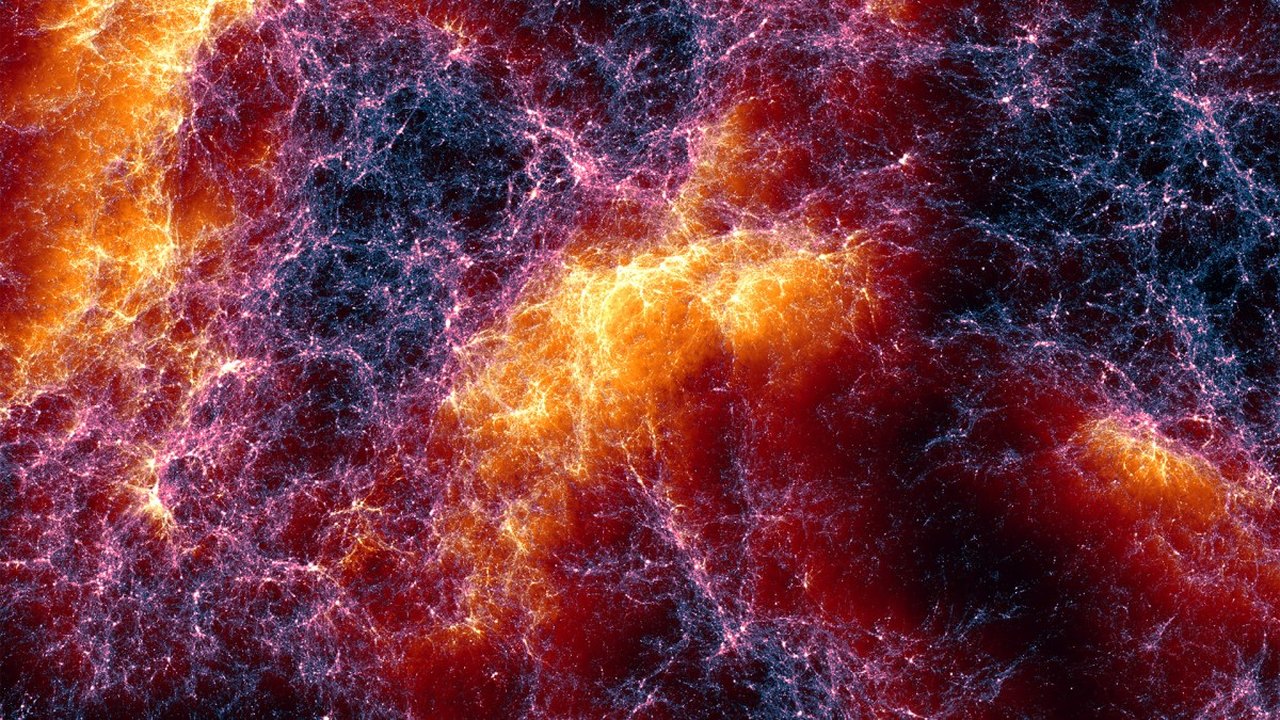
Image: CNET · Photo source · Resized and letterboxed to 16:9; no AI generation
Researchers from the Center for Astrophysics, a collaboration between Harvard and the Smithsonian, have assembled the Lumina Project, a massive simulation designed to model the first 2 billion years of the universe. Details of the simulation were published in the Monthly Notices of the Royal Astronomical Society.
Understanding the Early Universe
The simulation covers a region equivalent to a cube roughly 1.5 billion light-years on each side, making it significantly larger than prior efforts such as the 2022 Thesan simulation. According to the study's lead author, Oliver Zier, the project aims to translate existing astrophysical theories into detailed predictions to help interpret observations made by NASA’s James Webb Space Telescope.
- Scale: Modeled across a 1.5-billion-light-year cube.
- Timeline: Focuses on the first 2 billion years of cosmic history.
- Computing Power: Executed on the Frontier supercomputer at Oak Ridge National Laboratory, utilizing approximately 15,000 GPUs.
Key Processes and Predictions
The Lumina Project tracks complex phenomena, including both hydrogen and helium reionization. By following these processes self-consistently alongside galaxy formation, researchers can study how matter interacted during the early stages of the cosmos.
Co-author Aaron Smith noted that the model allows scientists to observe the transition of hydrogen and helium into their modern forms across an enormous volume while retaining resolution for individual galaxies. Initial predictions from the simulation suggest there may have been fewer massive galaxies in the early universe than some JWST observations initially implied.
Practical Implications and Verification
While simulations provide valuable frameworks for testing theoretical physics, they remain models built on current assumptions and observational data. Scientists use these tools to gauge whether theoretical understanding aligns with computational outcomes. Readers interested in verifying the original findings can consult the published paper in the Monthly Notices of the Royal Astronomical Society or review official announcements from the Harvard-Smithsonian Center for Astrophysics.
AI-assisted reporting; source claims are attributed and have not been independently verified.
More to read
 YourOwnWeigh Open-Source Project Offers Alternative Data Sync for Withings Scales
 Oxc Project Offers High-Performance JavaScript Tools Written in Rust
 Horizon Open-Source Project Offers AI-Powered News Aggregation and Briefing Generation
 Open-Source AI Memory Project Offers Cross-Agent Handoffs and Git-Backed Markdown Storage
Trending on GlobeWire Daily
Selected from recent coverage and related topics; not live search rankings.
 Madhya Pradesh Government Plans Revenue Generation from 117-Year-Old Edward Villa in Mumbai Through Leasing
 iPhone 18 Pro Named TechRadar Product of the Year 2026
 Google Project Suncatcher Runs Gemma 4 AI on Orbiting Satellite and Receives First Response
 Gender Disparities in Eye Care Access Across India Examined
 Satellite Images Show Cyclone Arnab Weakening Over India As New System Brews
 Expanding Green and Blue Spaces Crucial for India's Economic and Public Health, Reports Indicate