Quantinuum Announces Quantum Error Correction Scaling Beyond Breakeven
· GlobeWire Daily Science Desk · Source: arstechnica.com
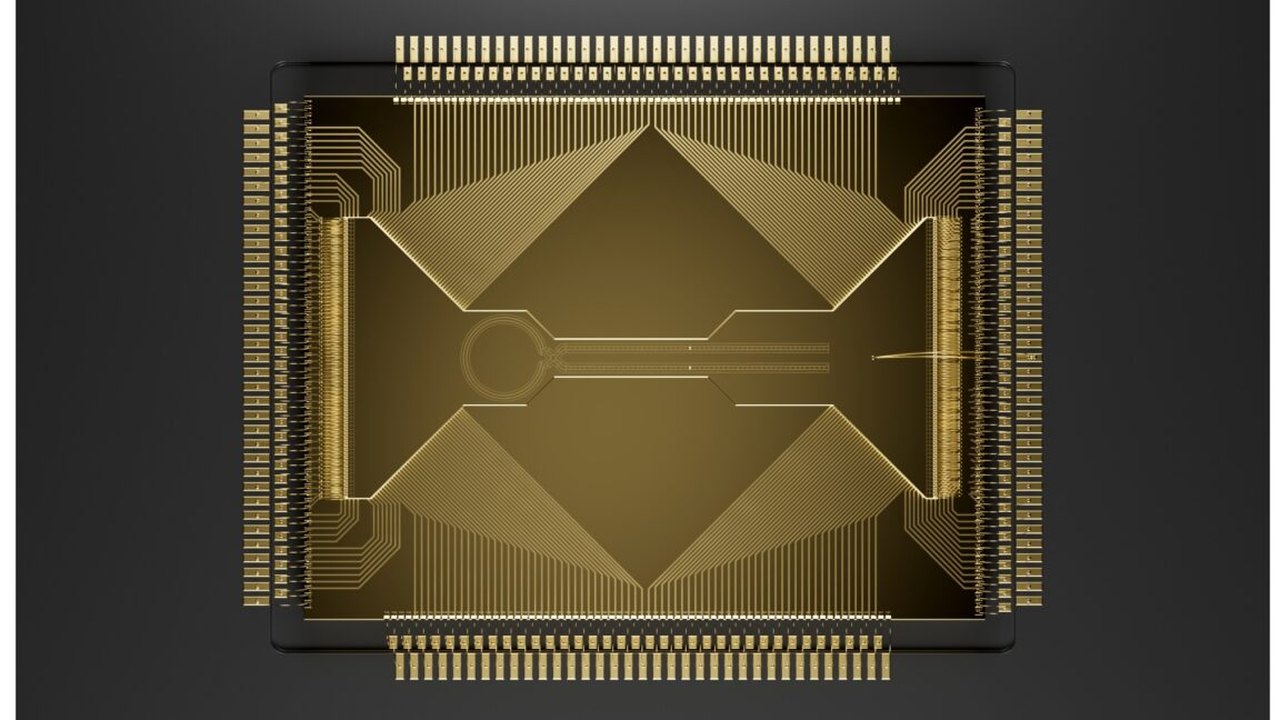
Image: Ars Technica · Photo source · Resized and letterboxed to 16:9; no AI generation
Quantum error correction remains a central hurdle for running complex algorithms on quantum hardware, requiring multiple physical qubits to form reliable logical qubits. On Monday, Quantinuum announced that its current generation of trapped-ion hardware, named Helios, has demonstrated scaling well beyond the breakeven point, with performance improvements exceeding a factor of 10 at each step up in logical qubit size.
Understanding Quantum Error Correction and Breakeven
Quantum processors are inherently prone to errors, meaning that simply adding physical qubits to a logical qubit can sometimes increase the overall probability of failure if the underlying hardware error rate is too high. The breakeven point occurs when adding more qubits successfully improves performance. While past demonstrations have shown performance past this threshold, the scaling factor—the rate at which error rates drop with each increase in distance—has typically been closer to two rather than 10. A lower scaling factor means thousands of additional hardware qubits would be required to reach the error thresholds needed for complex algorithms.
The Helios Processor and Leakage Suppression
Quantinuum’s Helios computer stores qubits in trapped ions, utilizing electrical fields and lasers to move and manipulate them around a ring structure. This architecture allows any ion to entangle with any other, supporting various error correction codes. Key operational updates contributed to the recent results:
- Leakage Mitigation: A new laser scheme identifies and returns qubits that have drifted into unintended energy states back to the computation states, suppressing leakage errors by a factor of 6.5.
- Real-Time Analysis: The company employed three software approaches—a standard algorithm, a convolutional neural network, and a transformer-based neural network—to process syndrome data rapidly without creating a bottleneck.
Experimental Results and Scaling Performance
In memory-state experiments, the team used color codes with distances of three, five, and seven, employing 13, 37, and 73 hardware qubits respectively. Running 20 rounds of error correction before measuring, the logical error rate dropped from approximately 5 x 10^-4 at distance three down to 5 x 10^-6 at distance seven. This demonstrated a roughly twelvefold reduction in the logical error rate at each step, representing a significant scaling milestone. For two-qubit gate operations, comparing direct hardware usage against distance three and five color codes, the distance five code successfully reduced the logical error rate to about 7 x 10^-5.
Practical Implications and Outlook
While these results mark a notable technical step forward, experts note that significant challenges remain. The hardware is currently limited to hosting a single distance-seven error code at a time, and error rates must be reduced further still before practical, complex algorithms can be executed routinely. Observers emphasize that verifying these findings will depend on independent replication and tracking whether Quantinuum can effectively scale its qubit counts according to its projected roadmap.
AI-assisted reporting; source claims are attributed and have not been independently verified.
More to read
 Ingrain --- beyond Architecture Announces Architectural Internship Opportunity in Pune
 Beyond Border Consultants Announces EdTech BDE Opening in New Delhi
 IIT Kharagpur Announces Rs 35 Crore ‘Benjamin Gupta School of Physical AI’ to Push Artificial Intelligence Beyond Screens
 Physicists Trap a Single Antimatter Particle for Months in Quantum Physics Breakthrough
Trending on GlobeWire Daily
Selected from recent coverage and related topics; not live search rankings.
 Madhya Pradesh Government Plans Revenue Generation from 117-Year-Old Edward Villa in Mumbai Through Leasing
 iPhone 18 Pro Named TechRadar Product of the Year 2026
 Google Project Suncatcher Runs Gemma 4 AI on Orbiting Satellite and Receives First Response
 Gender Disparities in Eye Care Access Across India Examined
 Satellite Images Show Cyclone Arnab Weakening Over India As New System Brews
 Expanding Green and Blue Spaces Crucial for India's Economic and Public Health, Reports Indicate