Rajasthan’s Luxury Hotels Turn to Solar, Water Recycling and Local Sourcing to Cut Carbon Footprint
· GlobeWire Daily Science Desk · Source: news.abplive.com
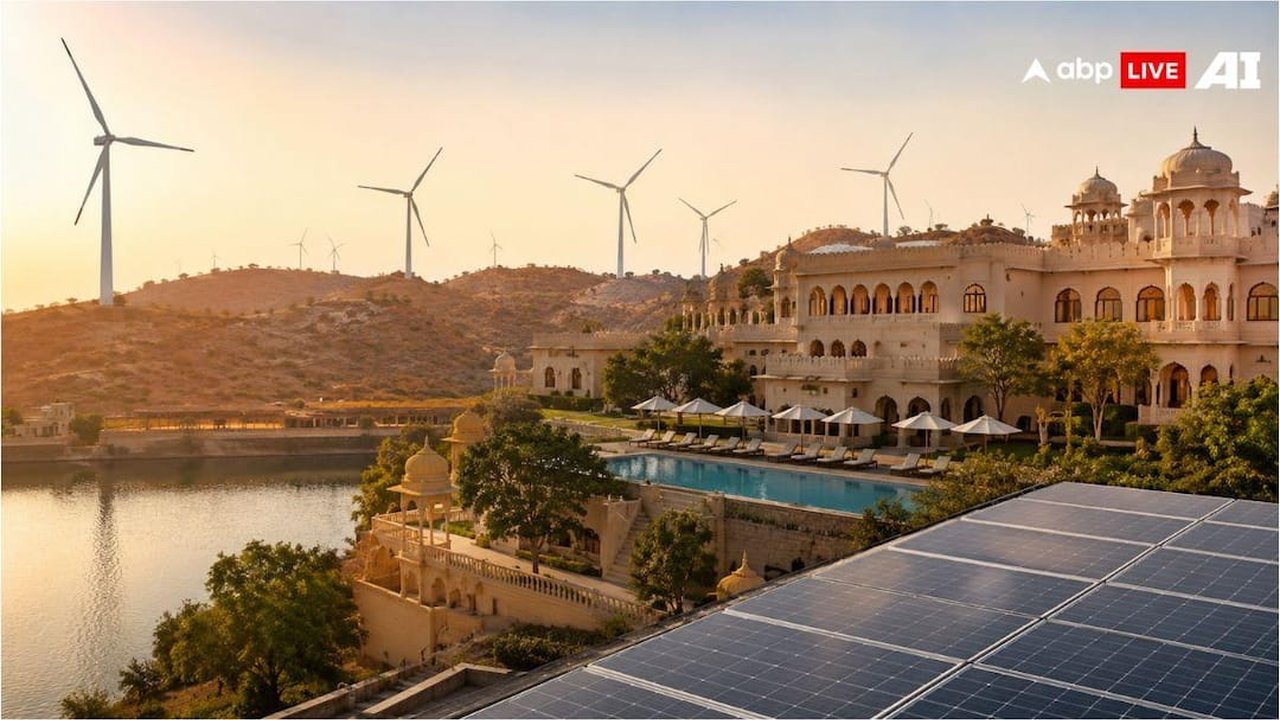
Image: Somrita Ghosh — Creative Commons
Sustainable Operations at ITC Rajputana
On a sweltering weekend in Jaipur, when temperatures topped 40 °C, the ITC Rajputana hotel was operating at roughly 50 % occupancy. Chief Engineer Siddharth Bisht explained that the property runs a 250 KLD sewage‑treatment plant (STP) and a 30 KLD effluent‑treatment plant (ETP) every day, regardless of guest numbers. Treated water is reused for landscaping, cooling‑tower make‑up and toilet flushing, eliminating the need for fresh‑water intake for these functions.
The hotel also claims the only LEED Zero‑Carbon certification in Rajasthan. Its energy mix includes 2.5 MW of captive wind power from ITC’s Jaisalmer wind farms and a 100 kW rooftop solar array. According to Bisht, the wind and solar generation are “clubbed with the electricity supply” and power electrical boilers, heat pumps and the hotel’s HVAC system.
Architectural Passivity at Brij Laksham Sagar
In the Pali district, the heritage resort Brij Laksham Sagar has retrofitted a 19th‑century hunting lodge with thick mud‑stone walls, high‑thermal‑mass rooms, shaded verandas and natural ventilation. These passive design features reduce reliance on mechanical cooling. The resort currently draws electricity from the grid and uses motor‑driven water heating; a solar installation is being evaluated but not yet committed.
Solar‑Heavy Model at Dev Vilas, Ranthambhore
Owner‑operator Balendu Singh’s Dev Vilas eco‑resort in Sawai Madhopur sources about 62 % of its electricity from on‑site solar panels. The property harvests rainwater, recharges groundwater, and recycles treated water for non‑potable irrigation. Architectural choices – high ceilings, wide verandas and the absence of a central cooling plant – keep electricity demand low. Only 12 of the 28 rooms have heat‑pump units, which are switched on only when all 12 are occupied.
Context: Energy Use and Emissions in Rajasthan’s Hospitality Sector
The state lists more than 7,000 hotels, with over 3,000 registered on the Ministry of Tourism’s SAATHI portal. Global estimates suggest a typical hotel room consumes about 25 kWh of electricity per day, covering HVAC, lighting, appliances and minibar use. For 5‑star properties, the figure rises to roughly 118 kWh per room‑night. A 1.5‑ton air‑conditioner operating eight hours a day emits 2.2–3.6 kg CO₂ daily. Overall, an average hotel night generates ~35 kg CO₂, while a 5‑star night can emit 60–90 kg CO₂.
Practical Implications for Guests and Operators
- Water security: Recycling 250 KLD of sewage and 30 KLD of effluent means the ITC Rajputana can sustain its landscaping and cooling needs without tapping additional groundwater – a critical advantage in Rajasthan’s “dark zones” where aquifers are depleted.
- Carbon reduction: Wind and solar contributions at ITC Rajputana offset a portion of the hotel’s electricity demand, directly lowering the 60–90 kg CO₂ per room‑night typical of luxury hotels.
- Cost considerations: Installing a 100 kW solar plant can cost ₹35–45 lakh; adding battery storage pushes the price to ₹60–90 lakh. Recent MNRE rules requiring domestically produced solar cells may raise these costs by ~30 %.
- Employment stability: Brij Laksham Sagar shuts down during the peak summer months for maintenance, but staff receive full pay and are redeployed to a hill property, preserving income.
- Local economies: Brij Laksham Sagar reports that ~70 % of its operational spend stays within a 10 km radius, supporting farmers, artisans and shepherds.
Confirmed Facts vs. Open Questions
| Confirmed | Uncertain | |-----------|-----------| | ITC Rajputana operates 250 KLD STP and 30 KLD ETP; uses 2.5 MW wind + 100 kW solar; holds LEED Zero‑Carbon. | Exact proportion of hotel electricity supplied by renewables (wind + solar) versus grid. | | Brij Laksham Sagar uses passive cooling, no central AC, and plans future solar but no commitment yet. | Quantitative energy savings from passive design (kWh per night). | | Dev Vilas gets ~62 % of power from solar, recycles water for irrigation, and limits AC use to 12 rooms. | Long‑term performance of rainwater‑harvesting and groundwater recharge in the local aquifer. | | Rajasthan has >7,000 hotels; >3,000 on SAATHI portal. | Precise carbon‑footprint data for the entire state’s hospitality sector. |
How Readers Can Verify
The full story, including direct quotations from the hotel engineers and owners, is published by ABP Live. Readers can consult the original article at: https://news.abplive.com/science/rajasthan-heat-wave-sustainable-hospitality-solar-power-water-recycling-and-local-sourcing-1861999.
Outlook: Financing the Green Transition
Hotel chains are eyeing ESG‑linked financing such as green bonds, but India’s market lacks a dedicated domestic investor base. SEBI’s BRSR mandate pushes listed hotels toward higher ESG scores, yet the higher compliance costs and limited pricing advantage make green‑bond issuance a slow‑moving prospect for many operators.
--- This report was compiled from the ABP Live article dated [insert date if known] and reflects information publicly disclosed by the hotels and industry experts. No original interviews were conducted.
AI-assisted reporting; source claims are attributed and have not been independently verified.
More to read
 New Medium-Lift Rocket Unveiled as Industry Executives Warn of Looming Launch Capacity Crunch
 Columbia University IRI Forecasts 'Very Strong' El Nino Through 2026-27 Winter, Raising Climate Risks for India
 How NASA’s Biological and Physical Sciences Division Uses Space to Advance Medicine and Technology
 Experimental Male Contraceptive Pill Aims for On-Demand Use Within 30 Minutes
Trending on GlobeWire Daily
Selected from recent coverage and related topics; not live search rankings.
 Bihar BSSC Field Assistant Mains Online Form 2026: Dates, Eligibility and Application Details
 UPSSSC PET 2026 Admit Card and Exam City Details Released: What Candidates Need to Know
 Coal India Limited Announces 2026 Internship Program Under Prime Minister's Scheme
 NTA NIFTEE 2027 Application Process Opens: Dates, Eligibility, and Exam Structure
 Bihar School Examination Board Opens BLET 2026 Registration with Deadline Set for October 31
 NTA Opens JEE Mains 2027 Session I Application Window: Key Dates and Details