Columbia University IRI Forecasts 'Very Strong' El Nino Through 2026-27 Winter, Raising Climate Risks for India
· GlobeWire Daily Science Desk · Source: news.abplive.com
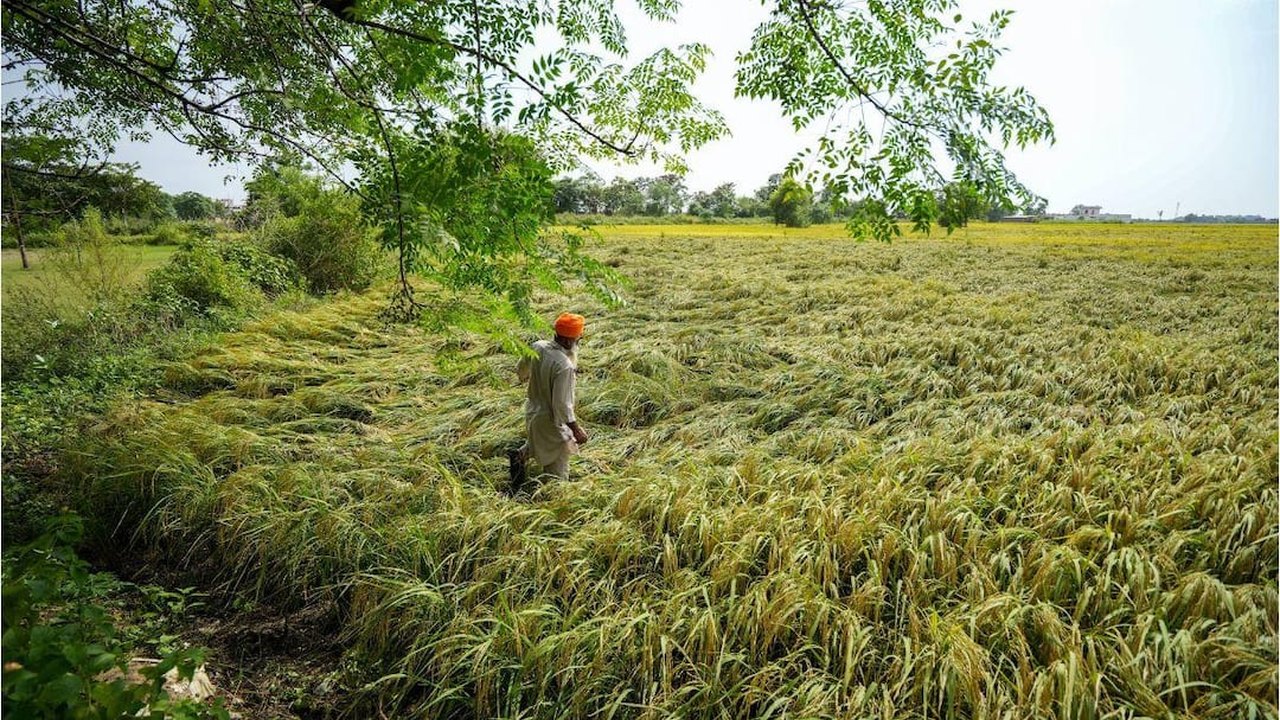
Image: PTI — Creative Commons
El Nino Strengthens Toward Record Levels
Recent meteorological forecasts indicate that a significant El Nino weather pattern is actively strengthening across the Pacific Ocean. According to a forecast published on September 21 by the International Research Institute for Climate and Society (IRI) at Columbia University, the Nino 3.4 index—a primary diagnostic gauge for tracking Pacific Ocean surface temperatures—reached +3.0 degrees Celsius by mid-September.
The IRI survey encompasses 22 predictive models, including 13 dynamical systems and nine statistical models. Unanimously, all 22 models project "very strong" El Nino conditions persisting continuously through the winter of 2026-27. The probability of the weather pattern remaining active is assessed at 100 percent through February 2027, before gradually decreasing to 61 percent by mid-2027. Climate specialists note that the current trajectory could position this event among the strongest recorded instances of the phenomenon.
Concurrently, the IRI anticipates the Indian Ocean Dipole (IOD) to transition into a strongly positive phase spanning from September through December 2026, before moderating back toward neutral conditions in early 2027. While El Nino and the IOD can evolve independently, a positive IOD phase frequently manifests simultaneously.
Potential Implications for India
El Nino represents a naturally occurring climate cycle characterized by the abnormal warming of a vast expanse of the Pacific Ocean. Historically, this phenomenon correlates with modified weather trends globally. For India, established climatological patterns associate El Nino with diminished monsoon rainfall, warmer and drier winter conditions, and heightened pressures on both agricultural output and domestic water availability.
However, meteorological experts emphasize that the concurrent positive Indian Ocean Dipole phase introduces complex variables. A strongly positive IOD has the historical capacity to partially offset the negative rainfall deficits typically induced by El Nino events.
Expert Perspective and Uncertainty
While the IRI forecast clearly highlights an elevated baseline of climate risk, analysts caution that the current modeling does not constitute a localized, definitive prediction for agricultural yield or precise regional rainfall amounts in India.
Practical Analysis and Verification
- What is Confirmed: The International Research Institute for Climate and Society published an ENSO forecast on September 21 indicating that the Nino 3.4 index reached +3.0 degrees Celsius in mid-September. All 22 surveyed models project very strong El Nino conditions through the 2026-27 winter, with a 100 percent probability through February 2027. The IOD is also projected to turn strongly positive from September through December 2026.
- What Remains Unknown: Precise quantitative metrics regarding future agricultural output, specific seasonal monsoon deficits, localized temperature anomalies, and exact long-term economic impacts across different regions of India cannot be reliably derived from the current baseline forecast alone.
- Relevant Comparisons: El Nino events vary considerably in intensity. The projected parameters suggest this event could rank among the strongest recorded historical cycles, though interacting regional factors like the IOD play a critical mediating role.
- How to Verify: Readers can review the original reporting and monitor ongoing updates via the ABP Live coverage or directly consult research bulletins published by academic climate centers such as the International Research Institute for Climate and Society (IRI) at Columbia University.
Source: https://news.abplive.com/news/india/el-nino-very-strong-india-impact-likely-through-winter-2026-27-climate-risks-for-india-1868723
AI-assisted reporting; source claims are attributed and have not been independently verified.
More to read
 Rajasthan’s Luxury Hotels Turn to Solar, Water Recycling and Local Sourcing to Cut Carbon Footprint
 New Medium-Lift Rocket Unveiled as Industry Executives Warn of Looming Launch Capacity Crunch
 How NASA’s Biological and Physical Sciences Division Uses Space to Advance Medicine and Technology
 Experimental Male Contraceptive Pill Aims for On-Demand Use Within 30 Minutes
Trending on GlobeWire Daily
Selected from recent coverage and related topics; not live search rankings.
 Major European Education Powerhouses Record Historic Lows in Latest Global Pisa Study
 PM Kisan Samman Nidhi 24th Installment: Central Government Announces October 30 Release Date
 GitHub Platform Metrics Highlight Scale With Over 225 Million Developers
 Hitachi Energy Announces Opening for Production Supervisor in India
 BKU Kisan Mahapanchayat Begins in Lucknow Following Overnight Stand-off Over Venue Permission
 State Education Department Issues Six-Point Directive for Saraswati Vidya Niketan Model Schools