Startup Atoco Uses Data‑Center Waste Heat to Pull Water from Air with MOF Technology
· GlobeWire Daily Science Desk · Source: www.wired.com
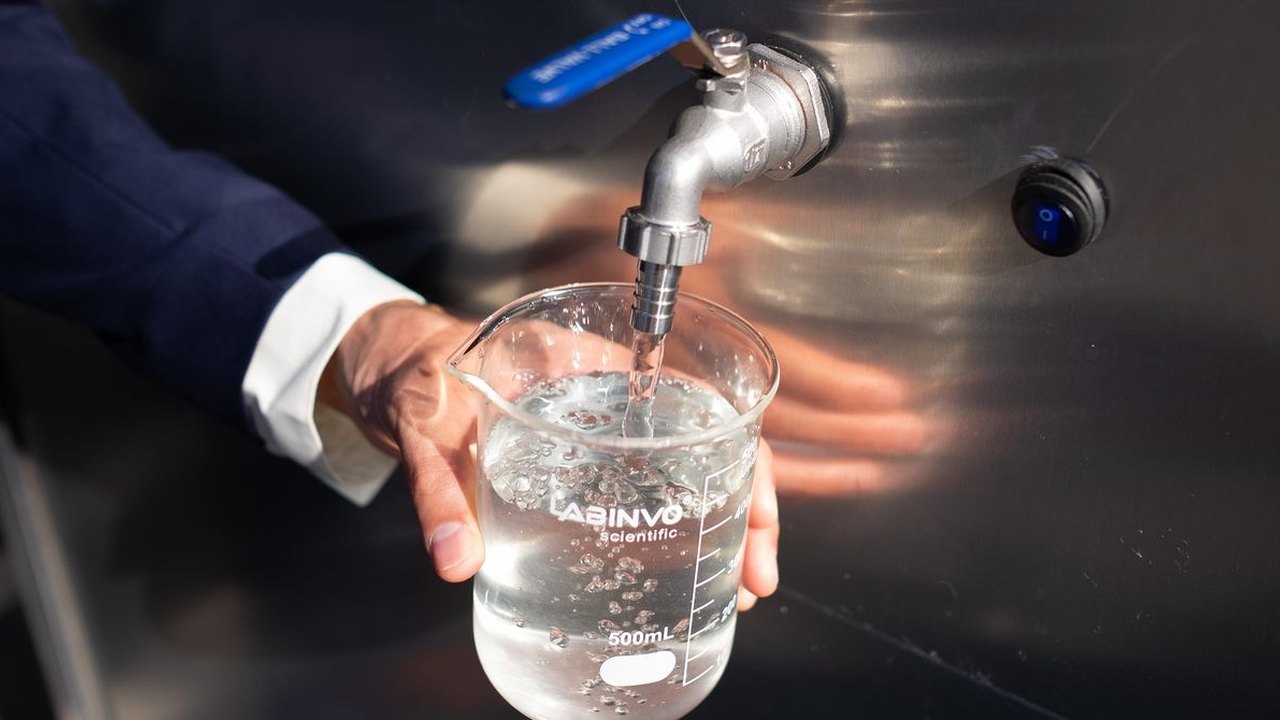
Image: Brian Kahn — Creative Commons
A prototype turns low‑grade heat into drinkable water
On a sweltering September morning in Irvine, California, a 20‑foot‑tall metal‑clad unit sits in the parking lot of Atoco, a local startup. The machine, built around metal‑organic frameworks (MOFs), captures water vapor from ambient air and releases it as liquid using only modest heat – no electricity or grid connection is required for the core water‑harvesting process.
The prototype can produce up to 300 liters of water per day when supplied with heat equivalent to a 20‑kilowatt data‑center. Atoco says a commercial version could generate 1,000 liters per day, enough to offset a small portion of a data‑center’s water use.
How the technology works
MOFs are crystalline materials that act like molecular sponges. Their internal lattice – described by UC Irvine’s Seth Cohen as “a jungle gym on a playground” – contains pores that can adsorb large quantities of water molecules even when relative humidity is in the teens. Once saturated, the material feels dry to the touch and does not release water by squeezing.
To extract the captured water, Atoco applies low‑grade heat (as low as 100 °F). The heat causes the water molecules to desorb from the pores, condensing into a clear stream that the company describes as essentially distilled water. The heat source can be waste heat from industrial processes; Atoco’s demo used simulated heat at about 150 °F.
Why data‑center waste heat is a target
Modern AI‑focused data centers emit large amounts of low‑grade heat – comparable to the output of tens of thousands of homes – and consume millions of gallons of water daily for cooling. Operators typically disperse the waste heat into the environment, creating heat islands.
“Atoco’s system turns that waste heat into clean water,” says CEO Samer Taha. “We give you back water, the same product that is causing the issue.”
The company has already installed five on‑grid prototype trials with partners in the United States and the Gulf Cooperation Council. It plans to begin taking orders for its first commercial unit by the end of the year and is in talks with unnamed major tech firms that have pledged to become water‑positive by 2030.
Practical implications and comparisons
- Energy use – Unlike silica desiccants, which require very high temperatures to release water, Atoco’s MOFs operate with modest heat, reducing the energy penalty.
- Cost – Atoco estimates a levelized cost of $5 per metric ton of water. This is higher than the $2‑plus per ton achievable by the newest desalination plants, a gap the company expects to close in three to five years.
- Scalability – The prototype’s 300‑liter output is modest compared to the millions of gallons per day used by large data centers. Scaling to that level would require many units operating in parallel and a reliable heat source.
- Rural deployment – Without nearby waste heat, the system would need an external energy source to power the heating step, which could limit usefulness in off‑grid, water‑stressed communities.
Confirmed facts vs. open questions
Confirmed:
- MOFs can adsorb water at low humidity and release it with heat as low as 100 °F.
- Atoco’s prototype produces up to 300 L/day using heat equivalent to a 20 kW data center.
- The company has five on‑grid trials and aims for commercial orders by year‑end.
- Levelized water cost is quoted at $5/ton.
Uncertain / Not yet demonstrated:
- Performance at the scale of hyperscale data centers (tens of megawatts of waste heat).
- Long‑term durability of MOF materials under continuous cycling.
- Exact pricing and financing terms for commercial units.
- Real‑world water quality when operating in polluted air environments.
How readers can verify the story
The details above are drawn from a Wired feature titled “A Startup Has a Plan to Make Water From Air Using Data Centers’ Waste Heat” published on the Wired website. The full article, including direct quotes from Atoco’s leadership and independent experts, can be accessed at:
https://www.wired.com/story/startup-atoco-makes-water-from-air-using-data-centers/
Readers can cross‑check the company’s claims by reviewing any future press releases from Atoco, patents related to their MOF formulations, and public disclosures from data‑center operators about waste‑heat utilization projects.
--- This article was compiled from publicly available information and does not contain original reporting or interviews.
AI-assisted reporting; source claims are attributed and have not been independently verified.
More to read
 Inside the New Mexico Community Neighbors Worrying Over a New Hypersonic Missile Factory
 Massive Antarctic Iceberg A-81 Reaches South Georgia After Years at Sea
 Scientists Re-create 1,600-Year-Old Roman Recipe Behind the Lycurgus Cup's Optical Mystery
 Heart Health and Diet: How Eating Fish May Support Cardiovascular Wellness
Trending on GlobeWire Daily
Selected from recent coverage and related topics; not live search rankings.
 MP High Court Opens Applications for 418 Stenographer and Assistant Posts: Key Dates and Eligibility
 Community and Social Services Career Openings Highlight Regional Employment Landscape
 ARCI Recruitment 2026: Applications Open for 29 Technical, Administrative, and Scientific Posts
 Kendriya Vidyalaya and Navodaya Vidyalaya Recruitment 2025: 14,967 Vacancies Open
 Community and Social Services Openings Highlight Diverse Employment Landscape in Cheyenne, WY
 KRDP Recruitment 2026: Online Applications Open for 12,878 Group B and C Vacancies