Voyager 2’s 1989 Neptune Flyby Re‑imagined in a New Composite Image
· GlobeWire Daily Editorial Desk · Source: science.nasa.gov
Summary
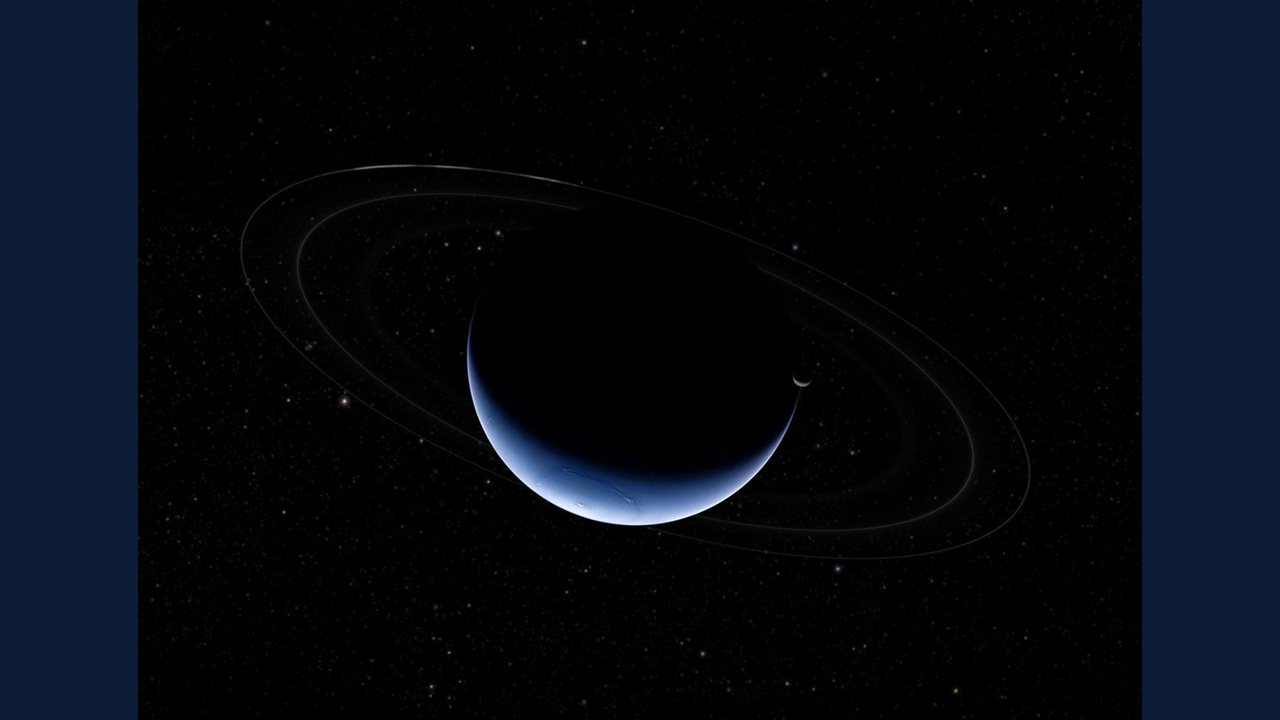
NASA’s Astronomy Picture of the Day (APOD) for 21 Nov 2026 showcases a computer‑generated composite of Voyager 2’s historic encounter with Neptune on 25 Aug 1989. The image blends original spacecraft photos with modern sky‑survey data to illustrate the planet, its moon Triton, and the faint ring system from a viewpoint just beyond Neptune’s orbit.
Confirmed Details
- Mission: Voyager 2, the only probe to have visited Neptune, performed its closest approach on 25 August 1989.
- Image Source: Original photographs taken during the fly‑by and the days that followed are combined with recent star‑field data from the Camelopardalis region.
- Features Shown:
- Neptune as a thin, sun‑lit crescent.
- Triton, the largest moon, also appearing as a crescent.
- Cirrus‑type clouds and a dark band around the planet’s south pole, with a vortex above the pole.
- Parts of Neptune’s faint ring system, including the three bright arcs first captured by Voyager.
- Current Status: Voyager 2 continues its journey in interstellar space as of 2026.
Reported Context
The APOD description notes that the faintest segments of the rings are modeled rather than directly photographed, because the original data were too dim to resolve. The background star field is assembled from modern sky surveys, giving a broader context for the outbound view.
Practical Implications
- For Researchers: The composite provides a clear visual reference for studying Neptune’s atmospheric dynamics, such as the polar vortex, and for comparing historic data with current models of ice‑giant atmospheres.
- For the Public: It offers an accessible way to appreciate a landmark event in planetary exploration, reinforcing the long‑term value of the Voyager missions.
- Verification: Interested readers can cross‑check the original Voyager 2 images in NASA’s Planetary Data System (PDS) and compare the star‑field background with publicly available surveys like Gaia DR3.
Unknowns / Limits
- The exact brightness values of the modeled ring segments are not disclosed.
- No new scientific measurements are derived from the composite; it is a visual synthesis for outreach.
--- *Image credit: NASA/ESA/Johnson Space Center; composite created for APOD.*