Astronomers Claim Discovery of New 'Black Hole Star' Object in Early Universe
· GlobeWire Daily Editorial Desk · Source: www.theguardian.com
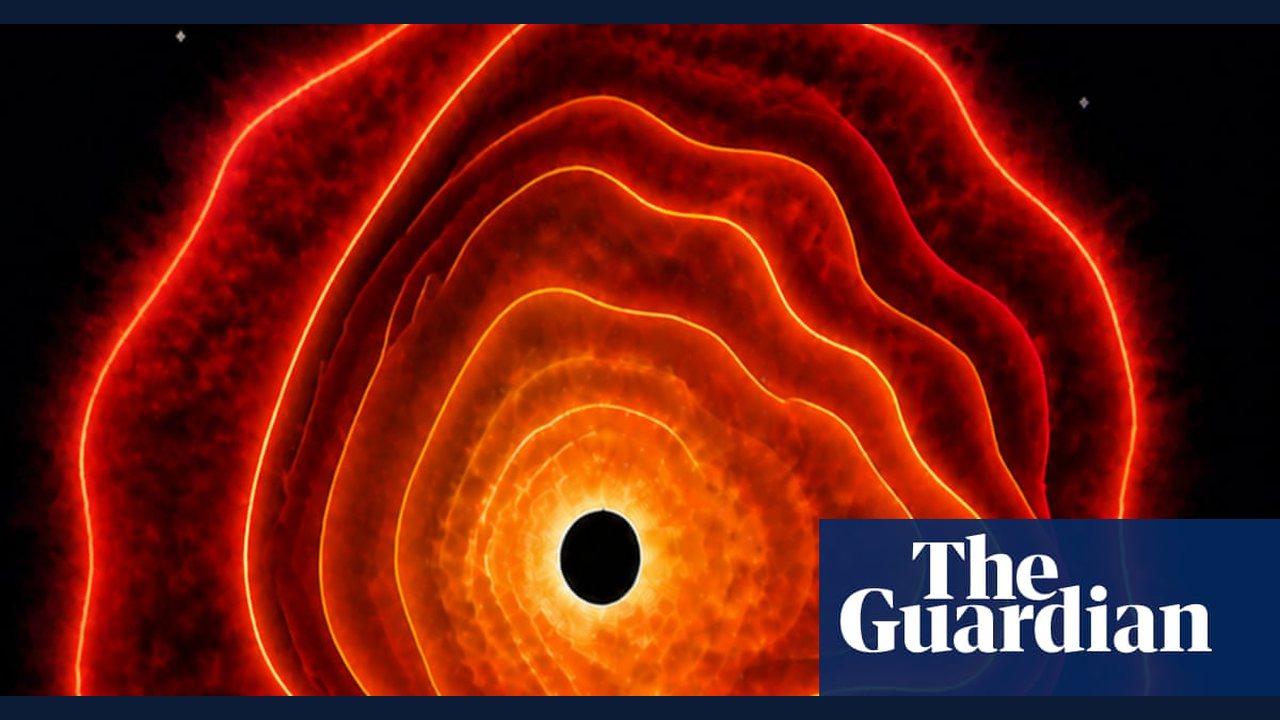
An international team of astronomers reports the discovery of a new kind of cosmic object termed a black hole "star"—an entity the size of the solar system glowing with brilliant red light billions of light-years away. Researchers made the finding after studying a mysterious red spot captured by NASA's James Webb Space Telescope.
Discovery and Characteristics
- Location and Age: Found in the constellation Cetus, estimated to have formed 660 million years after the Big Bang.
- Energy Output: Releases 100 billion times more energy than any known star, matching output levels typically associated with black holes while retaining stellar signatures.
- Designation: The object is described in the journal Nature as MoM-BH*-1.
Scientific Implications
According to Dr. Rohan Naidu, formerly of MIT and now at the University of Hawaii, computer simulations indicate the object is not powered by nuclear fusion. Instead, it is a black hole surrounded by dense gas shrouds that cause it to radiate like a star. Scientists suspect this phenomenon may explain other "Little Red Dots" (LRDs) in deep space images and could represent the early, swaddled phase of supermassive black holes.
Practical Implications and Verification
While researchers describe the findings as a potential paradigm shift in understanding early galaxy evolution, the conclusions rely on ongoing analysis and computer modeling. Independent verification will depend on continued observation with advanced space telescopes and peer review of data published in Nature. Readers can review the primary study in scientific journals to examine methodology and data archives directly.
More to read
 Star Wars Actor 'Thrilled' to Voice Luke Skywalker in New Welsh-Language Version
 PM‑JAY May Add 89 New Treatment Packages, Expanding Government Hospital Coverage to 112
 Voyager 2’s 1989 Neptune Flyby Re‑imagined in a New Composite Image
 Study Examines How Carbohydrates Like Bread and Rice Can Influence Weight Gain Without Extra Calories