Delhi Records No 'Severe' AQI Days During November 1-15 for the First Time Since 2015
· GlobeWire Daily Editorial Desk · Source: timesofindia.indiatimes.com
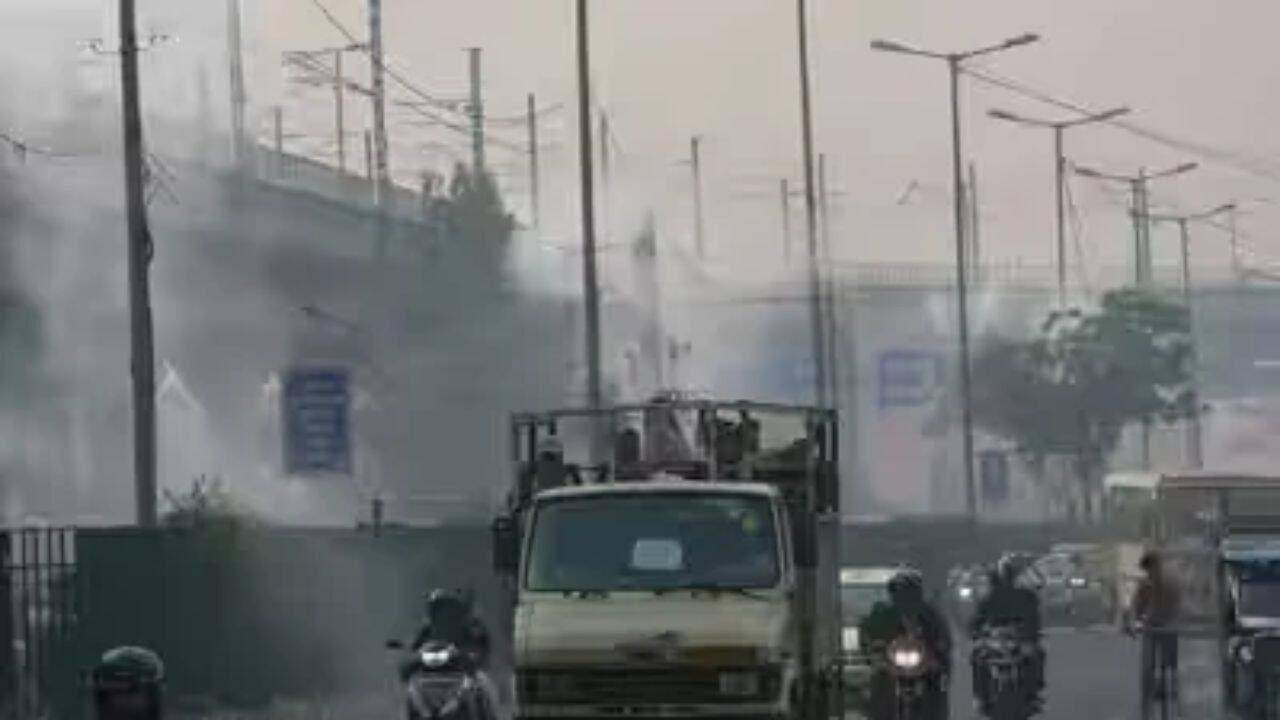
Image: The Times of India · Photo source · Resized and letterboxed to 16:9; no AI generation
According to data from the Central Pollution Control Board (CPCB), Delhi recorded no 'severe' air quality days during the period of November 1-15 for the first time since the agency began calculating the Air Quality Index (AQI) in April 2015. A severe day is defined as having an AQI above 400 on a scale up to 500.
CPCB Data and Historical Comparison
- CPCB records show that Delhi experienced three severe days during the same fortnight in 2024, two in 2024 (referencing source figures), six in 2023, three in 2022, seven in 2021, and eight in 2020.
- The average AQI for November 1-15 this year stood at 343, compared to 367 last year.
- During this fortnight, the city recorded three 'poor' days (AQI between 201 and 300) and 12 'very poor' days (AQI between 301 and 400), with the highest AQI reaching 382 on November 6.
Expert Insights and Contributing Factors
Experts attributed the absence of severe days to favorable meteorological conditions, lower contributions from stubble burning, and restrictions under the Graded Response Action Plan and Delhi's winter framework.
However, Sunil Dahiya, founder of the think tank Envirocatalyst, noted that arithmetic played a role as well, explaining that the expanded monitoring network with newer, lower-reading stations pulled down the overall city average. Dahiya pointed out that on long-running stations alone, Delhi crossed into the severe category on three days.
Additionally, reports highlighted data gaps on Diwali night, when CPCB did not share readings for several hours at multiple stations as particulate matter concentrations surpassed 1,000 micrograms per cubic metre. This missing data was excluded from the 24-hour average AQI calculation. An analysis cited by the Times of India from the Centre for Research on Energy and Clean Air (CREA) indicated that including these missing readings could have pushed average PM2.5 levels higher.
Outlook and Future Spells
Experts cautioned that the winter pollution season is far from over, noting that the periods from December 16 to 31 and January 1 to 15 historically record higher pollution levels due to low temperatures, dense fog, and calm winds associated with winter weather.
Verification of these figures and ongoing updates can be tracked through official CPCB releases and meteorological bulletins.
AI-assisted reporting; source claims are attributed and have not been independently verified.
More to read
 Chittoor Records 32 Elephant Deaths by Electrocution Since 2015
 Hyundai Bayon Records 3,449 Factory Dispatches in First Month Since Launch
 AIIMS Delhi Performs India's First Open Foetal Surgery for Severe Spina Bifida
 Union Home Minister Amit Shah Likely to Attend Ayodhya Deepotsav for the First Time