From Wall Street to British India: How the 1929 Great Depression Reshaped Global Politics and Livelihoods
· GlobeWire Daily Editorial Desk · Source: timesofindia.indiatimes.com
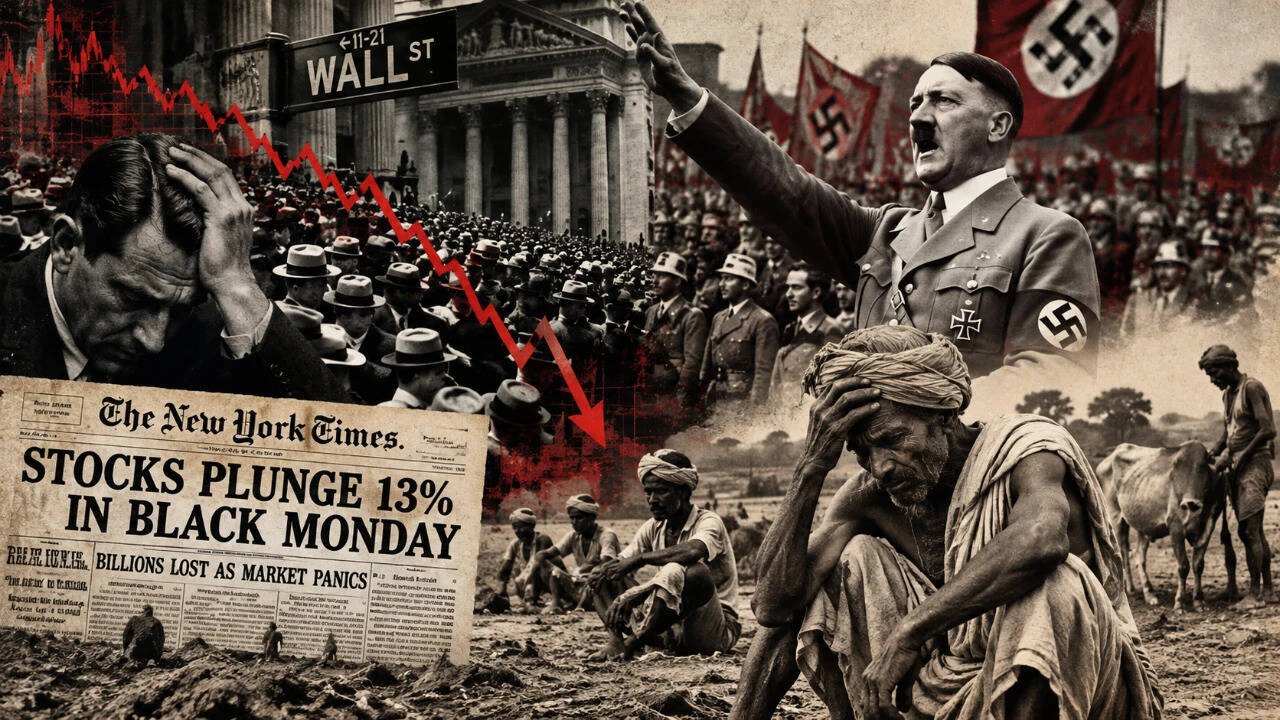
Image: The Times of India · Photo source · Resized and letterboxed to 16:9; no AI generation
The 1929 Wall Street stock market crash triggered a global economic catastrophe known as the Great Depression, which severely impacted economies far beyond the United States, including colonial India, Germany, and Britain.
Impact on British-Valued India and Farmers
In British-ruled India, the economic downturn manifested as a severe rural crisis. As international demand fell, agricultural prices plummeted, leaving cultivators struggling with fixed debts, rents, and land revenue obligations while earning substantially less from their produce.
- Price Collapses: According to research by historian Alok Oak published in *Studies in Indian Politics*, India's agricultural price index fell from 203 in 1929 to 127 in 1931, while raw cotton prices dropped sharply.
- Colonial Policies: The British government refused to devalue the rupee due to foreign financial obligations, compounding the pressure on rural incomes.
- Nationalist Mobilization: The economic distress coincided with the Indian National Congress declaring Purna Swaraj in December 1929. Mahatma Gandhi launched the Civil Disobedience Movement in 1930 with the Salt March from Sabarmati Ashram to Dandi, connecting economic self-reliance, khadi promotion, and anti-imperial resistance.
- Electoral Impact: Studies by Stanford researchers Rikhil Bhavnani and Saumitra Jha indicated that export-crop producing districts affected by trade shocks showed higher support for the independence movement in the 1937 and 1946 elections.
Global Ripples: Germany and Britain
- Germany: Vulnerable due to World War I reparations and heavy reliance on American loans under the 1924 Dawes Plan, Germany suffered soaring unemployment—reaching about 5.6 million by 1932. The economic desperation enabled Adolf Hitler and the Nazi Party to exploit public anger, culminating in President Paul von Hindenburg appointing Hitler as chancellor in January 1933.
- Britain: Facing structural declines in coal, shipbuilding, and textiles, Britain saw unemployment climb to nearly 3.5 million by 1932. The crisis forced Britain to suspend the gold standard in September 1931 after massive capital outflows from London.
The Great Depression ultimately transformed global financial policies, encouraging post-WWII economic cooperation while demonstrating how economic collapse can fuel political extremism.
AI-assisted reporting; source claims are attributed and have not been independently verified.
More to read
 India Criticises Global Energy Disruptions Caused by Sanctions and Chokepoints at G20 Meeting
 ‘Gondhal’: Makers of India’s Oscar Entry Unveil Global Trailer Ahead of Theatrical Re-Release
 Amazon Advertising Growth Decelerates in Q3 2026, Earnings Miss Wall Street Expectations
 Former India spinner Amit Mishra opens up on the depression that followed his 2008 drop
Trending on GlobeWire Daily
Selected from recent coverage and related topics; not live search rankings.
 Madhya Pradesh Government Plans Revenue Generation from 117-Year-Old Edward Villa in Mumbai Through Leasing
 iPhone 18 Pro Named TechRadar Product of the Year 2026
 Google Project Suncatcher Runs Gemma 4 AI on Orbiting Satellite and Receives First Response
 Gender Disparities in Eye Care Access Across India Examined
 Satellite Images Show Cyclone Arnab Weakening Over India As New System Brews
 Expanding Green and Blue Spaces Crucial for India's Economic and Public Health, Reports Indicate