French Army Transforms Armored Cavalry Units into Drone-Centric Combat Squadrons
· GlobeWire Daily Editorial Desk · Source: www.defensenews.com
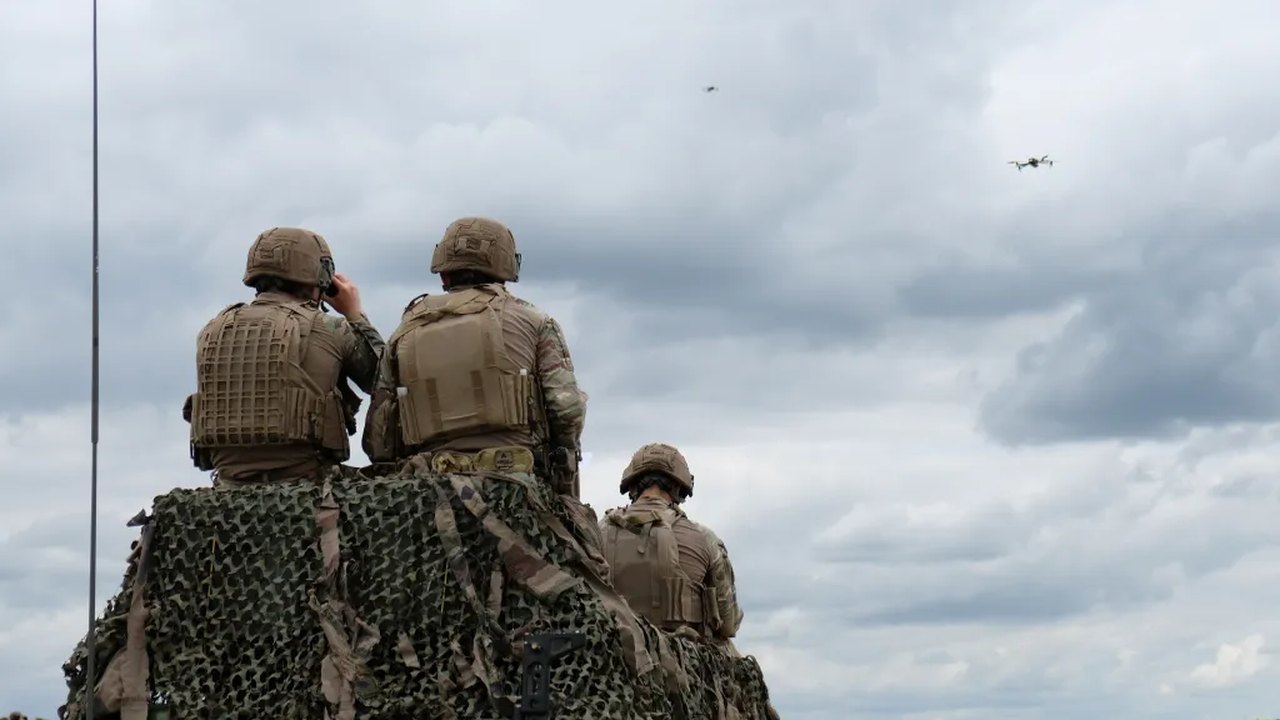
Image: Rudy Ruitenberg · Source image rights not independently verified · Photo source · Cropped to 16:9; original source image
Tactical Shift in French Cavalry
The French Army is undergoing a significant doctrinal shift, restructuring traditional light cavalry units to prioritize drone-based combat. Following successful experimentation by the 1st Marine Infantry Regiment (1er RIMa), the Army plans to establish approximately 15 dedicated drone-combat units by summer 2027. This transition involves training soldiers—formerly specialized in operating heavy vehicle weaponry, such as the 105 mm guns on AMX 10 RC armored cars—to become FPV (First-Person View) strike pilots.
The 'Hunter-Drone' Concept
The 1st Hunter-Drone Squadron (1er Escadron de Drones de Chasse) serves as the blueprint for this transformation. The unit is designed to maintain the mobility of traditional light cavalry while replacing heavy cannons with drone systems as the primary weapon. According to military officials, this structure allows for:
- Enhanced Intelligence: ISR (Intelligence, Surveillance, and Reconnaissance) drones detect targets from kilometers away.
- Disruption of Command: Tactical units target command posts and logistics, forcing adversaries into a reactive state.
- Increased Versatility: The squadrons use a mix of FPV one-way attack drones, loitering munitions, and ISR platforms.
Industry Collaboration and Autonomous Future
The French Army is actively partnering with domestic technology firms to refine these capabilities. Current research focus areas include:
- Autonomous Terminal Guidance: Projects aiming to raise FPV hit rates from current manual pilot averages (30%) toward 80-90%.
- Swarming and Launch Systems: Development of 'queen-worker' drone systems, where a lead drone coordinates multiple autonomous units launched from canisters.
- AI-Assisted Reconnaissance: Software to help pilots identify and track targets more efficiently in contested environments.
Operational Realities and Defensive Training
While drone units have demonstrated high effectiveness in simulated combat—notably accounting for 20% of attrition during an exercise against U.S. forces in Estonia—commanders emphasize that drones do not render traditional ground forces obsolete. The French Army has identified several critical lessons from recent training:
- Vulnerability to EW: Electronic warfare and jamming significantly impact drone performance, necessitating a hybrid approach where traditional infantry support remains vital.
- Signature Management: The threat of surveillance drones has forced units to adopt extreme camouflage measures, such as the use of handheld umbrellas to obscure thermal and visual signatures.
- Balancing Mass: Doctrine is evolving to maintain a balance between "human mass" (ground troops) and drone operators, noting that drone saturation alone cannot secure territory.
Army leadership confirms that this is an iterative process, with units continuing to gather feedback on how to operate in drone-contested environments and integrate these assets into broader NATO-compatible combined-arms tactics.
AI-assisted reporting; source claims are attributed and have not been independently verified.
More to read
 New IAF Chief Air Chief Marshal Ashutosh Dixit Outlines Strategic Priorities Under 'VAYU' Framework
 From Hyrule to Horror: Zelda Characters with Spine-Chilling Potential
 Vishwak Sen’s 'Cult' Sees Box Office Uptick on Second Day
 Aadarsha Kutumbam House No: 47 Sees Saturday Growth in Box Office Performance
Trending on GlobeWire Daily
Selected from recent coverage and related topics; not live search rankings.
From Hyrule to Horror: Zelda Characters with Spine-Chilling Potential Pakistan Secures Tri-Series Title With Historic ODI Chase
 From Bristol Roots to Prime Time: The Rise of Maya Jama
 Ayesha Curry Faces Public Scrutiny Following Trailer Release for 'Second Chance Holiday'
 Box Office Update: 'You Can See Everything' and 'Clayface' Battle for Top Spot Over Sluggish Halloween Weekend
 Evacuees from Russian-occupied Oleshky reunited with families in Chernihiv