Astrophotographer's Decade-Long Project Captures Diverse Hues of the Moon
· GlobeWire Daily Editorial Desk · Source: science.nasa.gov
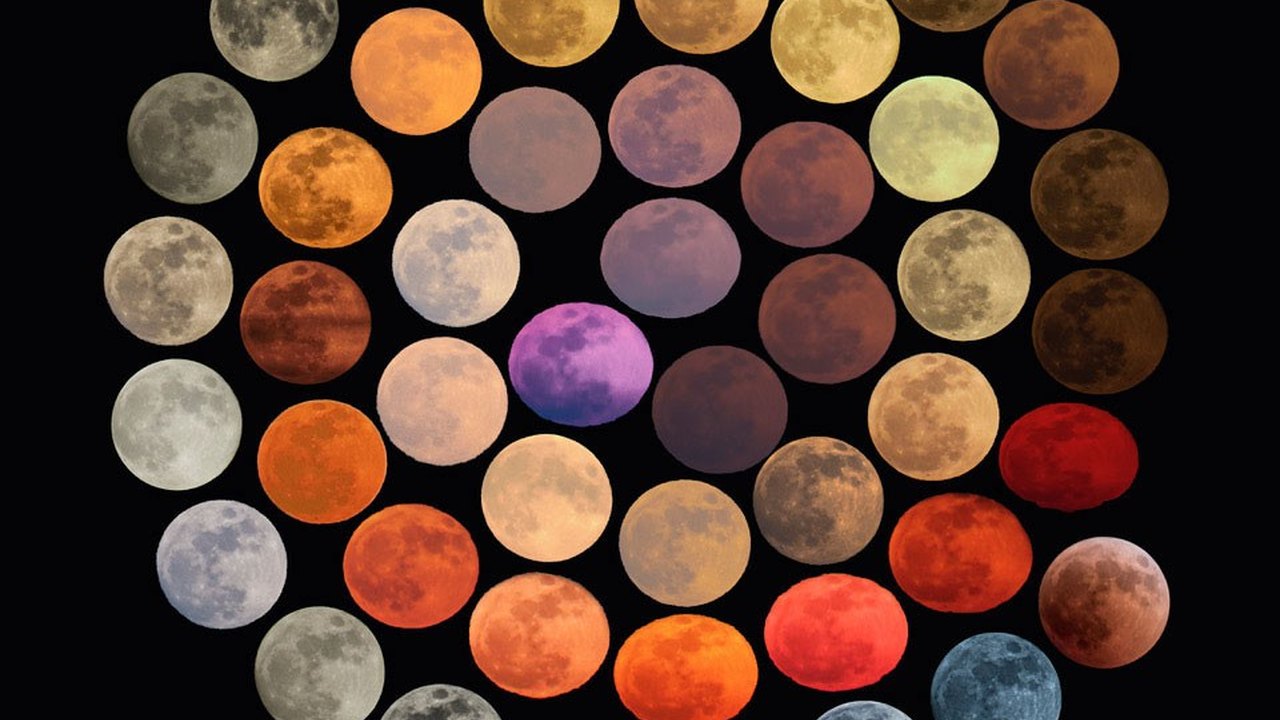
Image: NASA Science · Source image rights not independently verified · Photo source · Cropped to 16:9; original source image
Documenting Lunar Colors Over Ten Years
A recent Astronomy Picture of the Day feature highlights a collection of full moon images captured over a span of 10 years by an astrophotographer across various locations in Italy. According to the accompanying scientific explanation, the apparent color of the Moon varies significantly depending on atmospheric conditions and the celestial body's position relative to the horizon.
While the Moon typically appears as a brown-tinged gray when viewed from outside Earth's atmosphere, observers on the ground frequently record different shades.
Factors Influencing Lunar Hues
The published explanation outlines several atmospheric phenomena responsible for the observed color variations:
- Red and Yellow: These tones typically appear when the Moon is near the horizon. At this position, light travels through a longer path of Earth's atmosphere, scattering blue wavelengths away.
- Blue: A rare occurrence that can signal the presence of larger dust particles suspended in the atmosphere.
- Purple: The source notes that the cause of a purple-hued moon in the collection remains unclear, suggesting it may result from a combination of multiple optical effects.
- Faint Red (Eclipse): During the July 2018 total lunar eclipse, the Moon appeared faint red as it passed through Earth's shadow, illuminated by light refracted through Earth's atmosphere.
Practical Implications and Verification
Amateur astronomers and photography enthusiasts interested in observing or documenting lunar color variations are encouraged to monitor atmospheric clarity, dust levels, and the Moon's elevation near the horizon.
Readers can verify the original announcement, view the featured astrophotography collection, and read the professional astronomer's full commentary by visiting the official NASA Astronomy Picture of the Day archive for November 1, 2026, at science.nasa.gov.
AI-assisted reporting; source claims are attributed and have not been independently verified.
More to read
 Microgravity and the Mind: How ESA's Brain-DTI Study Maps Spaceflight's Impact on Astronaut Brains
 NASA’s APOD Highlights Earth’s ‘Spooky’ Aurora Over Iceland’s Hverir Geothermal Field
 New Weather System Forms Over Bay of Bengal Following Cyclone Arnab
 Ray Parlour Backs Arsenal Teenager Max Dowman After Carabao Cup Red Card
Trending on GlobeWire Daily
Selected from recent coverage and related topics; not live search rankings.
Ray Parlour Backs Arsenal Teenager Max Dowman After Carabao Cup Red Card Pressure Mounts on Aberdeen Manager Stephen Robinson After Falkirk Defeat
 Callum McGregor Backs Jota and Kasper Hogh After Dundee United Draw
 Izzy Christiansen Praises Everton After Carabao Cup Victory Over Newcastle
 Everton Manager David Moyes Praises Squad Mentality After Carabao Cup Win
 Sunderland Face Premier League Relegation Battle Amid European Campaign