Giant Icy World Beyond Pluto Discovered as Potential Dwarf Planet Candidate
· GlobeWire Daily Editorial Desk · Source: www.sciencedaily.com

Image: ScienceDaily · Photo source · Resized and letterboxed to 16:9; no AI generation
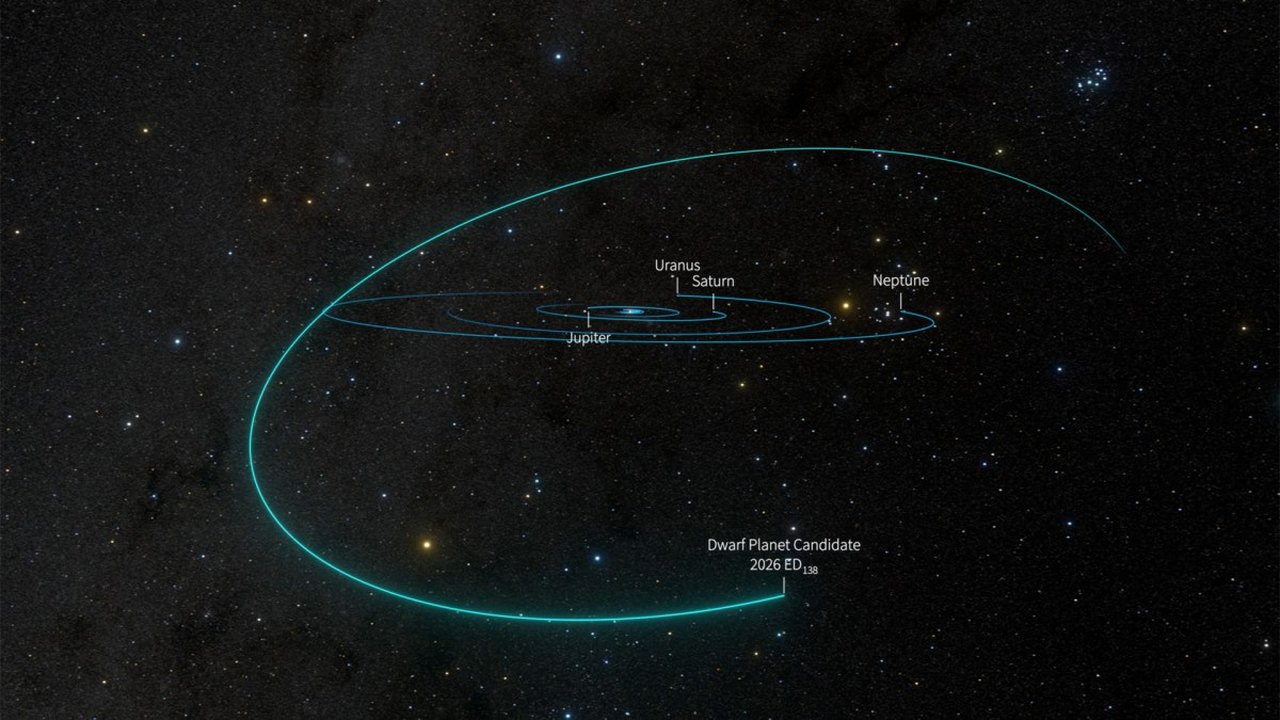
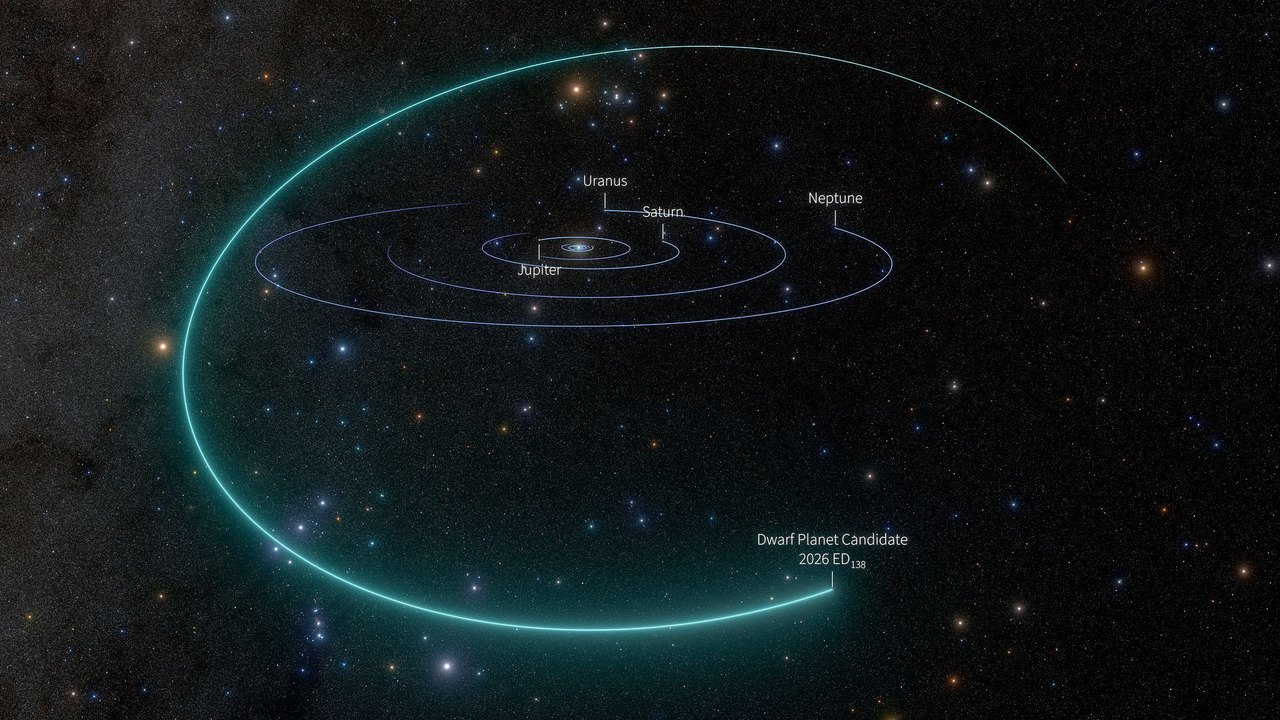
Astronomers have identified a massive icy object beyond Pluto, temporarily designated 2026 ED138, which could become our solar system's sixth officially recognized dwarf planet. Reported by researchers using the Simonyi Survey Telescope at the NSF-DOE Vera C. Rubin Observatory, the find represents the largest trans-Neptunian object discovered in about two decades.
Discovery and Verification
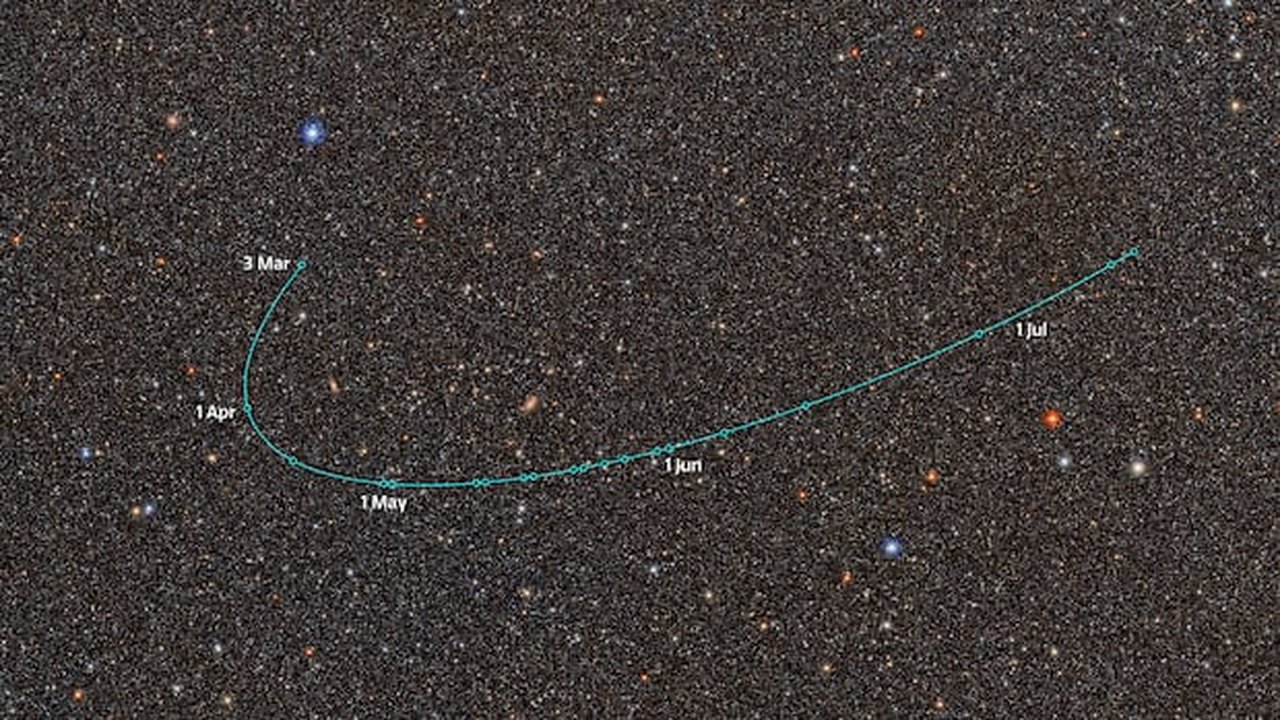
The object was initially identified on the evening of October 13 by Matthew Holman, a senior astrophysicist at the Harvard & Smithsonian Center for Astrophysics. Holman utilized specialized software developed with Kevin Napier to analyze observations gathered earlier in 2026. To verify the finding, University of Washington astronomy professor Mario Jurić examined stored Rubin data and located 20 additional detections, while historical records revealed images dating back to 2016. These combined observations enabled researchers to reconstruct over a decade of the object's orbital motion.
Characteristics and Dwarf Planet Status
- Distance: Located approximately 46 astronomical units (au) from the Sun, compared to Pluto's average of 40 au.
- Size Estimates: Current calculations suggest a diameter ranging from 600 to 1,500 kilometers.
- Classification Challenge: While its size implies sufficient gravity to form a round shape, formal confirmation as a dwarf planet by the International Astronomical Union requires further observations to establish its exact dimensions.
Why It Remained Hidden
ED138 orbits near the plane of the Milky Way, where millions of background stars create a crowded field that previously hindered detection. The Rubin Observatory overcame this challenge by combining advanced computer algorithms with repeated sky observations to track subtle positional changes.
Practical Implications and Verification
This discovery marks an early success for the Rubin Observatory ahead of its Legacy Survey of Space and Time (LSST), which began in June 2026. Researchers note that the observatory's capabilities allow scientists to both discover new bodies and "precover" them in historical image archives. Interested individuals can explore the object's orbit using the interactive Orbitviewer web application. Official findings and ongoing research updates can be verified through announcements from the NSF-DOE Vera C. Rubin Observatory and participating institutions like the University of Washington.
AI-assisted reporting; source claims are attributed and have not been independently verified.
More to read
 New Vera C. Rubin Telescope Spots Icy Candidate Beyond Pluto That Could Become a Dwarf Planet
 Researchers May Have Discovered the 6th Dwarf Planet Candidate ED138
 Astronomers Identify Potential New Dwarf Planet in Our Solar System
 World's oldest recorded giant otter, Gordito, dies at 19