ISRO Employee Associations Seek Official Clarification Amid Space Sector Privatisation Push
· GlobeWire Daily Editorial Desk · Source: news.abplive.com
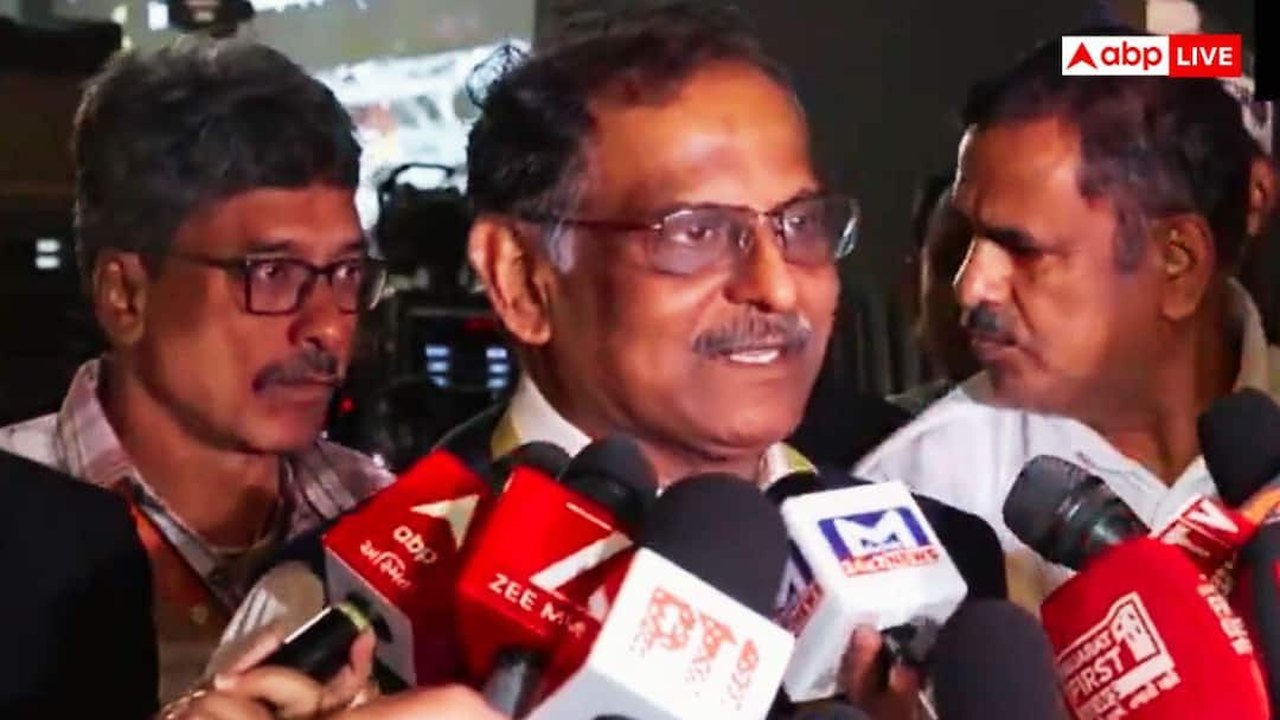
Image: Deepika Bhatt · Photo source · Cropped to 16:9; original source image
Employee associations representing approximately 5,000 workers across several major Indian Space Research Organisation (ISRO) centres have formally written to top leadership seeking formal clarification regarding the long-term scope of the government's space sector privatisation initiatives. The five-page communication was directed to ISRO Chairman and Department of Space Secretary V Narayanan following recent industry statements concerning the future manufacturing of launch vehicles.
Background of Private Participation
Since 2020, the Indian government has actively encouraged private sector involvement across the national space ecosystem. Under this broader policy framework, commercial entities are permitted to design, manufacture, and operate space systems, allowing ISRO to increasingly direct its institutional focus toward fundamental research, exploration, and advanced technology development. Employee representatives have emphasized that they support legitimate private sector participation and commercialisation in principle.
However, anxieties within the workforce heightened following public remarks by IN-SPACe Chairman Pawan Goenka at a recent industry summit, where he indicated that ISRO would eventually transition away from manufacturing launch vehicles, leaving that production work to private enterprises or public sector undertakings.
The letter to leadership was signed by nine representatives from major facilities, including the Vikram Sarabhai Space Centre (VSSC), Satish Dhawan Space Centre (SDSC), U R Rao Satellite Centre (URSC), Liquid Propulsion Systems Centre (LPSC), Space Applications Centre (SAC), National Remote Sensing Centre (NRSC), and the ISRO Propulsion Complex (IPRC). Combined, these associations represent roughly 27 percent of ISRO's stated workforce of 18,100 personnel.
Specific Transfers and Workforce Concerns
The associations pointed to several ongoing and completed technology transfers as the basis for their request for a formally defined long-term policy. These include the transfer of Small Satellite Launch Vehicle (SSLV) technology and production to Hindustan Aeronautics Limited (HAL), alongside efforts involving the LVM3 and PSLV launch vehicles. Additionally, reports regarding the potential relocation of routine satellite manufacturing and the operation of new infrastructure—such as the Space Launch Complex at Kulasekarapattinam—have contributed to workforce uncertainties.
Employees have expressed concern that transferring core engineering, integration, and manufacturing operations outside the public institution could risk eroding decades of accumulated institutional knowledge, technical expertise, and safety practices. Furthermore, the letter highlights fears regarding future in-house workloads, career progression opportunities, promotion pathways, and potential workforce redeployment if routine manufacturing is permanently shifted to external contractors.
Strategic Autonomy and Future Outlook
Beyond internal staffing implications, the associations raised questions concerning strategic autonomy and oversight. They argue that maintaining critical launch-vehicle development and testing capabilities within a dedicated public institution preserves rigorous accountability and quality control safeguards.
Practical Implications and Verification
For observers and stakeholders tracking India's aerospace sector, the primary confirmed development is the formal dialogue initiated by internal employee groups seeking a clear demarcation of responsibilities between ISRO and commercial entities.
- What is Confirmed: Representatives from nine ISRO center employee associations representing about 5,000 workers sent a five-page letter to the ISRO Chairman requesting explicit policy clarification regarding the future division of launch vehicle manufacturing and operational responsibilities.
- What Remains Unknown: The Department of Space has not yet released a formal public response detailing the final boundaries of future technology transfers or structural workforce adjustments.
- How to Verify: Readers can review the original reporting and monitor official Department of Space updates via the ABP Live Report.
AI-assisted reporting; source claims are attributed and have not been independently verified.
More to read
 ISRO Prepares GSLV-F17 Rocket to Launch EOS-05 Earth Observation Satellite
 How NASA's PACE Satellite Is Transforming Fall Foliage Tracking from Space
 NASA's Hubble Space Telescope Lays Groundwork for Future Roman Space Observations
 NASA Releases Preliminary Artemis II Lunar Science Report Highlighting Crew Observations and Deep-Space Data
Related coverage
Related reporting available at publication.
ISRO Prepares GSLV-F17 Rocket to Launch EOS-05 Earth Observation SatelliteHow NASA's PACE Satellite Is Transforming Fall Foliage Tracking from SpaceNASA's Hubble Space Telescope Lays Groundwork for Future Roman Space ObservationsNASA Releases Preliminary Artemis II Lunar Science Report Highlighting Crew Observations and Deep-Space Data NASA's Lucy Spacecraft Enters Unexplored Jupiter Trojan Asteroid Region
 NASA's NEO Surveyor Sunshade Passes Inspection in Colorado Ahead of Asteroid-Hunting Mission