NASA’s $2 B Space Reactor‑1 Freedom: A Long‑Awaited Leap Toward Nuclear‑Powered Mars Missions
· GlobeWire Daily Editorial Desk · Source: www.technologyreview.com

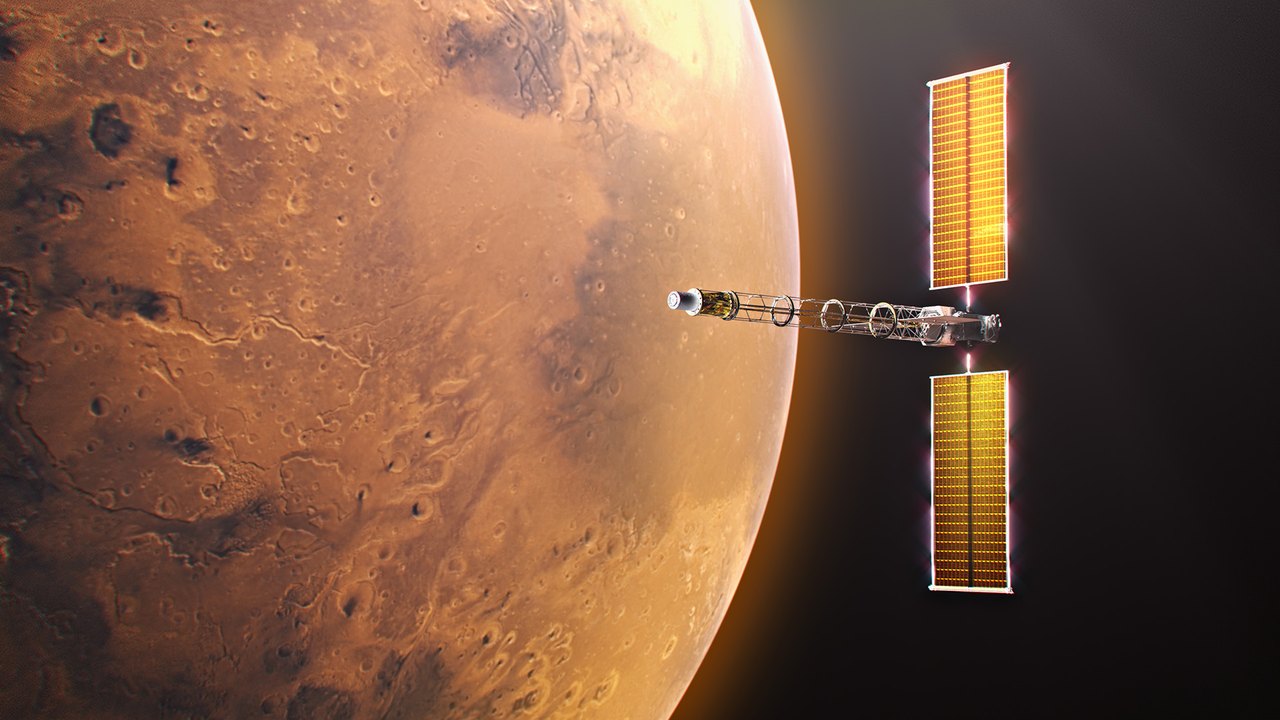
Image: MIT Technology Review · Photo source · Resized and letterboxed to 16:9; no AI generation
NASA’s $2 B Space Reactor‑1 Freedom: A Long‑Awaited Leap Toward Nuclear‑Powered Mars Missions
NASA has announced plans to build and launch *Space Reactor‑1 Freedom*, the first nuclear‑reactor‑powered interplanetary spacecraft, with a target launch by the end of 2028. The project, worth roughly $2 billion, aims to demonstrate that a compact fission reactor can provide the high power density needed for deep‑space propulsion, potentially shortening travel time to Mars and reducing astronauts’ exposure to cosmic radiation.
Why Nuclear Power Matters
Conventional chemical rockets deliver limited thrust and require large amounts of propellant, which translates into long transit times and high radiation doses for crew. A nuclear reactor can generate continuous, high‑energy output, enabling more efficient propulsion systems such as nuclear thermal or nuclear electric engines. If successful, *Freedom* could pave the way for faster, safer crewed missions to Mars and beyond.
Historical Context
The United States has pursued nuclear space propulsion intermittently for 75 years, with programs like the *Nuclear Engine for Rocket Vehicle Application* (NERVA) in the 1960s and the *Space Nuclear Thermal Propulsion* (SNTP) studies in the 1990s. Each initiative faced technical, political, and budgetary hurdles that halted progress. *Freedom* represents a renewed commitment, backed by recent advances in reactor safety, materials science, and compact power systems.
Current Status
NASA’s preliminary design phase is underway. Engineers are refining the reactor core, shielding, and propulsion architecture. The project will undergo a series of ground‑based tests, including a prototype reactor testbed and a simulated space environment chamber. Funding approval is pending from Congress, and the agency has requested a 2025 budget allocation to move the program into the detailed design phase.
Practical Implications
- Mission Duration: A nuclear‑powered vehicle could cut a Mars transit from ~9 months to 6–7 months.
- Radiation Protection: Continuous power generation allows for more robust shielding, reducing crew radiation exposure.
- Payload Capacity: Higher thrust enables larger cargo loads, supporting habitat modules and scientific instruments.
- Technology Spin‑Offs: Advances in reactor miniaturization could benefit terrestrial power grids and medical imaging.
How to Verify the Announcement
- Official NASA Press Release – Check the NASA website’s news section for the *Space Reactor‑1 Freedom* announcement.
- Congressional Budget Documents – Review the 2025 budget request for the Space Technology Mission Directorate.
- Industry Conferences – Look for presentations at the AIAA Space 2026 conference where NASA will discuss design milestones.
Uncertainties
- Regulatory Approval – Nuclear propulsion requires stringent safety reviews from the Nuclear Regulatory Commission.
- Technical Readiness – Key components such as high‑temperature fuel cladding and radiation‑hard electronics are still in development.
- Political Will – Funding and policy support may fluctuate with changing administrations.
Bottom Line
While *Freedom* is still in the planning stage, its successful launch would mark a historic milestone in space exploration, offering a new paradigm for interplanetary travel. The project’s progress will be closely watched by the scientific community, policymakers, and the public.
Keywords
NASA, Space Reactor‑1 Freedom, nuclear propulsion, Mars mission, interplanetary spacecraft, fission reactor, space technology, deep‑space travel, radiation protection, space policy
AI-assisted reporting; source claims are attributed and have not been independently verified.
More to read
 NASA Advances Nuclear-Powered 'SR-1 Freedom' Spacecraft Ahead of 2028 Launch
 SpaceX Shifts Focus Away From Traditional NASA Contracts Toward AI and Starship, Raising Questions for US Space Policy
 NASA Tests Powerful Lithium-Fed Thruster Prototype for Potential Deep Space Missions
 NASA's Second Year-Long Mars Simulation Mission Concludes in Houston
Trending on GlobeWire Daily
Selected from recent coverage and related topics; not live search rankings.
 Madhya Pradesh Government Plans Revenue Generation from 117-Year-Old Edward Villa in Mumbai Through Leasing
 iPhone 18 Pro Named TechRadar Product of the Year 2026
 Google Project Suncatcher Runs Gemma 4 AI on Orbiting Satellite and Receives First Response
 Gender Disparities in Eye Care Access Across India Examined
 Satellite Images Show Cyclone Arnab Weakening Over India As New System Brews
 Expanding Green and Blue Spaces Crucial for India's Economic and Public Health, Reports Indicate