REA Project Connects AI Agents to Reverse Engineering Tools for Binaries and Applications
· GlobeWire Daily Tech Desk · Source: github.com
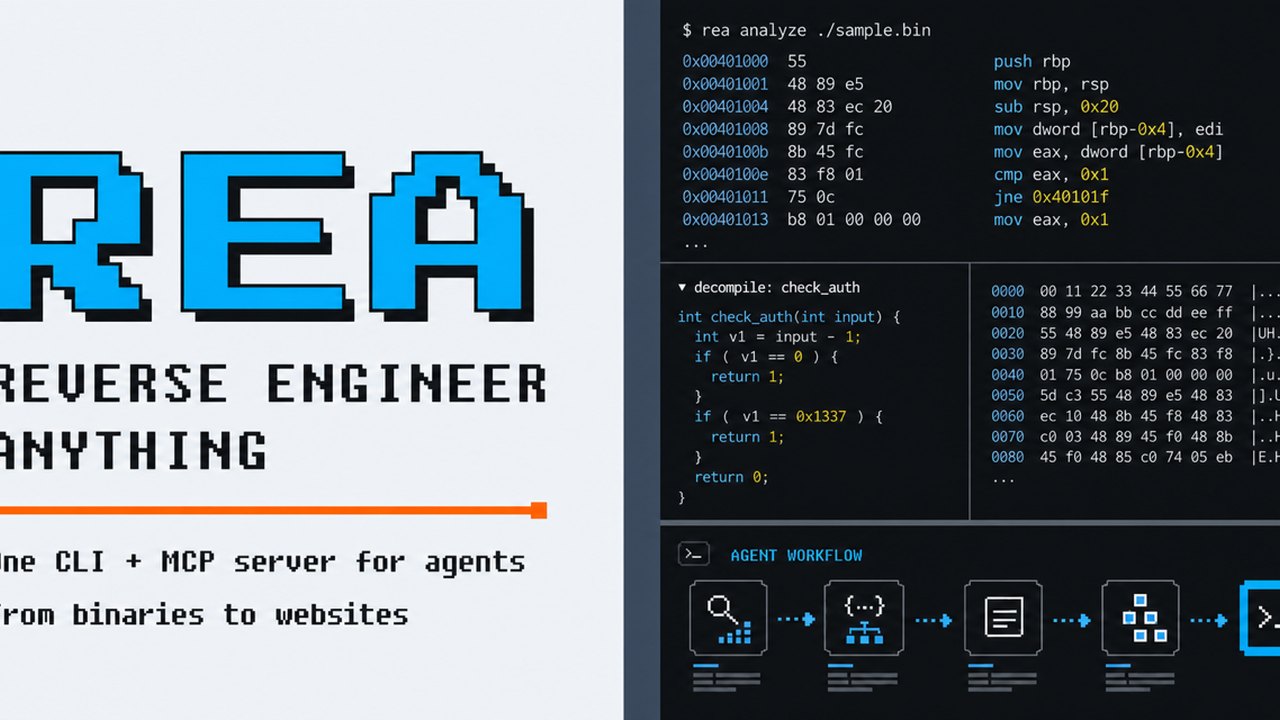
Image: github.com — Creative Commons
Overview of the REA Integration
A software project named REA has been documented as a Model Context Protocol (MCP) server and command-line tool designed to connect AI agents with reverse engineering and code inspection utilities. According to project documentation, the tool aims to help developers analyze application behavior, inspect native binaries, JavaScript or Electron applications, .NET assemblies, and websites without requiring source code.
Published documentation indicates that analysis runs locally on the user's machine, returning findings accompanied by supporting evidence and stated limitations.
Core Capabilities and Analysis Engines
According to the official guides, REA supports multiple workflows depending on the target type:
- Static Analysis: JavaScript and .NET inspections can run without external native analysis engines.
- Native Binaries: Deep native binary analysis can integrate with established reverse-engineering tools such as Hopper, Ghidra, IDA, or Kuna, depending on user configuration and platform support.
- Web and API Sessions: Recorded browser requests and responses can be converted into tools to export environments intended for reinforcement learning tasks or agent evaluation.
Setup routines register REA's MCP server with compatible AI agents—including clients like Claude Code, Cursor, and Gemini CLI—while installing workflow instructions and backing up existing configurations.
Practical Implications and Verification
Users exploring the project should note several operational considerations:
- Prerequisites: The software requires specific Node.js versions (22.x, 24.x, or 26.12.1+) alongside npm. Certain Linux operations require a procps-compatible `ps` utility for process ownership checks.
- Licensing Responsibilities: The project documentation emphasizes that REA does not grant licenses for commercial tools such as IDA Pro or Hopper. Operators remain legally responsible for obtaining authorized licenses for any third-party software they employ.
- Intended Use: The repository specifies that the software is intended for lawful research, education, interoperability, and the analysis of software that users own or are authorized to examine.
To verify announcements or review full configuration steps, interested parties can consult the official GitHub repository at `morluto/rea`, official release channels, or the project's dedicated documentation pages.
AI-assisted reporting; source claims are attributed and have not been independently verified.
More to read
 Keurig Alta Brewer Review: New Pod Technology Meets Espresso Capabilities
 Open-Source Tool 'Coucou' Brings AI Coding Agent Monitoring to Mac Notches and Mobile Devices
 GitHub Platform Metrics Highlight Scale With Over 225 Million Developers
 GoDaddy Introduces Airo AI Builder to Streamline Website and App Creation
Trending on GlobeWire Daily
Selected from recent coverage and related topics; not live search rankings.
 When Antibiotics Don't Work After 48 Hours: What Medical Guidance Advises
 When Human Writing Sets Off AI Detectors: What False Positives Mean for Writers
 Debate Intensifies Over Calls for United Nations Protection Force in Palestinian Territories
 Union Finance Ministry Establishes High-Level Committee to Review Indian Banking Sector
 Railway Recruitment Board Announces Station Master Recruitment 2026: Check Details
 LIC HFL Apprentice Recruitment 2026: Applications Open for 232 Vacancies