SpaceX’s Starship: Size, Power and What It Means for Lunar Missions
· GlobeWire Daily Tech Desk · Source: www.engadget.com
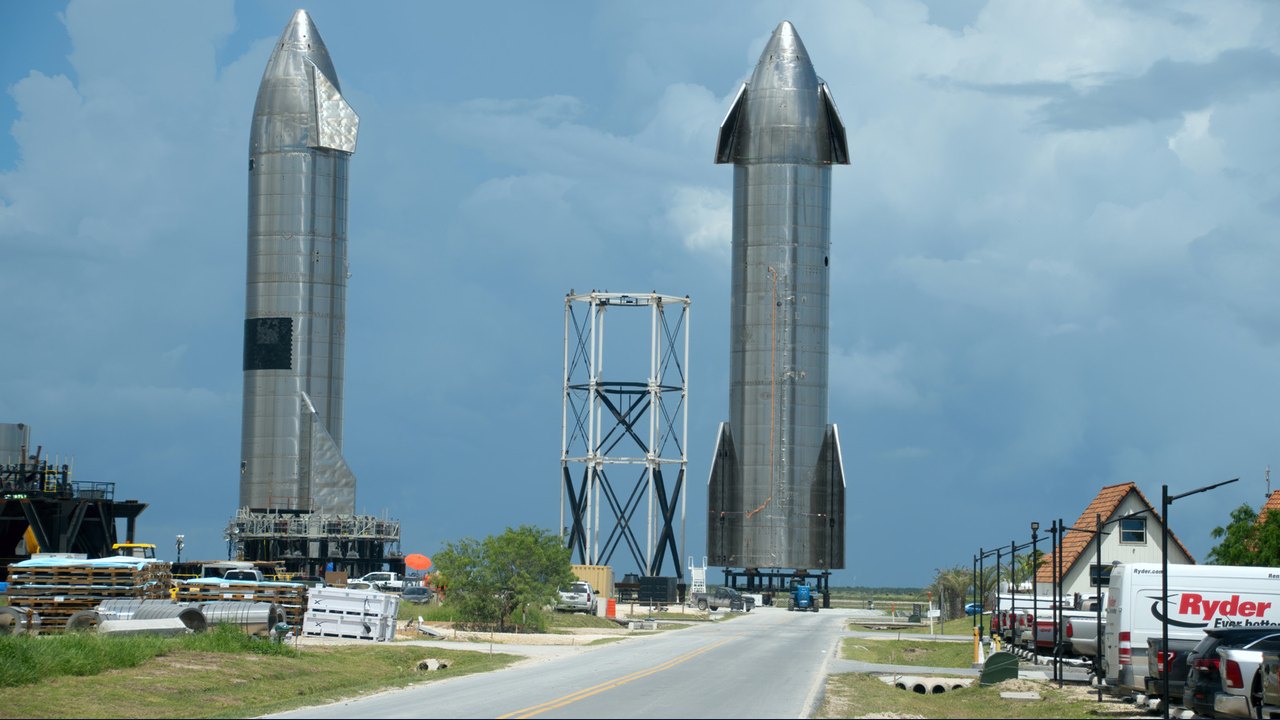
Image: Engadget · Photo source · Resized and letterboxed to 16:9; no AI generation
Overview
SpaceX’s fully‑stacked Starship launch system is the tallest and most powerful rocket ever built. The vehicle combines a 236‑foot Super Heavy booster with a 171‑foot Starship spacecraft, reaching a total height of 407 feet (124 m). The design is intended to move massive payloads and eventually ferry crews beyond low‑Earth orbit.
Physical dimensions
- Total height: 407 ft (124 m) – taller than the world’s tallest living tree, Hyperion, and about one‑third taller than the Statue of Liberty (including its pedestal).
- Booster (Super Heavy): 236.2 ft (72 m) long, housing 33 Raptor engines.
- Upper stage (Starship): 170.6 ft (52 m) long, carrying three sea‑level Raptor engines and three vacuum‑optimized Raptors.
- Payload volume: Designed for large cargo bays; exact usable volume is not disclosed by SpaceX.
Propulsion and thrust
- Super Heavy thrust: 18.1 million lbf (≈ 80.5 MN) at liftoff, generated by 33 Raptor engines that burn liquid methane (CH₄) and liquid oxygen (LOX).
- Starship thrust (in‑space): Roughly 3.5 million lbf (≈ 15.6 MN) from its six Raptor engines.
- Comparison: NASA’s Space Launch System (SLS) produces between 8.8 million and 9.4 million lbf, less than half of Starship’s booster thrust.
Propellant capacity
- Super Heavy: ~3,650 metric tons of methane/oxygen.
- Starship: ~1,600 metric tons.
- Combined: About 5,250 metric tons of propellant, enabling the vehicle to lift very heavy payloads and perform deep‑space missions.
Practical implications
- Payload capability: The sheer thrust and propellant load suggest Starship could launch payloads exceeding 100 tons to low‑Earth orbit, though SpaceX has not published a definitive figure.
- Reusability: Both stages are planned to be recovered and reflown, which could dramatically lower launch costs if the turnaround time meets SpaceX’s targets.
- Infrastructure stress: The first full‑stack launch in April 2023 damaged the launch pad, indicating that ground‑support facilities must be reinforced for routine operations.
Lunar mission architecture (reported plan)
SpaceX’s partnership with NASA for Artemis lunar landings relies on in‑orbit refueling:
- A dedicated propellant depot is launched first.
- One or more tanker Starships deliver methane/oxygen to the depot.
- The lunar lander (a Starship variant) docks with the depot, fills up, and then proceeds to the Moon.
- NASA’s Orion crew capsule launches separately, meets the refueled Starship in Earth orbit, and together they travel to lunar orbit.
- The Starship lander is expected to carry two astronauts to the lunar surface and back.
> Note: The need for orbital refueling is a reported requirement from NASA’s Artemis architecture; SpaceX has not publicly confirmed the exact number of tanker flights or depot specifications.
How to verify
- SpaceX releases: Official specifications are posted on SpaceX’s website and in launch webcast briefings.
- NASA documents: The Artemis program’s public architecture diagrams and NASA’s “Human Landing System” contracts outline the refueling concept.
- Independent analysis: Aerospace analysts (e.g., NASA’s Independent Review Team) regularly publish comparative thrust tables and payload estimates that can be cross‑checked.
Bottom line
Starship’s unprecedented height and thrust make it a game‑changer for heavy‑lift and deep‑space missions, but its operational success hinges on reliable reusability, robust ground infrastructure, and a functional orbital refueling chain for lunar flights.
--- *All figures are taken from SpaceX and NASA public statements. Unconfirmed future launch dates (e.g., September 28 2026) are presented as reported claims, not verified events.*
AI-assisted reporting; source claims are attributed and have not been independently verified.
More to read
 Slate vs. Ford Fathom EV Trucks: A Contrast in Infotainment Strategy
 How to Watch The Gilded Age Season 4 Online: Streaming Options and Release Dates
 Why Your AirPods Battery Drains Fast and How to Fix It
 Quordle Sunday Puzzle (Nov 1 2026) – Hints Reveal Vowel Count, Repeated Letter and Letter Restrictions
Trending on GlobeWire Daily
Selected from recent coverage and related topics; not live search rankings.
 Ducati Panigale V4: Motorcycle Specifications, Facts and Verification Guide
 Aprilia RXV/SXV: Motorcycle Specifications, Facts and Verification Guide
 Mitsubishi Outlander: Car Specifications, Facts and Verification Guide
 Leapmotor C11: Car Specifications, Facts and Verification Guide
 iPhone 15: Smartphone Specifications, Facts and Verification Guide
 Sony Ericsson Xperia X10 mini: Smartphone Specifications, Facts and Verification Guide