Lithuanian Forest Foragers Link Solitary Mushroom Gathering to Cross-Border Trade
· GlobeWire Daily World Desk · Source: bioengineer.org
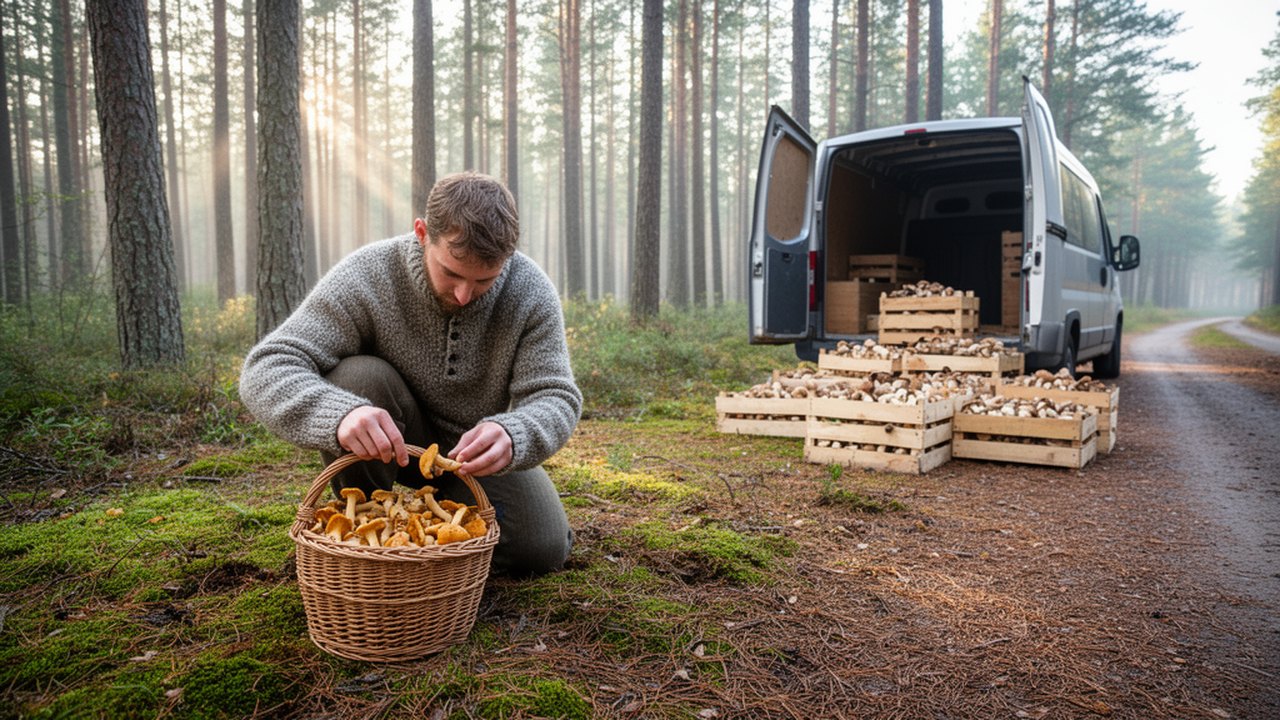
Image: BIOENGINEER.ORG · Photo source · Resized and letterboxed to 16:9; no AI generation
An exploratory ethnobiological study examines how wild mushroom harvesting in southeastern Lithuania's Dzūkija region bridges solitary foraging with international commercial supply chains. Reported in the Journal of Ethnobiology and Ethnomedicine in 2026, the research by Irfan Ullah, Andrea Pieroni, and colleagues details how autumn fungus collection operates as both a community-wide cultural phenomenon and a decentralized economic engine feeding into cross-border European distribution networks.
Study Overview and Methodology
- Location and Timing: Conducted in October 2025 across the heavily forested region of Dzūkija near Varėna, Lithuania.
- Participants: Field interviews covered thirty-four local foragers—twenty women and fourteen men with an average age of fifty-six.
- Scope: The investigation documented eighteen distinct fungal taxa, primarily from the Boletaceae, Suillaceae, and Russulaceae families, found across sandy pine woodlands.
Solitary Practices and Decentralized Trade
- Independent Foraging: Despite shared regional enthusiasm, participants gather mushrooms strictly on an individual basis within forest parcels near their homes without formal collection schedules or cooperative groups.
- Cross-Border Commerce: Rather than utilizing centralized purchasing depots, local foragers sell their daily harvests directly to a dense network of Polish-speaking intermediaries who aggregate the produce for wholesale distribution into Poland and wider Western European markets.
Ecological Knowledge and Policy Recommendations
- Embodied Wayfinding: Applying anthropologist Tim Ingold's theoretical concepts, the authors describe how gatherers navigate unmarked pine stands through skilled, embodied wayfinding and sustained perceptual engagement.
- Methodological Limitations: The authors note that findings are based on a single autumn season and a purposive sample of thirty-four individuals, serving as an exploratory study rather than a statistically representative national survey.
- Conservation and Education: Researchers recommend integrating foraging traditions into environmental education, engaging experienced pickers in citizen science, and maintaining unrestricted public forest access to preserve living ecological practices.
To verify the original findings, readers can consult the published study in the Journal of Ethnobiology and Ethnomedicine under DOI: 10.1186/s13002-026-00958-6.
AI-assisted reporting; source claims are attributed and have not been independently verified.
More to read
 Jimmy Lang: The Pioneer Recognized as Football's First Cross-Border Professional
 MetaComp Scales StableX Agentic Network for Cross-Border Payments in ASEAN
 Cyber Criminals Target Rural Bihar to Source Old Phones for Cross-Border Fraud
 Russia-Ukraine Peace Talks Conclude Without Breakthrough Amid Cross-Border Drone Strikes