Fake AI Helen Zille Booze ‘Ban’ for Under-25s Leaves South African Youth Stressed
· GlobeWire Daily Editorial Desk · Source: www.news24.com
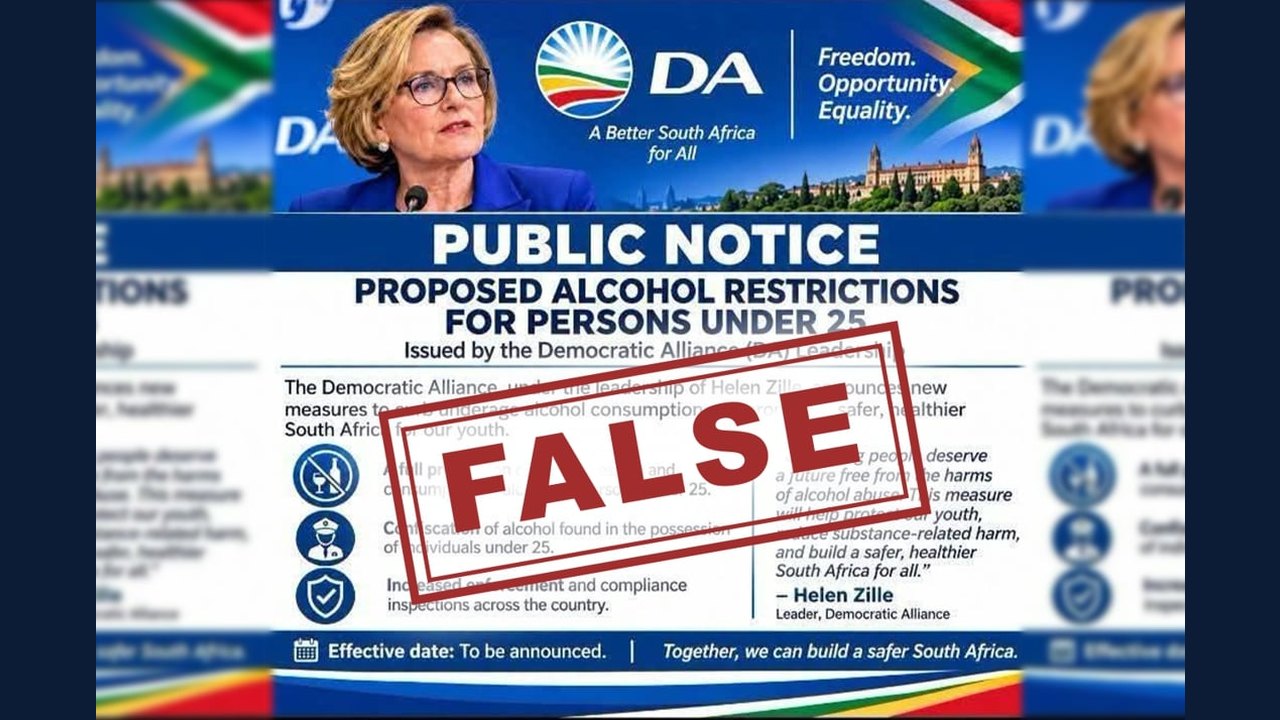
Image: Andrew Thompson · Photo source · Resized and letterboxed to 16:9; no AI generation
A viral image circulating on social media falsely claims that Democratic Alliance (DA) mayoral candidate Helen Zille and her party plan to ban alcohol possession and consumption for South Africans under 25. News24 investigated the claim and confirmed the notice was AI-generated, with no such policy existing.
Origins of the Viral Claim
The fabricated notice began spreading widely following the 4 November local government elections. Distributed across platforms including X, TikTok, Facebook, Instagram, and WhatsApp, the image featured a bold heading announcing proposed alcohol restrictions, alongside an AI-generated portrait of Zille and the party logo.
- High Engagement: Posts on X and TikTok accumulated tens of thousands to hundreds of thousands of views.
- Mixed Reactions: Some social media users expressed enthusiastic support for stricter alcohol controls, while others criticized the supposed clampdown or questioned its authenticity.
- AI Detection: An image provenance check using OpenAI's verification tool identified an embedded SynthID watermark, confirming the graphic was generated using AI tools.
Practical Implications and Verification
Beyond the artificial origin of the image, the practicalities of such a restriction highlight its falsehood:
- Legal Authority: South Africa's legal minimum drinking age is 18 under the Liquor Act. Municipalities, which were contested in the recent local government elections, lack the authority to change national liquor laws.
- Legislative Process: A nationwide ban for adults up to age 24 would require legislative changes passed through Parliament and presidential assent.
- DA Stance: While the DA has addressed alcohol-related harm and municipal liquor outlet regulation in its manifestos, it has never proposed a blanket prohibition for adults under 25.
To verify similar claims, citizens should check official party manifestos, consult established fact-checking desks, and use digital verification tools to inspect suspicious images.
AI-assisted reporting; source claims are attributed and have not been independently verified.
More to read
 Race to Replant Five South African Baobabs After Export Blocked
 Japan Considers Lifting 76-Year Ban on US Fresh Potatoes Under US Pressure
 UK Government Plans Ban on Social‑Media Access for Under‑16s, Targeting Spring 2027
 South African Winemakers Embrace Conservation for Business Resilience Amid Climate Pressures