Race to Replant Five South African Baobabs After Export Blocked
· GlobeWire Daily Climate Desk · Source: www.theguardian.com
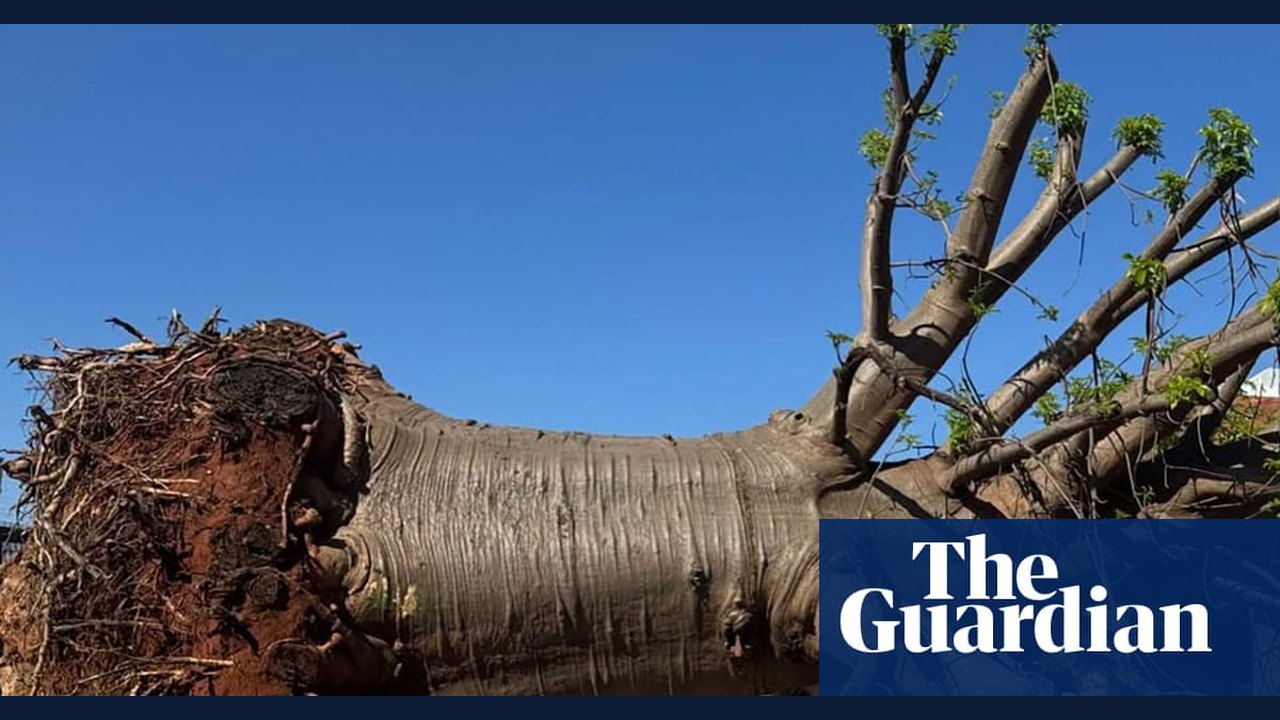
Image: the Guardian · Photo source · Resized and letterboxed to 16:9; no AI generation
Environmentalists and experts in South Africa are working to replant five centuries-old baobabs after authorities intercepted the 20-tonne trees before they could be exported to Georgia.
According to reports, the trees were dug up without the necessary permits and had been stranded at a Durban warehouse since July. The Department of Forestry, Fisheries and the Environment confirmed the intended destination was Georgia, though the buyer was not named. A criminal case has been opened against the owner of a landscaping company allegedly linked to the illegal harvesting and transport.
Rescue and Replanting Efforts
- Arrival at Reserve: The baobabs arrived at a reserve in Timbavati, north-eastern South Africa, on Wednesday.
- Stabilisation: The trees will be supported by cables and protected by electric fences to prevent elephant damage.
- Survival Outlook: Experts note the trees have a good chance of survival if planted quickly during the spring transition.
Ecological and Cultural Significance
- Biodiversity Anchors: Baobabs provide shelter for bats, bush babies, parrots, and hornbills, while elephants and monkeys eat their fruit.
- Protected Status: The trees are protected under South African law, requiring permits for disturbance.
- Age and Scale: Estimated to be between 200 and 300 years old, weighing 19 to 29 tonnes, and reaching up to 12.5 metres in height.
Practical Implications and Verification
Moving such large specimens requires abnormal load trucks and careful timing. Observers can verify official environmental updates through the South African Department of Forestry, Fisheries and the Environment or official statements from conservation organisations like the Baobab Foundation.
AI-assisted reporting; source claims are attributed and have not been independently verified.
More to read
 2027 NFL Draft: Examining the Five-Team Race for the No. 1 Pick
 South African Winemakers Embrace Conservation for Business Resilience Amid Climate Pressures
 Fake AI Helen Zille Booze ‘Ban’ for Under-25s Leaves South African Youth Stressed
 South African Artist Nokwazi Praises Eswatini Culture After Royal Performance