Lemo-Opuscar: New Coding Toolset Enables AI-Generated Video via Claude Code
· GlobeWire Daily Editorial Desk · Source: github.com
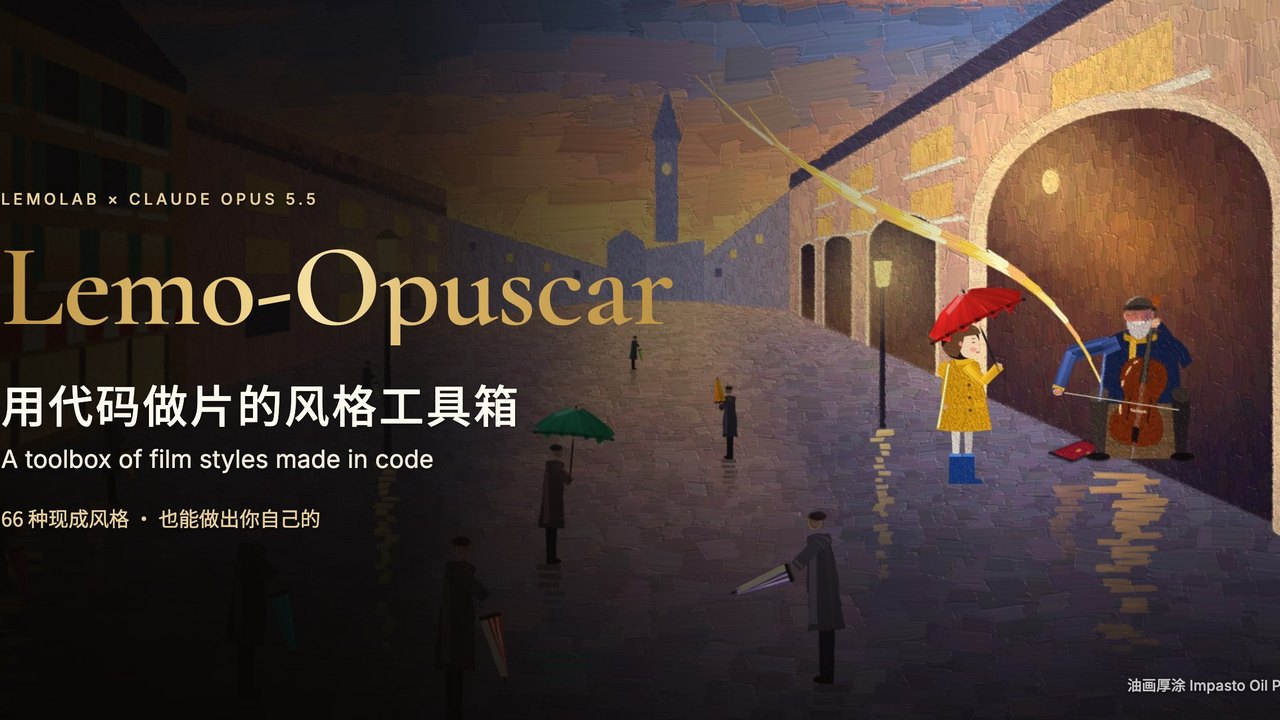
Image: GitHub · Source image rights not independently verified · Photo source · Cropped to 16:9; original source image
A Code-First Approach to Video Production
A new toolset named "lemo-opuscar" has been released for Claude Code, allowing users to generate short films entirely through programmed instructions rather than traditional video generation models. Developed by Lemomo, the repository provides 66 distinct film styles, each paired with a demo film created by Claude Opus 5.5.
The core functionality of the toolset relies on instructing an AI agent to render visuals frame-by-frame using canvas and WebGL, while incorporating original music scores. Because the output is generated through code, the process does not utilize standard generative video AI, instead relying on the agent's ability to "direct, draw, score and mix" content in real-time.
Customization and Usage
The toolbox is designed to function as a skill within Claude Code, requiring local installation of dependencies including Node 20+, ffmpeg 7+, and Python 3.11+. Key features for users include:
- Extensive Style Library: Users can choose from 66 pre-configured styles, ranging from documentary aesthetics to stylized animations.
- Style Modification: The tool allows users to alter existing library styles—such as adjusting color palettes, pace, or sound—or create entirely new styles from a blank page based on natural language descriptions.
- Interactive Planning: The agent can be set to operate in a step-by-step planning mode, where it proposes design choices and allows users to review a storyboard or a single sample frame before rendering the full project.
- Custom Styles Persistence: Once a user creates a unique style, it is saved locally, allowing for reuse in future projects without being overwritten by library updates.
Practical Implications
Creating a film using this toolset typically takes an agent between 30 to 60 minutes and requires a significant token budget. While the library is designed specifically for Claude Opus 5.5, the author notes that performance may vary if used with other AI models.
Regarding intellectual property, the author specifies that demo films and stills provided in the repository are licensed under CC BY 4.0, provided that credit is given to LemoLab. However, users are reminded that third-party assets—specifically certain voice tracks used in the demos—may be subject to separate licensing terms. Films created by the user using the library are considered the user's property with no attribution required. Users interested in testing the tool can verify the installation guides and documentation on the official GitHub repository at github.com/lemomo-ai/lemo-opuscar.
AI-assisted reporting; source claims are attributed and have not been independently verified.
More to read
 US Tech Sector Faces Market Volatility Amid Heightened AI Spending Scrutiny
 GitHub’s ‘Ponytail 5’ lets AI agents refactor code like a senior developer, slashing code size and execution cost
 Mainplane Launches Open-Source Ecosystem for AI Agent Management
 New Community Guide Offers Structured Learning Path for Claude Code Users
Trending on GlobeWire Daily
Selected from recent coverage and related topics; not live search rankings.
 GitHub Expands Copilot Code Review with 'Max' Effort Level and Automated ApprovalsUS Tech Sector Faces Market Volatility Amid Heightened AI Spending Scrutiny
 Manchester United Manager Michael Carrick Addresses Friction with Captain Bruno Fernandes
 Open Genjutsu Launches Local-First Workflow for AI-Powered Video Recasting
 Lexmount Releases Moli: A Rust-Based Headless Browser Optimized for AI Agents
 Tonga Secures Semifinal Spot with Narrow Victory Over Samoa