Making the Case for Context-Operational AI in Enterprise Decisions
· GlobeWire Daily Editorial Desk · Source: www.technologyreview.com
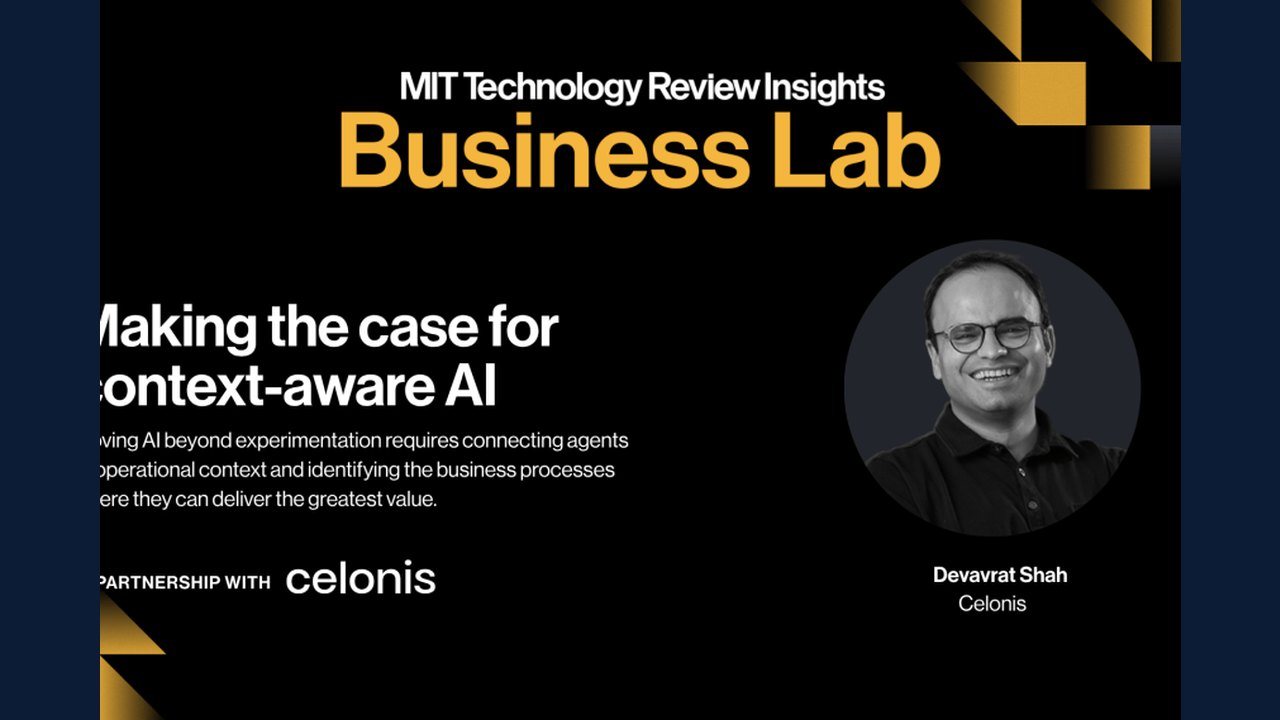
Image: MIT Technology Review · Photo source · Resized and letterboxed to 16:9; no AI generation
As organizations look to move artificial intelligence beyond basic experimentation and into everyday operations, experts argue that raw computing power alone is not enough. Without operational context regarding how a business functions, AI models risk missing key constraints, making costly errors, or consuming excessive computational resources.
In a recent discussion on MIT Technology Review's Business Lab podcast, Devavrat Shah, chief scientist of enterprise AI at Celonis, outlined the concept of "decision intelligence." Rather than operating in a vacuum, AI agents need to understand the specific roles and business conditions surrounding individual tasks.
The Role of Context in Enterprise AI
- Bridging Experimentation and Scale: Businesses are seeking clear proof of return on investment as they transition AI from pilots to core workflows.
- Operational Guardrails: A contextual layer connects AI to existing systems of record and workflow tools, ensuring models operate within defined boundaries.
- Resource Efficiency: Proper context reduces the likelihood of excessive computation caused by models trying to infer basic operational rules.
Practical Steps for Implementation
Shah recommends that organizations adopt a structured approach when introducing contextual AI into their processes:
- Identify a Specific Decision: Start with a well-defined business process and pinpoint its most challenging steps.
- Test and Measure: Evaluate whether deploying AI agents to support those specific tasks measurably improves speed and value.
- Address Workforce Education: As repetitive tasks become automated, employees must be trained to interpret AI outputs and understand their implications for strategic decision-making.
Future Outlook
Looking ahead, contextual AI could extend beyond routine operational tasks to support enterprise-wide planning in finance, marketing, sales, and workforce management. However, realizing these benefits requires careful adherence to internal governance, InfoSec protocols, and thoughtful workforce development to balance automation with human expertise.
Listeners can verify announcements and explore original insights directly through MIT Technology Review's official channels and published episodes.
AI-assisted reporting; source claims are attributed and have not been independently verified.
More to read
 Context Labs Unveils AI Distillery™ Platform for Sovereign Enterprise AI
 EDB Previews Horizontal Scaling for Postgres AI to Support Growing Enterprise Workloads
 Counting enterprise AI agents is the wrong metric, Oracle executive argues
 Microsoft Details Synthetic Data Approach for Enterprise Copilot Evaluation
Trending on GlobeWire Daily
Selected from recent coverage and related topics; not live search rankings.
 Madhya Pradesh Government Plans Revenue Generation from 117-Year-Old Edward Villa in Mumbai Through Leasing
 iPhone 18 Pro Named TechRadar Product of the Year 2026
 Google Project Suncatcher Runs Gemma 4 AI on Orbiting Satellite and Receives First Response
 Gender Disparities in Eye Care Access Across India Examined
 Satellite Images Show Cyclone Arnab Weakening Over India As New System Brews
 Expanding Green and Blue Spaces Crucial for India's Economic and Public Health, Reports Indicate