OpenRig Launches as an Open-Source System for Managing Multi-Agent AI Teams
· GlobeWire Daily Editorial Desk · Source: github.com
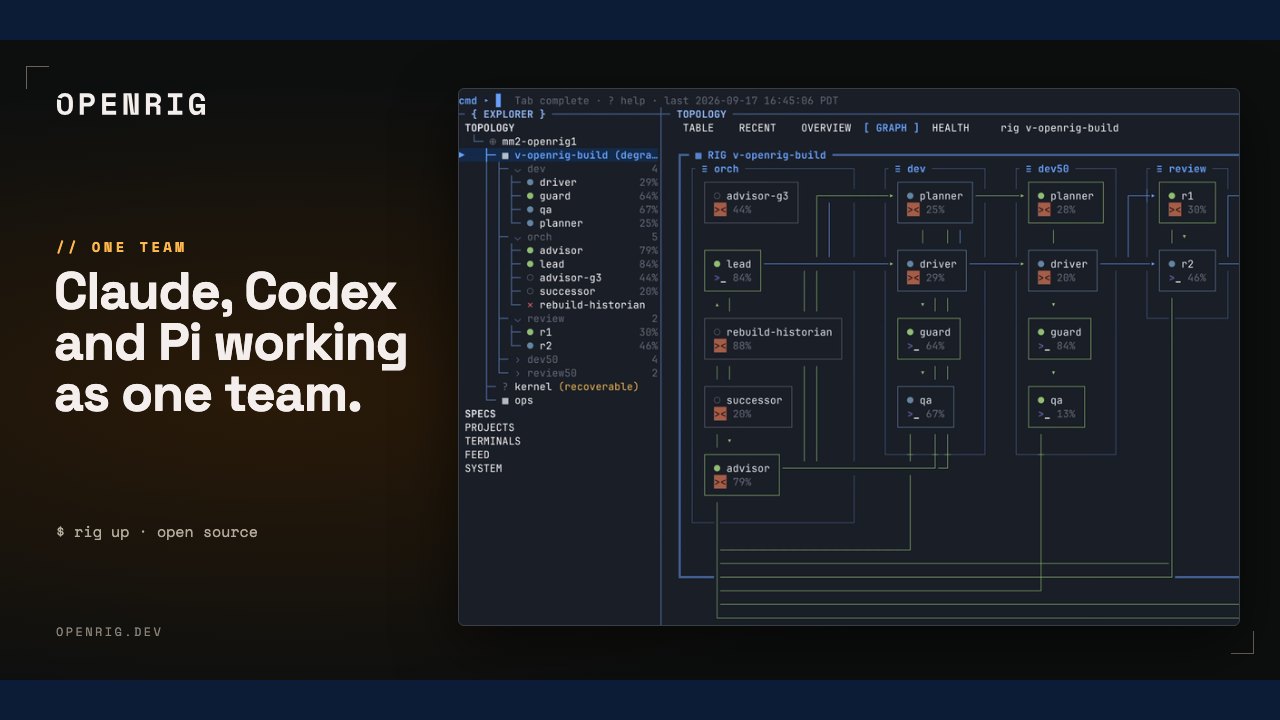
Image: GitHub · Photo source · Resized and letterboxed to 16:9; no AI generation
Overview
OpenRig is an open-source software project designed to build and run networks of AI coding agents, specifically wrapping harnesses like Claude Code and Codex into a managed system. Rather than leaving developers with scattered terminal sessions, OpenRig organizes agents into persistent teams with defined roles, shared context, and owned work. The system is available as open-source code and relies on prerequisites including Node.js 22 or 24, tmux, and macOS or Linux (with WSL2 for Windows).
Core Architecture and Capabilities
OpenRig functions as a multi-agent harness manager that coordinates how separate AI coding sessions relate to each other. Key capabilities include:
- Topology Definitions: Define agent teams and pods using YAML specifications, managing continuity policies and relationships.
- Single-Command Control: Boot and manage tmux sessions, startup files, and readiness checks using commands like `rig up` and `rig down`.
- Terminal Integration: Every agent runs within an attachable tmux session, allowing direct inspection and work.
- Monitoring and TUI: View rigs, pods, and seats using the terminal user interface (TUI) topology table and graph to inspect instance health.
- Communication Tools: Send messages across agents using `rig send`, `rig broadcast`, and `rig chatroom`.
- Topology Evolution: Grow, shrink, or launch new components dynamically as projects progress.
Available Teams and Bundles
The system offers starter configurations designed to scale with project needs, guided by a kernel operator:
- Starter: Features a builder and a reviewer for a single bounded change.
- Workshop: A rig bundle providing a lead, a builder, QA, and a reviewer for ongoing work.
- Factory: A seven-agent structure including a lead, an advisor, build, QA, design, and two independent reviewers for sustained product development.
- Specialist Teams: Includes configurations for code-review, research, and product management (pm).
Setup, Permissions, and Verification
Setting up OpenRig involves installing the `@openrig/cli` package globally via npm or Bun and running setup routines. The software configures workspace trust, activity hooks, and permission boundaries depending on the selected harness and security profile. Users can review prerequisites, execute dry runs using `rig setup --dry-run`, and verify installations by checking provider status and running diagnostic commands such as `rig doctor` and `rig ps`.
*Note: OpenRig modifies local configuration files such as `~/.tmux.conf`, workspace trust settings, and activity hooks. Users should back up relevant configuration files before initial setup.*
AI-assisted reporting; source claims are attributed and have not been independently verified.
More to read
 Diagram Design Open-Source Agent Skill Launches for Multi-Platform AI Coding Assistants
 Paperclip Offers Open-Source Orchestration for AI Agent Teams
 Cindy Open-Source AI Agent Platform: Features, Multi-Device Capabilities and Licensing Overview
 Mainplane Launches Open-Source Ecosystem for AI Agent Management
Trending on GlobeWire Daily
Selected from recent coverage and related topics; not live search rankings.
 Madhya Pradesh Government Plans Revenue Generation from 117-Year-Old Edward Villa in Mumbai Through Leasing
 iPhone 18 Pro Named TechRadar Product of the Year 2026
 Google Project Suncatcher Runs Gemma 4 AI on Orbiting Satellite and Receives First Response
 Gender Disparities in Eye Care Access Across India Examined
 Satellite Images Show Cyclone Arnab Weakening Over India As New System Brews
 Expanding Green and Blue Spaces Crucial for India's Economic and Public Health, Reports Indicate