Eight eMudhra CA Keys Compromised, Triggering Emergency Fixes Across Browsers and Software
· GlobeWire Daily Editorial Desk · Source: thehackernews.com
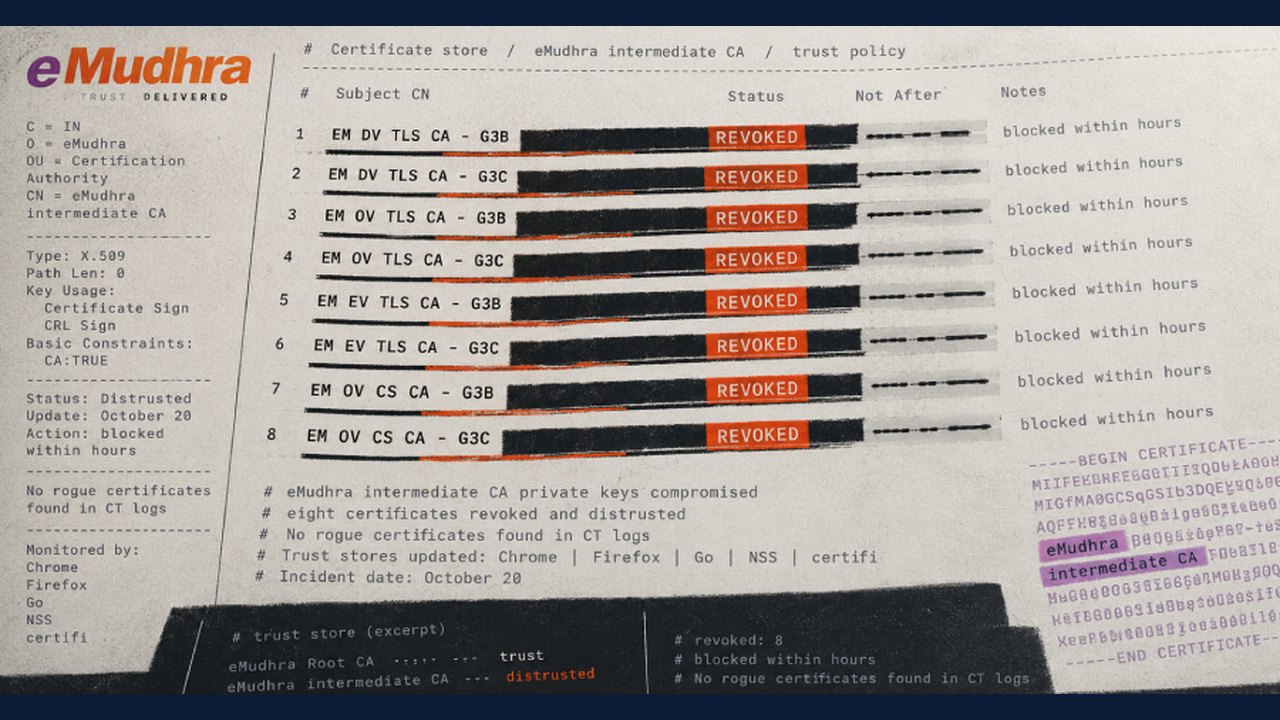
Image: The Hacker News · Photo source · Resized and letterboxed to 16:9; no AI generation
Private keys for eight eMudhra intermediate certificate authority certificates were compromised due to low randomness during an April 2025 ceremony, prompting emergency revocations and patches across major browsers, programming languages, and operating systems in October 2026.
Incident Overview and Cause
Mozilla and Google's Chrome Root Program confirmed the compromise on October 20, 2026, after a researcher reported the issue on the evening of October 17. According to Google and eMudhra, the keys were not stolen via an infrastructure breach; instead, a flaw in a key wrap and unwrap step during an April 30, 2025, generation ceremony produced a weak second set of keys alongside the intended ones. Security researchers demonstrated that the weak private keys could be easily computed from the public certificates in seconds.
Browser and Software Responses
Major browsers and software ecosystems moved quickly to mitigate the risk:
- Chrome and Firefox: Applied automated revocation lists (CRLSets and OneCRL) within hours of receiving the report on October 17.
- Operating Systems & Packages: Debian, Ubuntu, Canonical, Red Hat, and various Linux distributions released or prepared updates dropping affected root certificates, such as `emSign ECC Root CA - G3` and Sectigo's `AAA Certificate Services` root.
- Go Language: Released urgent security updates containing the eight compromised key hashes in its standard library to block untrusted chains.
- Node.js and Cloudflare: Issued updates and patched client software to protect ecosystems relying on static certificate bundles.
Practical Implications and Verification
While automated browsers handled the updates seamlessly, many applications relying on static certificate bundles (such as Python's certifi, curl, or custom containers) do not check revocation lists. Consequently, removing affected roots can break legitimate websites chaining to those roots until administrators transition to alternative hierarchies. Administrators and developers should verify whether their software environments utilize updated trust bundles, check vendor advisories from CERT-In or Red Hat, and monitor official eMudhra and browser security channels for ongoing remediation steps.
AI-assisted reporting; source claims are attributed and have not been independently verified.
More to read
 OpenClaw Releases Detailed Software Updates and Security Fixes Across Versions
 Adani Airports and IHCL Sign Agreement for Eight Airport Hotels Across Four Cities
 Aspirational Districts Programme Shows Progress Across Eight Uttar Pradesh Districts
 Android SMS of Death Vulnerability Discovered: What We Know About the Crash Bug and Coming Fixes
Trending on GlobeWire Daily
Selected from recent coverage and related topics; not live search rankings.
 Madhya Pradesh Government Plans Revenue Generation from 117-Year-Old Edward Villa in Mumbai Through Leasing
 iPhone 18 Pro Named TechRadar Product of the Year 2026
 Google Project Suncatcher Runs Gemma 4 AI on Orbiting Satellite and Receives First Response
 Gender Disparities in Eye Care Access Across India Examined
 Satellite Images Show Cyclone Arnab Weakening Over India As New System Brews
 Expanding Green and Blue Spaces Crucial for India's Economic and Public Health, Reports Indicate