Environment
Indigenous Students Retrace Lewis and Clark’s Route in Modern Wildlife Re-Survey
· GlobeWire Daily Climate Desk · Source: www.theguardian.com
Key takeawaysIndigenous students and tribal colleges are participating in a wildlife re-survey along the historic 1804 route of Lewis and Clark. Coordinated by the Smithsonian National Zoo and Conservation Biology Institute, the initiative uses motion-triggered trail cameras to document modern biodiversity and address historical omissions regarding Native contributions.
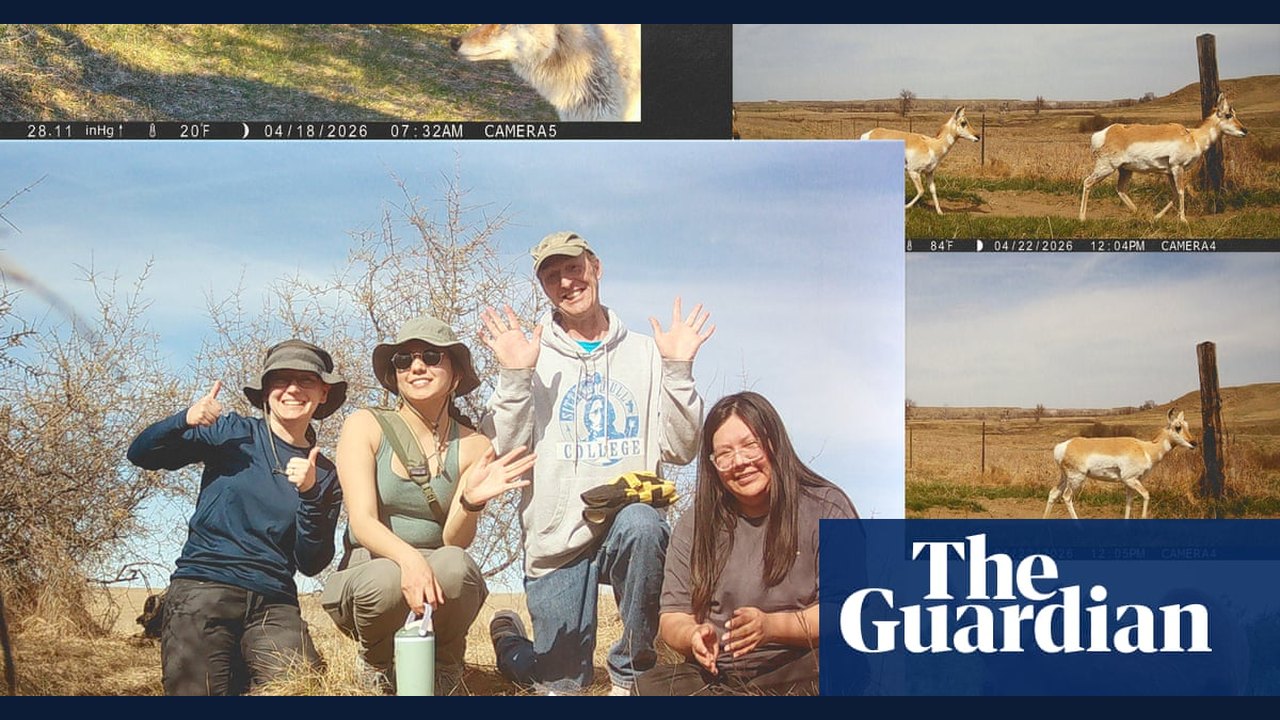
Image: the Guardian · Photo source · Resized and letterboxed to 16:9; no AI generation
Indigenous students and tribal colleges are participating in a wildlife re-survey along the historic 1804 route of Lewis and Clark. Coordinated by the Smithsonian National Zoo and Conservation Biology Institute, the initiative uses motion-triggered trail cameras to document modern biodiversity and address historical omissions regarding Native contributions.
Project Background and Goals
- Historical Context: While Lewis and Clark documented flora and fauna for political and scientific reasons, Native Americans often view the original expedition as an invasion and a prelude to forced relocation.
- Smithsonian Collaboration: Project coordinators reached out to tribal colleges along the trail to ensure Native participation, securing paid internships funded by the Smithsonian’s Women’s Committee.
- Scope: Seven tribal colleges joined to manage cameras, process data, and interpret ecological changes on their reservations.
Implementation at Standing Rock
- Students and faculty at Standing Rock installed 16 camera arrays across the 2.3-million-acre reservation in spring 2026.
- Initial community hesitation regarding data privacy and outside researchers was addressed through student involvement, helping to bridge traditional ecological knowledge with contemporary data.
- Participants captured images of elusive species such as bobcats and mule deer, offering insights into animal behavior and watershed differences.
Broader Impact and Verification
- The re-survey extends the nationwide Snapshot USA monitoring project.
- Partners have captured millions of images confirming dozens of species, including recovering populations of beavers and fishers.
- Project data will be made publicly available to support conservation, land management, and future scientific research.
Share this article
Read the original source: Indigenous students retrace Lewis and Clark’s historic journey: ‘We can’t protect what we cannot see’
AI-assisted reporting; source claims are attributed and have not been independently verified.
More to read
 COP31: Oceans and Indigenous Knowledge Take Center Stage as Climate Negotiations Enter Final Days
 Kashmir’s Traditional Potato Pits Vanish, Threatening Indigenous Himalayan Crops
 Wildlife Trusts Reach £30M Target to Purchase and Rewild Rothbury Estate in Northumberland
 Global Wildlife Trade Involves Twice as Many Species as Previously Estimated