US West Has Lost Nearly 300 Glaciers Since the 1960s Due to Climate Crisis, Study Finds
· GlobeWire Daily Climate Desk · Source: www.theguardian.com
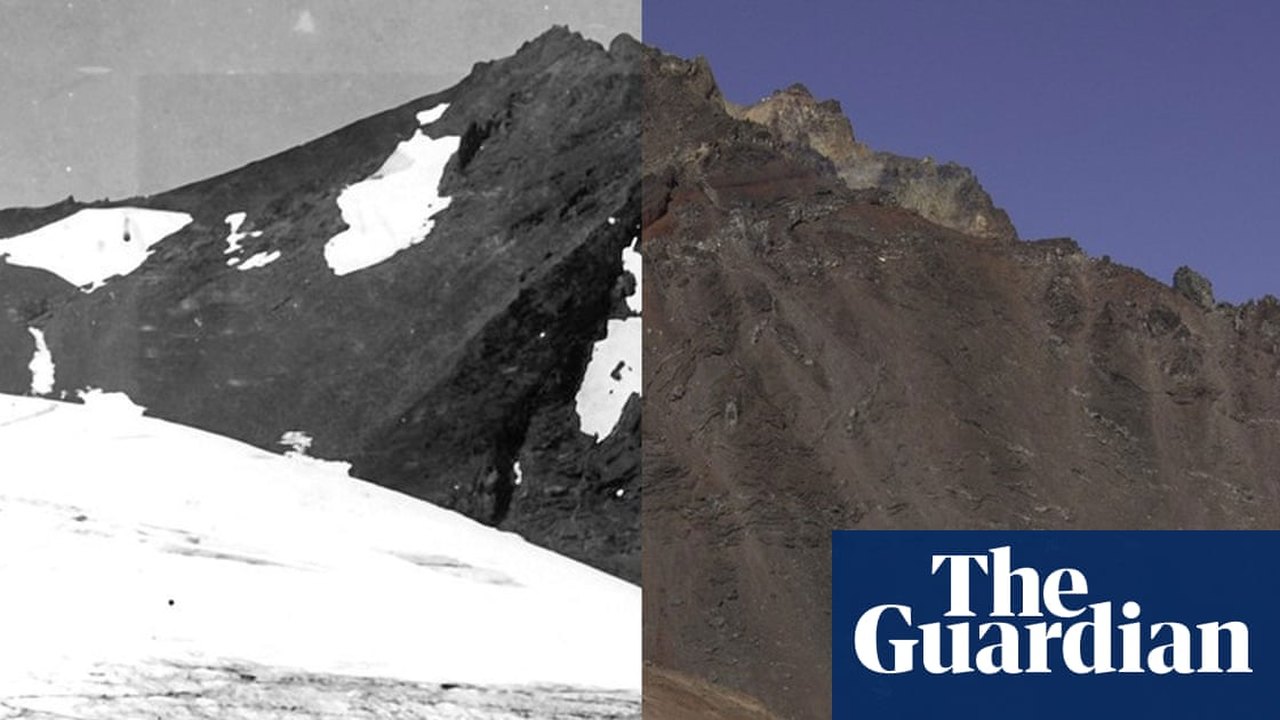
Image: www.theguardian.com — Creative Commons
A comprehensive new study reveals that the western United States has lost approximately 300 glaciers since the 1960s, driven by rising global temperatures and escalating climate change. Published in the Proceedings of the National Academy of Sciences, the research highlights a dramatic retreat of perennial ice masses across six western states, threatening regional water supplies, ecosystems, and alpine stability.
The Extent of the Ice Loss
At the midpoint of the last century, the mountains of the American west contained more than 1,450 glaciers. These formations—some dating back thousands of years in California’s Sierra Nevada, while others are remnants from the last ice age ending 11,700 years ago—provided steady meltwater for ecosystems and agriculture.
However, the new research indicates that the total area of glaciers in the US west has shrunk by a third since the 1960s. About 300 of these glaciers have functionally disappeared, meaning they have reduced to roughly the size of two football fields and no longer move under their own weight. Lead study author Andrew Fountain, a geographer at Portland State University, noted that the rate of loss is accelerating as summers grow hotter and winter precipitation increasingly falls as rain rather than nourishing snow.
Vulnerable Regions and Future Projections
Researchers utilized satellite data and aerial photography to track the recession across the lower 48 states. Smaller, south-facing glaciers experienced the most severe shrinkage, particularly those at lower elevations below 9,000 feet in the Sierra Nevada and under 6,000 feet in the Cascade range.
Scientists project that many remaining glaciers will vanish entirely within the next half century. By 2100, surviving ice masses are expected to persist only in diminished states atop the highest western peaks, such as Mount Hood and Mount Rainier.
Practical Implications and Reader Verification
- Ecosystem and Water Impacts: The retreat of alpine glaciers serves as a visible indicator of shrinking snowpacks, raising concerns for agricultural irrigation, hydroelectric power, and local drinking water sources during drought conditions.
- Safety Hazards: Beyond water supply concerns, melting ice destabilizes mountain terrain. Experts warn of increased risks from landslides and rock instability, echoing similar hazards documented in international mountain ranges.
- What is Confirmed vs. Unknown: The study confirms the historic count of 1,450 mid-century glaciers and the functional loss of roughly 300 bodies of ice based on satellite and photographic analysis. The exact timeline of future melting for every individual larger glacier remains subject to ongoing climate variables.
- How to Verify: Readers can review the peer-reviewed research findings directly through the [Proceedings of the National Academy of Sciences](https://www.pnas.org) or read the detailed interactive report published by [The Guardian](https://www.theguardian.com/environment/ng-interactive/2026/oct/23/glacier-loss-climate-crisis-west).
AI-assisted reporting; source claims are attributed and have not been independently verified.
More to read
 Federal Lawsuit Alleges EPA Failed to Regulate Cancer-Linked Pesticide Atrazine Under Clean Water Act
 Cali Biodiversity Fund Still Empty as Pharma Companies Hold Back Contributions
 Public Debate Intensifies Over UK Gasfield Approval, Climate Adaptation, and Net-Zero Strategy
 New Study Attributes Record 50,000 Summer Heat Deaths in European Cities to Climate Breakdown
Trending on GlobeWire Daily
Selected from recent coverage and related topics; not live search rankings.
 Karnataka School Education Department Extends Online Application Deadline for 2026 Teacher Recruitment to 16 November
 KRDP Recruitment 2026: Online Applications Open for 12,878 Group B and C Vacancies
 RRB Releases 2026 Station Master Recruitment Notification for 1,265 Posts
 GSSSB Work Assistant Recruitment 2026: 1,663 Vacancies, Online Applications Close October 29
 Mulugu District Recruitment 2026: Offline Applications Open for 7 AYUSH and Health Posts
 SKAU Non-Teaching Recruitment 2026: Application Deadline Extended to November 2