India Targets Domestic Manufacturing for 120 Key Items to Reduce Import Dependence
· GlobeWire Daily Public Services Desk · Source: navbharattimes.indiatimes.com
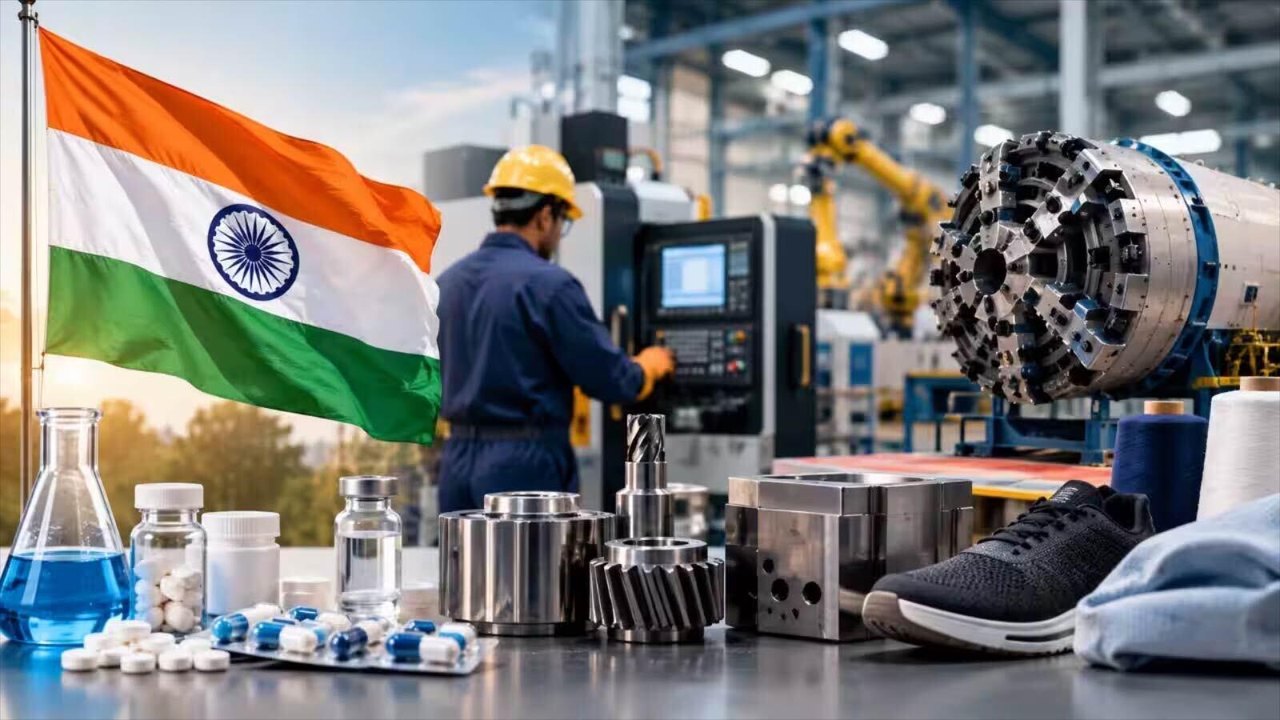
Image: Navbharat Times · Photo source · Resized and letterboxed to 16:9; no AI generation
Strategy to Enhance Domestic Production
To address a growing trade deficit with China, which has reportedly crossed $100 billion in the first nine months of the year, the Indian government is initiating a plan to boost domestic manufacturing. Under the leadership of the Department for Promotion of Industry and Internal Trade (DPIIT), the government has identified 120 key products previously reliant on imports, with a focus on reducing dependence on China.
Scope of the Initiative
The identified products span various critical sectors, including:
- Chemicals and Pharmaceuticals: Essential inputs like acetic acid and pharmaceutical components.
- Industrial Equipment: Construction machinery, cranes, and specialized machine tools.
- Medical Technology: High-tech medical equipment and supplies.
- Consumer Goods: Items within the footwear value chain.
- Aerospace: Maintenance, repair, and operations (MRO) products.
Implementation Plan
Government officials indicate that the strategy involves a three-pronged approach to ensure competitiveness against cheaper imports:
- Short-term Protection: Providing defensive measures to help emerging domestic industries compete with established foreign market participants, a strategy previously utilized for the mobile phone sector.
- Incentivization: Addressing "cost disabilities" through financial support, which may include capital incentives or turnover-linked benefits.
- R&D Support: Fostering innovation for products where the underlying technology is not yet domestically available.
This move is part of the broader 'Atmanirbhar Bharat' (Self-Reliant India) initiative, which gained urgency following global supply chain disruptions during the pandemic and regional geopolitical crises. The government continues to leverage the Production Linked Incentive (PLI) framework to encourage both domestic and international firms to set up local production capabilities.
AI-assisted reporting; source claims are attributed and have not been independently verified.
More to read
 Union Cabinet Approves Rs 10,000 Crore Container Manufacturing Scheme to Reduce Import Dependence
 Amazon and Tata Motors Partner to Deploy 3,000 Electric Trucks in India Across Key Freight Corridors
 India's Oil Imports and External Finance Remain Key Challenges, Says RBI Dy Governor
 India’s Record Asian Para Games Finish and New Rail Infrastructure Highlight Key October 24 Developments
Related coverage
Related reporting available at publication.
Union Cabinet Approves Rs 10,000 Crore Container Manufacturing Scheme to Reduce Import DependenceAmazon and Tata Motors Partner to Deploy 3,000 Electric Trucks in India Across Key Freight CorridorsIndia's Oil Imports and External Finance Remain Key Challenges, Says RBI Dy GovernorIndia’s Record Asian Para Games Finish and New Rail Infrastructure Highlight Key October 24 Developments WPL 2027 Mini Auction Concludes: A Look at the Final Squads
 Tamil Nadu Expands Free Bus Travel for Persons with Disabilities and Escorts