Rajasthan declares 80 tehsils across 14 districts as severely or moderately drought‑affected amid monsoon shortfall
· GlobeWire Daily Public Services Desk · Source: navbharattimes.indiatimes.com
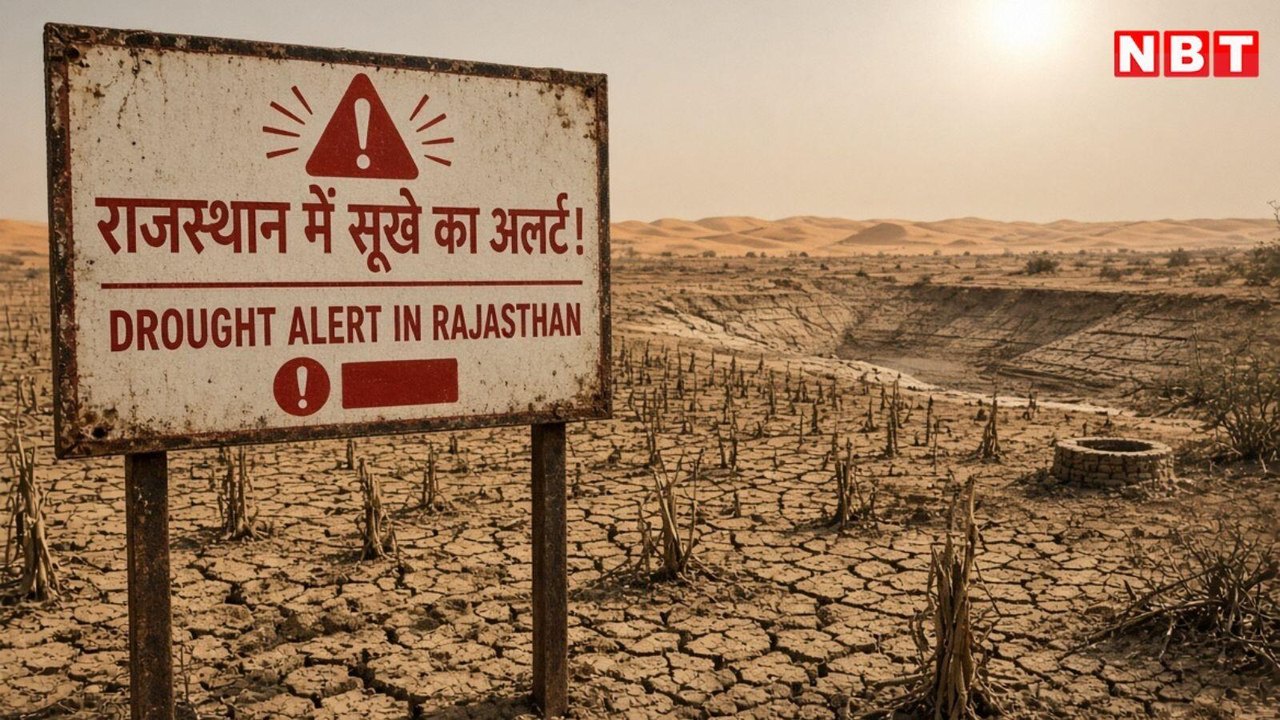
Image: navbharattimes.indiatimes.com — Creative Commons
Overview
The Rajasthan state government has issued an official notification classifying 80 tehsils in 14 districts as "severe" or "moderate" drought‑affected. The move follows an unusually weak monsoon season that left large parts of the state with significantly below‑average rainfall. The declaration is intended to streamline administrative relief for farmers and livestock owners whose crops, drinking water supplies, and animal fodder have been jeopardised.
Areas declared drought‑affected
The notification splits the 80 tehsils into two categories:
- 69 tehsils are listed as "severe drought‑affected"
- 11 tehsils are listed as "moderate drought‑affected"
The districts and the number of tehsils they contribute to each category are:
- Jodhpur – 12 tehsils (all severe)
- Jalore – 10 severe
- Barmer – 10 severe
- Balotra – 9 severe
- Pali – 8 severe
- Dungarpur – 7 severe, 3 moderate
- Jaisalmer – 6 severe, 1 moderate
- Falore – 6 severe, 1 moderate
- Banswara – 2 severe, 1 moderate
- Bharatpur – 2 severe, 2 moderate
- Bikaner – 1 moderate (Hada)
- Nagaur – 1 moderate (Khinvsar)
- Sirohi – 1 severe (Shivganj)
- Other districts – single tehsils each (e.g., Bikaner, Nagaur, Sirohi) are also listed.
A detailed breakdown of each tehsil’s classification is provided in the government notice, for example:
- Banswara – Garhi and Arthuna (severe); Sajjangarh (moderate)
- Barmer – Gadarrod, Chauhtan, Barmer, Baytu, Sedwa, Ramsar, Shiv, Dhanao, Barmer (Rural), Batadu (severe)
- Balotra – Guddamalani, Kalyanpur, Pachpadra, Gida, Dhorimanna, Patodi, Samdadi, Sivana, Sindhari (severe)
- Jodhpur – Osiyan, Tivri, Balesar, Bawadi, Shergarh, Sekhala, Kudi Bhagatasni, Jodhpur, Jhanwar, Bilada, Luni (severe); Pipadshahar (moderate)
Rainfall shortfall figures
The notification cites a scientific assessment of rainfall deficits, groundwater levels, surface‑water availability, and crop conditions. Reported shortfalls for the most affected districts are:
- Pali – ~58 % below normal rainfall
- Jaisalmer – ~54 % below normal
- Jalore – ~50 % below normal
- Banswara – ~39 % below normal
- Sirohi – ~36 % below normal
Other districts such as Balotra, Dungarpur and Jodhpur also recorded rainfall markedly lower than the long‑term average, contributing to the drought declaration.
Expected relief measures
While the notification does not enumerate specific financial assistance, it states that the classification will "clear the way for relief" under existing state schemes. Historically, Rajasthan has used programmes such as the Pradhan Mantri Krishi Sinchai Yojana (PMKSY), Rajasthan Drought Relief Fund, and crop‑insurance schemes to support drought‑hit farmers. The current declaration is expected to activate similar mechanisms, but the exact quantum of aid, eligibility criteria, and timelines will be detailed in subsequent government orders.
What remains uncertain
- Exact assistance amounts: The notification only signals that relief will be provided; the precise monetary or in‑kind support has not been released.
- Implementation timeline: No dates have been announced for when funds or resources will reach the affected tehsils.
- Long‑term mitigation: The statement does not outline any new water‑conservation or irrigation projects that may be launched to address the underlying water‑stress.
- Impact on livestock: While the notice mentions a crisis for animal fodder and water, specific measures for livestock owners are not detailed.
Practical implications for residents
- Monitor official releases – Farmers should watch for follow‑up orders from the Rajasthan Department of Agriculture and the State Disaster Management Authority, which will outline eligibility and application procedures.
- Document losses – Keeping records of crop damage, water scarcity, and livestock feed shortages will be essential for any future claim under relief schemes.
- Leverage existing schemes – Eligible households can already apply for crop‑insurance payouts or irrigation subsidies; the drought declaration may simplify verification for these programmes.
- Community coordination – Local panchayats and farmer groups can act as information hubs, helping residents navigate the relief process.
How to verify the announcement
The full list of tehsils, their classification, and the rainfall deficit data are published in the official government notification reproduced by Navbharat Times. Readers can verify the information by visiting the source article:
[https://navbharattimes.indiatimes.com/state/rajasthan/jaipur/rajasthan-government-drought-declared-14-districts-80-tehsils-see-full-list-and-reason/articleshow/135222689.cms](https://navbharattimes.indiatimes.com/state/rajasthan/jaipur/rajasthan-government-drought-declared-14-districts-80-tehsils-see-full-list-and-reason/articleshow/135222689.cms)
The notice itself is also expected to be available on the Rajasthan Government’s official portal under the Disaster Management or Agriculture department sections.
--- This article is based solely on the government notification reported by Navbharat Times and does not contain any unverified statements or speculative figures.
AI-assisted reporting; source claims are attributed and have not been independently verified.
More to read
 Gujarat Surya Urja Rooftop Yojana: Understanding Subsidy Structures, Application Steps, and Grid Rules
 Rajasthan Opens B.Ed. Financial Assistance Scheme for Sahariya Students: Deadlines, Amounts, and Application Process
 Lucknow Development Authority to Hold Lottery for 147 PM Awas Housing Applicants on October 30
 HPSC Food Safety Officer Recruitment 2026: Applications Open for 45 Group B Vacancies
Trending on GlobeWire Daily
Selected from recent coverage and related topics; not live search rankings.
 High-End Student Housing Sector Faces Financial Strain Amid Rising Costs and Falling International Demand
 How NASA's PACE Satellite Is Transforming Fall Foliage Tracking from Space
 WeMakeScholars Recruits Technical HR Professional Across Multiple Indian Cities
 Credit Saison India Recruits Relationship Manager for Secured Direct Operations in South India
 Ontario Teachers and Education Workers Rally Across Province Amid Contract Stalls and Upcoming Strike Votes
 Raymond Lifestyle Reports Record Total Income of ₹2,125 Crore in Q2 FY27 Amid Strong Apparel and Garmenting Growth