New Study Suggests Ancient Ice Sheet Expansion Was Interrupted by Human Climate Change
· GlobeWire Daily Science Desk · Source: arstechnica.com
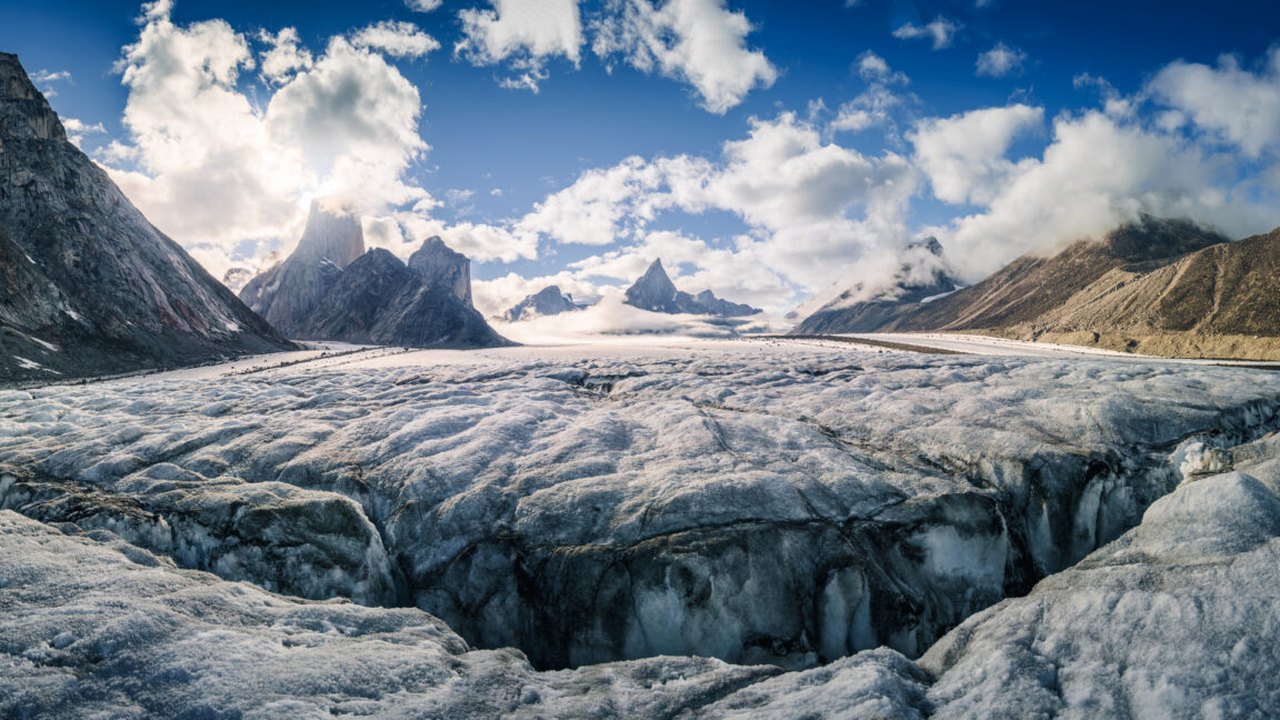
Image: Ars Technica · Photo source · Resized and letterboxed to 16:9; no AI generation
A recent study published in *Science* indicates that the remnants of the Laurentide Ice Sheet on Baffin Island began re-expanding roughly 2,000 years ago, a trend that researchers suggest marked the beginning of a potential new ice age before human-caused warming reversed it around 1960.
Evidence from Cold-Based Ice
Researchers focused on the Barnes Ice Cap, the last surviving fragment of the massive Laurentide Ice Sheet. Unlike warm-based glaciers that erode underlying terrain, Barnes is cold-based and frozen directly to the bedrock. This characteristic allowed the advancing ice to preserve tundra plants and mosses underneath it intact for millennia.
Dating the Advance
To understand the timeline of the ice sheet's movement, scientists used two primary methods:
- Beryllium-10 dating: Measured isotopes on exposed boulder surfaces to determine when the ice sheet originally retreated.
- Radiocarbon dating: Analyzed dead moss samples trapped by the re-advancing ice to establish "kill dates," mapping the progress of the growing ice margin over time.
Data gathered from neighboring smaller ice caps on the same plateau further supported the finding that ice expansion likely began around two millennia ago, driven by declining solar energy in high northern latitudes that temporarily overcame carbon dioxide levels.
Modern Decline of the Barnes Ice Cap
According to the study, the ice expansion continued through the Little Ice Age but ultimately halted around 1960 as human industrial greenhouse gas emissions accelerated. Today, the Barnes Ice Cap faces severe melting, with no accumulation zone left to form new ice, and models project it may disappear within a few centuries.
Practical Implications
- The research highlights how anthropogenic greenhouse gases have interrupted a long-standing natural cycle of glacial pacing.
- Readers can review the original peer-reviewed paper in *Science* (DOI: 10.1126/science.aed3379) to examine the methodology and dating techniques used by the research team.
AI-assisted reporting; source claims are attributed and have not been independently verified.
More to read
 New Study Suggests Human Fossil Fuel Emissions Halted the Onset of Another Ice Age
 Climate Change and Coastal Development Threaten World’s Renowned Surf Breaks
 Ancient Spanish Copper Mine Las Minillas Linked to Scandinavian Bronze Objects in Study
 How the Satirical Film 'Digger' Rewrites the Cinematic Approach to Climate Change
Trending on GlobeWire Daily
Selected from recent coverage and related topics; not live search rankings.
 Madhya Pradesh Government Plans Revenue Generation from 117-Year-Old Edward Villa in Mumbai Through Leasing
 iPhone 18 Pro Named TechRadar Product of the Year 2026
 Google Project Suncatcher Runs Gemma 4 AI on Orbiting Satellite and Receives First Response
 Gender Disparities in Eye Care Access Across India Examined
 Satellite Images Show Cyclone Arnab Weakening Over India As New System Brews
 Expanding Green and Blue Spaces Crucial for India's Economic and Public Health, Reports Indicate