New Study Suggests Human Fossil Fuel Emissions Halted the Onset of Another Ice Age
· GlobeWire Daily Science Desk · Source: www.wired.com
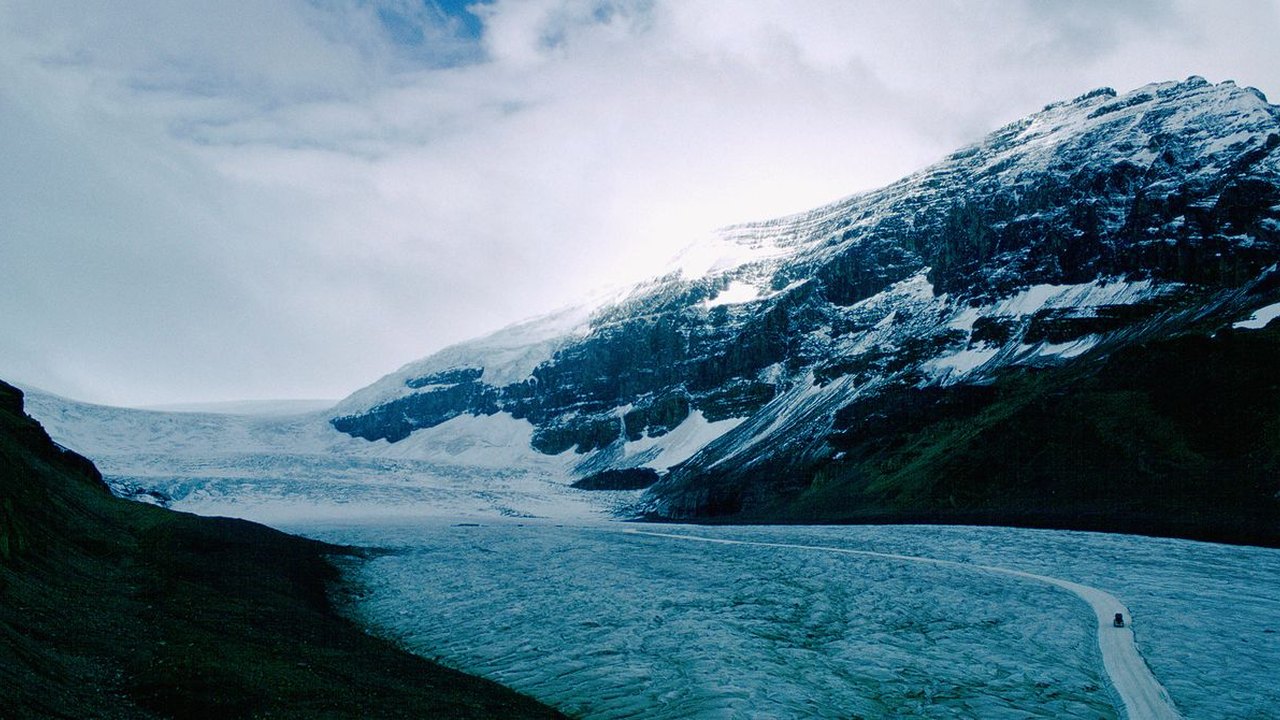
Image: Molly Taft — Creative Commons
A new scientific study published in the journal Science indicates that human-driven carbon emissions may have prevented the Earth from sliding into another ice age. Researchers analyzing ancient vegetation and rock records found that the Barnes Ice Cap—a remnant of the massive ice sheet that once blanketed North America—began re-expanding millennia ago, a trend that dramatically reversed in the mid-20th century as industrial carbon pollution surged.
Unlocking the History of the Barnes Ice Cap
The Earth naturally cycles between glacial periods, commonly known as ice ages, and warmer interglacial periods driven by variations in the planet's orbit and rotation, known as Milankovitch Cycles. The last official ice age concluded approximately 12,000 years ago, leaving behind the Laurentide Ice Sheet, which eventually shrank into the Barnes Ice Cap on Canada's Baffin Island.
Unlike standard glaciers that constantly move, the Barnes Ice Cap is frozen directly to the bedrock. This unique characteristic preserves underlying organic material. Lead author Nicolás Young, a paleoclimatologist at the Lamont-Doherty Earth Observatory at Columbia University, and his team utilized this feature to reconstruct historical ice movements. By analyzing preserved mosses that had been sequentially colonized, covered, and killed by advancing ice, researchers established a timeline showing the ice cap began growing again roughly 2,000 years ago, potentially signaling the dawn of a new glaciation period.
The Reversal in the 1960s
Despite thousands of years of net expansion, historical aerial photographs reveal that the ice cap's growth abruptly halted and reversed in the 1960s. Since the 1980s, the edges of the Barnes Ice Cap have retreated by an average of four meters per year. This sharp contraction aligns directly with the acceleration of global carbon emissions and human-caused warming.
Experts note that the findings address a longstanding point of historical context regarding 1970s climate science discussions. In the early 1970s, scientists warned policymakers that a natural cooling period and pending glaciation might be imminent—a meeting frequently cited out of context by climate skeptics to question modern global warming. Researchers behind the new study state that the data actually validates those historical scientific observations regarding natural cycles, while confirming that modern anthropogenic warming has since overridden them.
Practical Implications and Verification
Readers seeking to verify the original findings can review the published research paper in the journal Science or consult reporting via the official Wired coverage.
- What is Confirmed: The Barnes Ice Cap grew steadily for roughly 2,000 years prior to the 1960s, consistent with a trajectory toward a natural glacial period, and has rapidly retreated at an average of 4 meters per year since the 1980s amid rising carbon emissions.
- What Remains Unknown: While the broad triggers for ice ages are understood, the exact fine-scale mechanisms governing the transition into glaciation periods continue to require further paleoclimate research.
- Relevant Comparisons: The study provides a stark, localized example of how human industrial activity has fundamentally altered planetary climate trajectories, interrupting natural cycles that have dictated Earth's environmental history for millions of years.
AI-assisted reporting; source claims are attributed and have not been independently verified.
More to read
 Heart Health and Diet: How Eating Fish May Support Cardiovascular Wellness
 OpenAI Venture Fund Backs Startup Developing Brain Implants for Cancer Detection and Treatment
 Orionid Meteor Shower Peak and Other October Astronomical Events to Watch
 ULA Aims for Friday the 13th Return to Flight After Booster Anomaly
Trending on GlobeWire Daily
Selected from recent coverage and related topics; not live search rankings.
 What the Science Actually Says About Seed Oils and Human Health
 Weekend Alcohol Consumption and Women's Health: Examining the Science Behind Breast Cancer Risks
 ARCI Recruitment 2026: Applications Open for 29 Technical, Administrative, and Scientific Posts
 France Announces Overhaul of University Admissions Platform and Boosts Education Funding Amid Student Protests
 Kendriya Vidyalaya and Navodaya Vidyalaya Recruitment 2025: 14,967 Vacancies Open
 Karnataka School Education Department Extends Online Application Deadline for 2026 Teacher Recruitment to 16 November