Orionid Meteor Shower Peak and Other October Astronomical Events to Watch
· GlobeWire Daily Science Desk · Source: www.wired.com
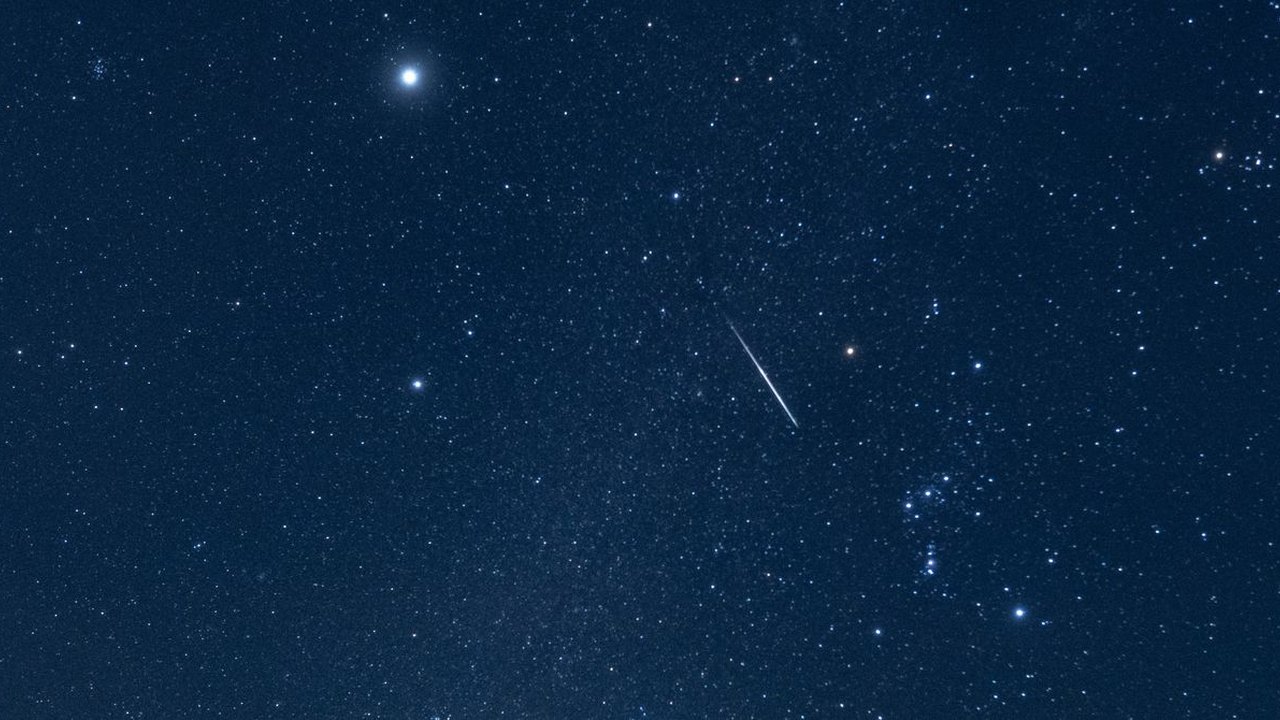
Image: Ritsuko Kawai — Creative Commons
Catching the Orionid Meteor Shower
Stargazers have a prime opportunity this month to observe fragments of Halley’s Comet as the Orionid meteor shower reaches its peak. While the cosmic event remains ongoing until November 7, viewing conditions in the US are expected to be optimal between dusk on October 21 and dawn on October 22. Under dark skies, observers may catch up to 20 meteors per hour.
Because the moon will be approximately three-quarters full during the peak, some shooting stars may be obscured. Astronomers note that the early morning hours—falling between moonset and sunrise—provide the best window for maximum darkness. Orionid meteors are particularly recognized for their speed and brightness, with exceptionally fast meteors occasionally transforming into "fireballs" comparable in brightness to Venus. Clear, dark conditions also help in spotting glowing trails of debris sometimes left in the wake of these meteors.
While the shower derives its name from the constellation Orion (its radiant source), viewers do not need to locate Orion to enjoy the display. Meteors are typically visible across any part of the night sky.
Saturn at Opposition and Atmospheric Discoveries
Beyond the meteor shower, Saturn recently reached opposition, meaning Earth passed directly between the sun and the gas giant. Because Saturn rises in the eastern sky around sunset and hits its meridian near midnight, it remains observable throughout the night. On October 24, the moon will also make a close approach to Saturn.
This alignment offers prime viewing for amateur astronomers and provides researchers an enhanced chance to study a unique geometric structure in Saturn's atmosphere: a decagon centered on the planet's south pole. Discovered nearly 50 years after the famous 18,600-mile-wide hexagon surrounding the north pole, scientists believe these structures stem from currents that confine powerful atmospheric waves, with the southern wave currently gaining momentum.
Moon and Pleiades Star Cluster Conjunction
Rounding out the month's astronomical calendar, the moon will pass close to the Pleiades star cluster. The optimal viewing window runs from the evening of October 27 into the morning of October 28, looking eastward as the moon and cluster rise.
With the naked eye, observers can generally spot a faint cluster of six to seven stars. Because this event occurs shortly after a full moon, the cluster may initially prove challenging to spot without optical aid, though binoculars or a telescope will reveal them more clearly.
Practical Implications and Verification
For those planning to view these October events, practical preparation involves finding locations with minimal light pollution, particularly given the moonlight interference during the Orionid peak. Telescopes or binoculars are recommended for optimal viewing of the Pleiades cluster and Saturn.
What is confirmed includes the specific dates for the Orionid peak (October 21–22), Saturn's opposition positioning, and the upcoming lunar proximity to the Pleiades on October 27–28. What remains variable are local weather conditions and visibility constraints caused by lunar illumination. Readers can review the original report and updates through the official [Wired Source](https://www.wired.com/story/how-to-see-the-orionid-meteor-shower-and-other-upcoming-astronomical-events/).
AI-assisted reporting; source claims are attributed and have not been independently verified.
More to read
 OpenAI Venture Fund Backs Startup Developing Brain Implants for Cancer Detection and Treatment
 ULA Aims for Friday the 13th Return to Flight After Booster Anomaly
 Apple Updates iMac and Entry-Level MacBook Pro with M6 and N1 Chips
 Anthropic S-1 Filing Highlights Extreme Risks, from AI Blackmail to Existential Threats
Trending on GlobeWire Daily
Selected from recent coverage and related topics; not live search rankings.
 Karnataka School Education Department Extends Online Application Deadline for 2026 Teacher Recruitment to 16 November
 KRDP Recruitment 2026: Online Applications Open for 12,878 Group B and C Vacancies
 RRB Releases 2026 Station Master Recruitment Notification for 1,265 Posts
 GSSSB Work Assistant Recruitment 2026: 1,663 Vacancies, Online Applications Close October 29
 Mulugu District Recruitment 2026: Offline Applications Open for 7 AYUSH and Health Posts
 SKAU Non-Teaching Recruitment 2026: Application Deadline Extended to November 2