ULA Aims for Friday the 13th Return to Flight After Booster Anomaly
· GlobeWire Daily Science Desk · Source: arstechnica.com
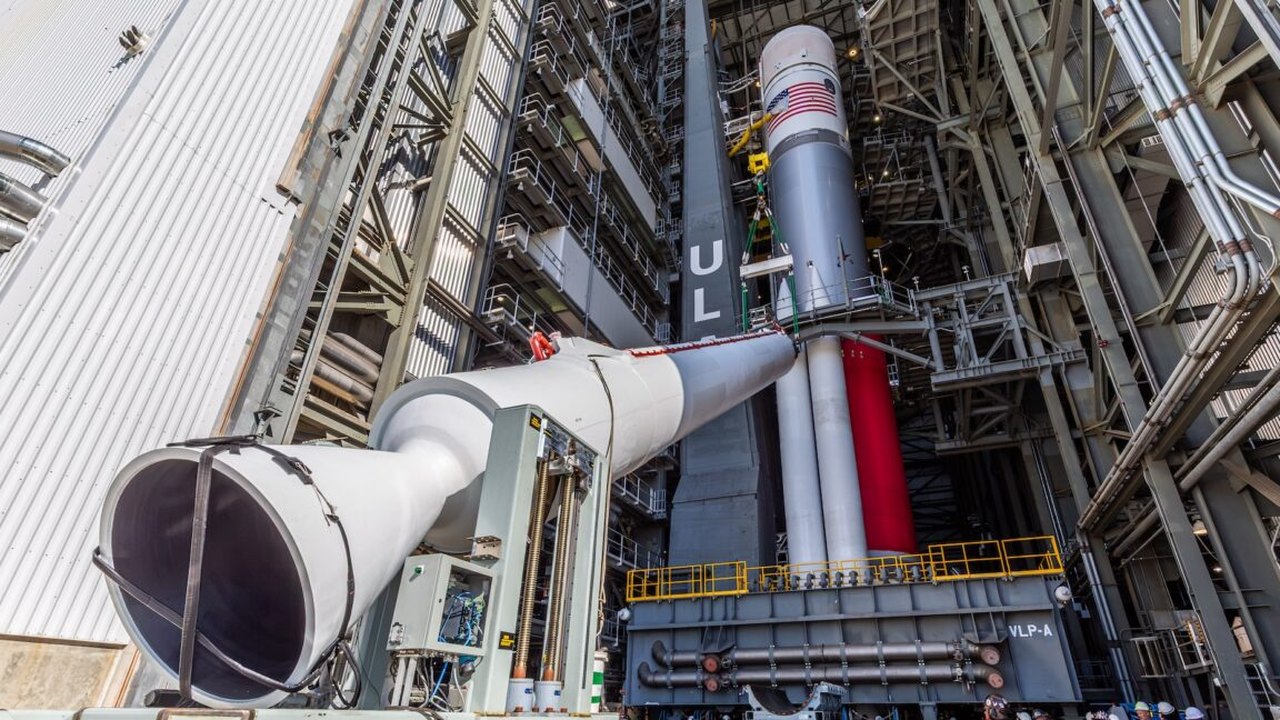
Image: arstechnica.com — Creative Commons
What is confirmed
United Launch Alliance announced on Wednesday that it plans to return its Vulcan rocket to service on Nov. 13, the date cited as Friday the 13th. The plan came nine months after a solid rocket booster anomaly disrupted the company’s 2026 launch schedule.
The return-to-flight mission is expected to launch 40 satellites for the Amazon Leo broadband constellation, the first of 38 Vulcan flights Amazon has booked to deploy the bulk of its network. The mission was scheduled to lift off from Cape Canaveral Space Force Station in Florida, and ULA said the launch date was pending range approval.
Background and uncertainty
Vulcan suffered nozzle failures on its solid rocket boosters on two of its first four missions, most recently during a February flight. In both cases, the rocket overcame the nozzle failure and completed its mission, but officials at the US Space Force, ULA’s primary customer, lost confidence in Vulcan.
Space Force officials will closely scrutinize the return-to-flight mission. The Pentagon has entrusted ULA’s Vulcan rocket for roughly half of its major launches through the early 2030s. The Space Force certified Vulcan for national security launches in 2025, then flew two missions on Vulcan before grounding it after the February booster incident.
In a statement, ULA said engineers made progress in understanding the booster anomaly from February. The company said engineers identified several potential contributors and mitigated them through design and process improvements to the nozzle. The upcoming launch would use the improved nozzle design, while additional testing and analysis would continue in parallel. ULA said flying the improved design would provide useful flight data and serve as the most beneficial path for its customers.
ULA and Northrop Grumman, the booster manufacturer, have not publicly identified the root cause of the February nozzle malfunction. Investigators first blamed a nozzle problem in 2024 on a manufacturing defect in an insulator meant to protect the nozzle’s metallic structure from superheated exhaust. Neither company responded to questions from Ars on Wednesday.
Impact, comparisons, and unknowns
The Space Force is relying on United Launch Alliance, a 50-50 joint venture between Boeing and Lockheed Martin, to deliver a backlog of military communications, navigation, missile warning, and surveillance satellites. Amazon Leo is a potential competitor to SpaceX’s Starlink network and has an inventory of broadband satellites in storage waiting for rides on Vulcan.
With ULA delays, the Space Force moved six missions off Vulcan to launch on SpaceX Falcon 9 and Falcon Heavy rockets. ULA received six future missions originally assigned to SpaceX, the military’s other certified launch provider. The swaps included three GPS satellites moved off Vulcan for launches last year and earlier this year on Falcon 9 rockets. Space Systems Command also swapped one ULA launch for the Space Development Agency with another on SpaceX.
A launch carrying the Air Force Research Laboratory’s Oracle-M lunar mission will now fly on a Falcon Heavy rocket instead of Vulcan. That mission will receive a future SpaceX-assigned launch in compensation, and Space Systems Command completed a similar swap to move a large strategic missile warning satellite from Vulcan to Falcon Heavy.
So far, the swaps have not affected the number of missions the Space Force has awarded to ULA and SpaceX, according to the source. The trades are separate from assignments of unallocated future missions to launch providers, which may already be affected by SpaceX’s plans to retire the Falcon rocket family.
Brig. Gen. Eric Zarybnisky, chief rocket buyer at Space Systems Command, said the military wants to see data from commercial flights on Vulcan before clearing ULA to resume national security launches. At least two Amazon Leo missions are on the Vulcan schedule before another national security mission, perhaps early next year. He said those flights will carry a significant number of solid rocket boosters and that clearance will depend heavily on flight data.
The next launch will be the first to fly with a full complement of six solid rocket boosters. It will also debut an extended payload fairing for Amazon’s satellite stack and a shortened Centaur upper stage optimized for low-Earth orbit missions.
Practical implications and verification
For Amazon Leo, a successful return to flight could enable the company’s planned broadband deployment. For the military, continued access to Vulcan matters because the Space Force entrusted the rocket with a large share of major launches through early 2030s. For SpaceX, the swaps may reshape near-term mission assignments, though the source said they have not changed overall award numbers so far.
The confirmed facts remain limited. The launch date is pending range approval. The root cause is not publicly identified. Space Force clearance is not yet clear. Readers can check the original announcement and source report at https://arstechnica.com/space/2026/10/ulas-vulcan-rocket-is-set-to-return-to-flight-on-friday-the-13th/. They should distinguish ULA statements, Space Force statements, and details not yet verified.
AI-assisted reporting; source claims are attributed and have not been independently verified.
More to read
 Apple Updates iMac and Entry-Level MacBook Pro with M6 and N1 Chips
 Anthropic S-1 Filing Highlights Extreme Risks, from AI Blackmail to Existential Threats
 Rare Mutual Occultation of Jupiter's Moons Ganymede and Io Captured in New Astronomy Video
 Mysterious 1,000-Mile Cloud on Mars May Reveal Hitherto Unseen Atmospheric Physics
Trending on GlobeWire Daily
Selected from recent coverage and related topics; not live search rankings.
 RRB Releases 2026 Station Master Recruitment Notification for 1,265 Posts
 GSSSB Work Assistant Recruitment 2026: 1,663 Vacancies, Online Applications Close October 29
 Mulugu District Recruitment 2026: Offline Applications Open for 7 AYUSH and Health Posts
 SKAU Non-Teaching Recruitment 2026: Application Deadline Extended to November 2
 GSSSB Opens Recruitment for 84 Food Safety Officer Posts in Gujarat
 BHEL Artisan Recruitment 2026: Official Notification Released for 660 Vacancies Across Seven Trades