Researchers Model the Mysterious 1,000-Mile Cloud on Mars
· GlobeWire Daily Science Desk · Source: www.wired.com
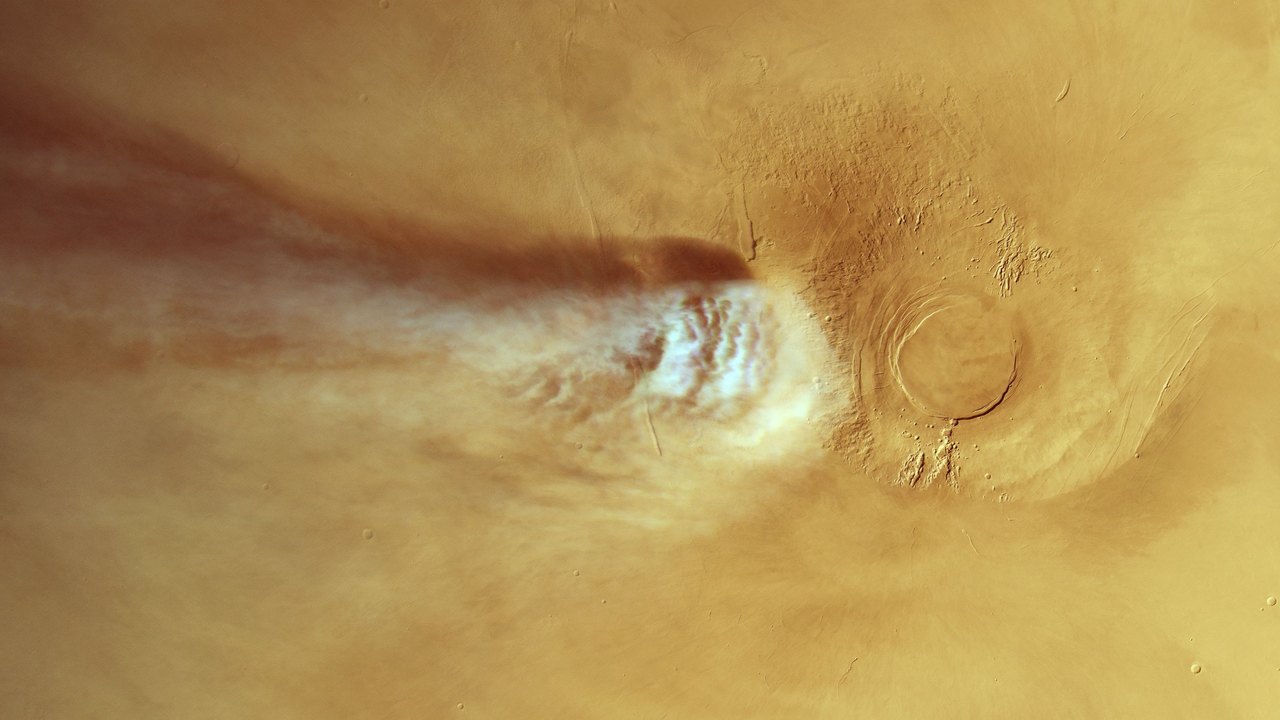
Image: Tereza Ondráčková · Photo source · Resized and letterboxed to 16:9; no AI generation
Scientists have recently modeled the formation of a recurring, 1,000-mile-long cloud near the Arsia Mons volcano on Mars, according to a study published in Nature Geoscience. First recorded by a probe in 2018 and known as the Arsia Mons Elongated Cloud (AMEC), this wispy formation emerges every morning during the Martian spring and summer, grows up to 1,000 miles long, and then disappears before the cycle repeats.
Before recent modeling efforts, researchers lacked a plausible explanation for the AMEC phenomenon. According to lead study author Jorge Hernández-Bernal, a planetary scientist at Sorbonne Université in Paris, researchers found they had to include theoretical physical processes not previously observed in nature to successfully simulate the cloud in computer models.
How the Martian Cloud Forms
Unlike typical cloud formation on Earth, which relies on water vapor condensing around tiny particles like dust or salt, the study suggests the AMEC forms through a process called homogeneous nucleation. In this process, vapor converts directly into ice crystals without the aid of debris.
- Required Conditions: The process demands extreme environmental factors, including a sharp temperature drop of 30 degrees Celsius within 10 minutes and extremely high relative humidity.
- Role of Arsia Mons: Wind currents striking the 65,000-foot-tall volcano generate a powerful atmospheric wave, launching moist air high into the atmosphere within minutes.
Broader Implications and Verification
While scientists previously theorized that homogeneous nucleation could occur in the upper atmospheres of planets like Venus or Earth, it has never been directly observed due to the extreme humidity levels required—levels exceeding any measured values on Earth by more than 100,000 times.
Researchers note that such high humidity levels were previously unknown on Mars as well. Because atmospheric data for Mars is more limited than for Earth, successfully reproducing the cloud in simulations is considered a notable development by the study authors. Readers interested in verifying the original research can consult the published paper in Nature Geoscience or review institutional press releases from Sorbonne Université.
AI-assisted reporting; source claims are attributed and have not been independently verified.
More to read
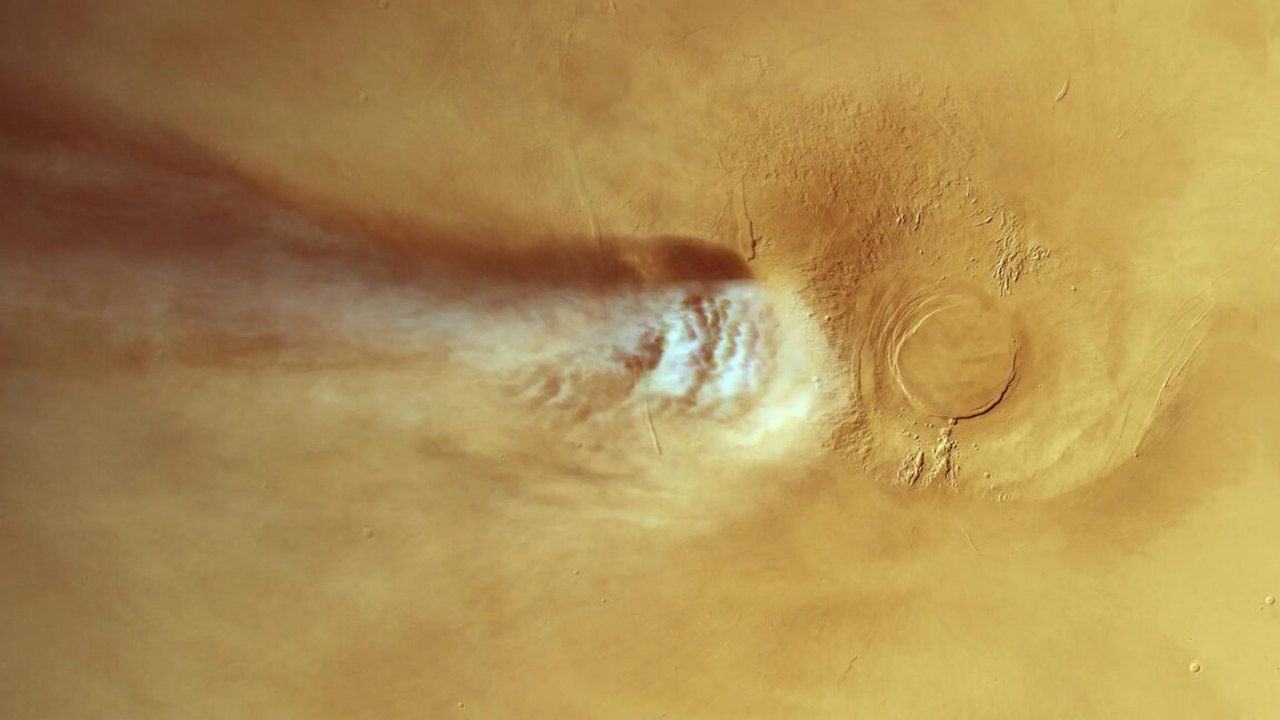 Mysterious 1,000-Mile Cloud on Mars May Reveal Hitherto Unseen Atmospheric Physics
 Bentley's First EV, the Torcal, Completes Extensive 621,000-Mile Testing Program
 Google DeepMind and Cloud Pledge AI Compute and Models to European Researchers
 Over 26,000 Active AI and Cloud Credentials Exposed on Gitee
Trending on GlobeWire Daily
Selected from recent coverage and related topics; not live search rankings.
 Madhya Pradesh Government Plans Revenue Generation from 117-Year-Old Edward Villa in Mumbai Through Leasing
 iPhone 18 Pro Named TechRadar Product of the Year 2026
 Google Project Suncatcher Runs Gemma 4 AI on Orbiting Satellite and Receives First Response
 Gender Disparities in Eye Care Access Across India Examined
 Satellite Images Show Cyclone Arnab Weakening Over India As New System Brews
 Expanding Green and Blue Spaces Crucial for India's Economic and Public Health, Reports Indicate