The Physics Behind Tesla’s Roadster 2 Prototype Features
· GlobeWire Daily Science Desk · Source: www.wired.com
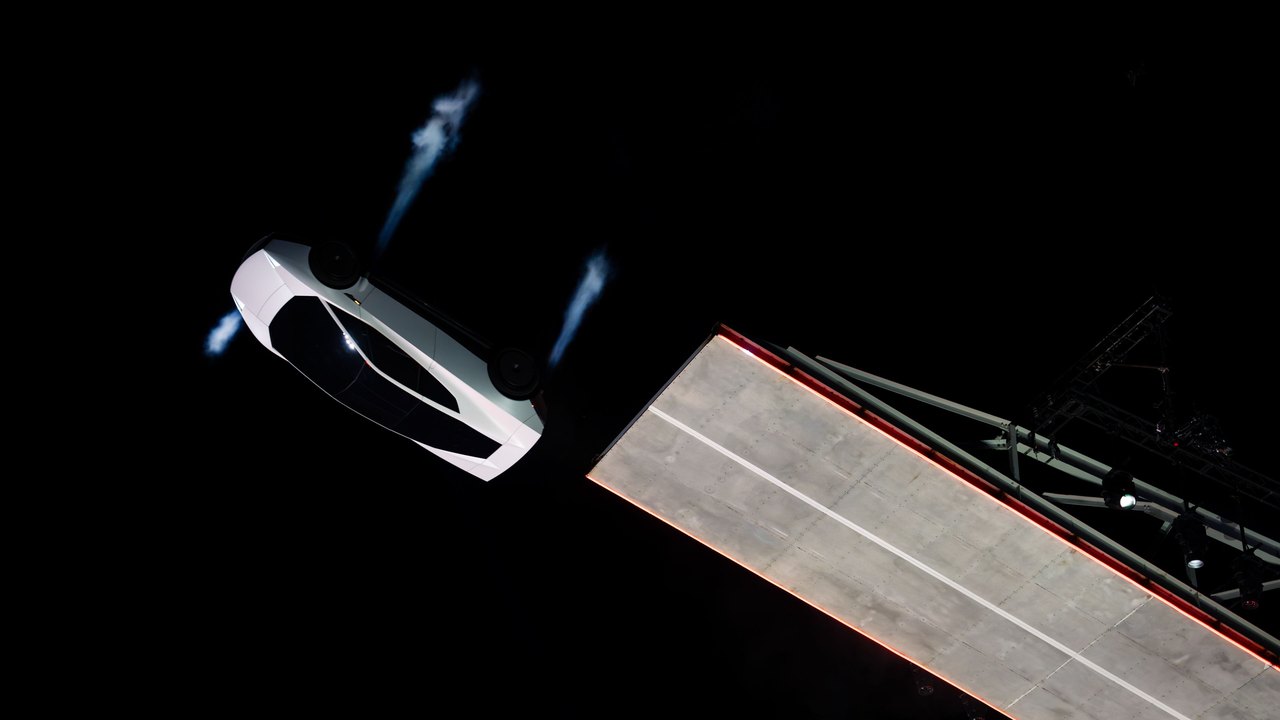
Image: Rhett Allain · Photo source · Resized and letterboxed to 16:9; no AI generation
Tesla recently revealed a Roadster 2 prototype featuring demonstrated capabilities such as driving up a vertical surface and brief airborne movement. Observers and analysts have examined the underlying physics, focusing on friction, suction forces, and compressed air propulsion.
Friction and Vertical Surfaces
Under normal driving conditions, a car relies on static friction between its rubber tires and the road surface. The maximum angle an ordinary car can ascend is limited by this friction coefficient and gravity.
- Normal Force: The force pressing surfaces together.
- Static Friction: The constraint preventing relative sliding.
To adhere to a vertical wall, the Roadster 2 prototype reportedly uses fans and side flaps to reduce air pressure underneath the vehicle, creating a suction effect that increases the normal force. Calculations regarding a vehicle weighing 1,700 kilograms over a contact area of approximately 2 square meters suggest that maintaining a bottom pressure at roughly 86 percent of atmospheric pressure is theoretically plausible.
Acceleration and Compressed Air
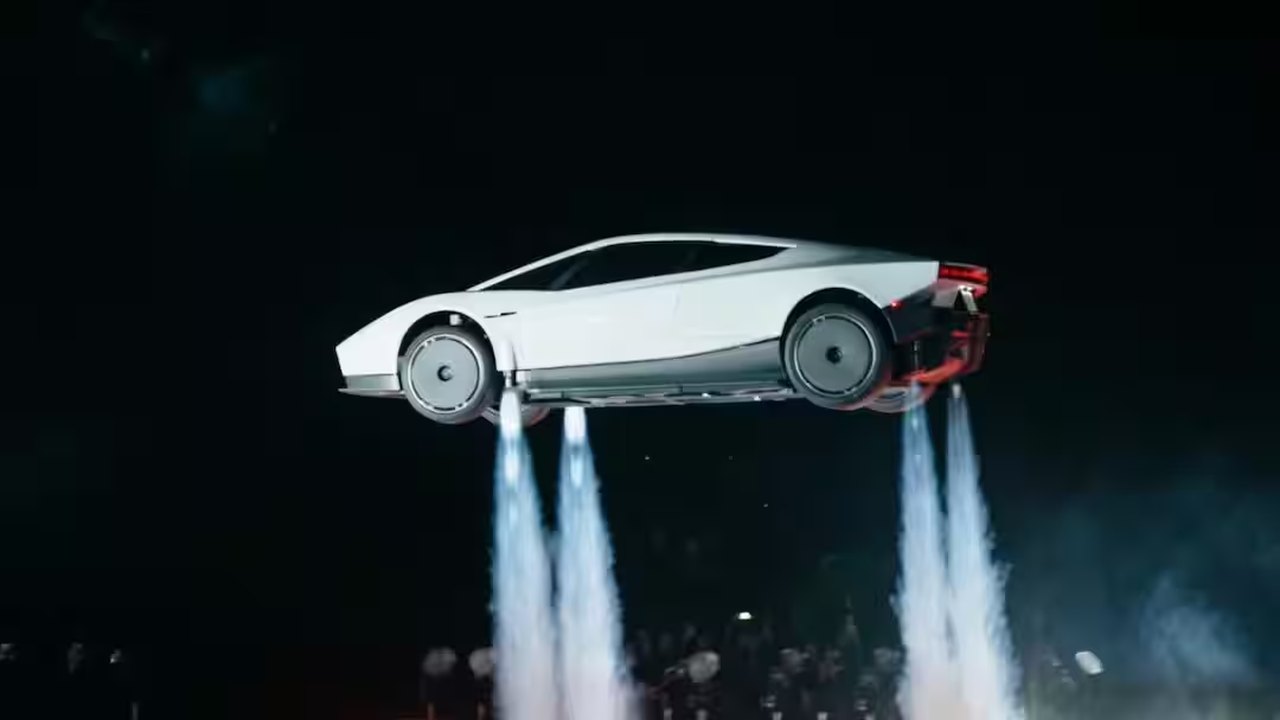
Traditional automobiles are constrained by the coefficient of friction when achieving rapid acceleration, such as going from 0 to 60 mph. Reports indicate the Roadster 2 utilizes compressed air storage to achieve greater thrust, applying principles akin to Newton's third law of motion, similar to how a balloon propels a toy car.
- Thrust Mechanism: Tanks of compressed air provide temporary upward and forward force.
- Duration: The air supply is limited, restricting airborne movement to a few seconds.
Acceleration Limits and Human Factors
Video analysis of the prototype jumping over a vehicle provides an estimated vertical acceleration of approximately 98 meters per second squared, equating to roughly 10 g's of force. While humans can endure such forces for brief periods, it carries physical risks, which observers note aligns with the use of a robotic driver during the demonstration.
Verification and Practical Implications
Independent verification of these physics principles relies on standard mechanical formulas, mass estimates, and video tracking software. While suction technology can enhance cornering and braking performance on normal roads, the practical application of flying cars remains constrained by energy storage limits and physiological tolerances for high acceleration.
AI-assisted reporting; source claims are attributed and have not been independently verified.
More to read
 Tesla Opens Roadster Reservations: What Indian Consumers Should Know
 Physicists Trap a Single Antimatter Particle for Months in Quantum Physics Breakthrough
 Francis Halzen Awarded 2026 Nobel Prize in Physics for IceCube Neutrino Discovery
 Examining the Nutritional Patterns Behind Israel's High Life Expectancy
Trending on GlobeWire Daily
Selected from recent coverage and related topics; not live search rankings.
 Madhya Pradesh Government Plans Revenue Generation from 117-Year-Old Edward Villa in Mumbai Through Leasing
 iPhone 18 Pro Named TechRadar Product of the Year 2026
 Google Project Suncatcher Runs Gemma 4 AI on Orbiting Satellite and Receives First Response
 Gender Disparities in Eye Care Access Across India Examined
 Satellite Images Show Cyclone Arnab Weakening Over India As New System Brews
 Expanding Green and Blue Spaces Crucial for India's Economic and Public Health, Reports Indicate