Proposed 2026 Animal‑Testing Rules Ignite Debate Over Safeguards in India
· GlobeWire Daily Editorial Desk · Source: timesofindia.indiatimes.com
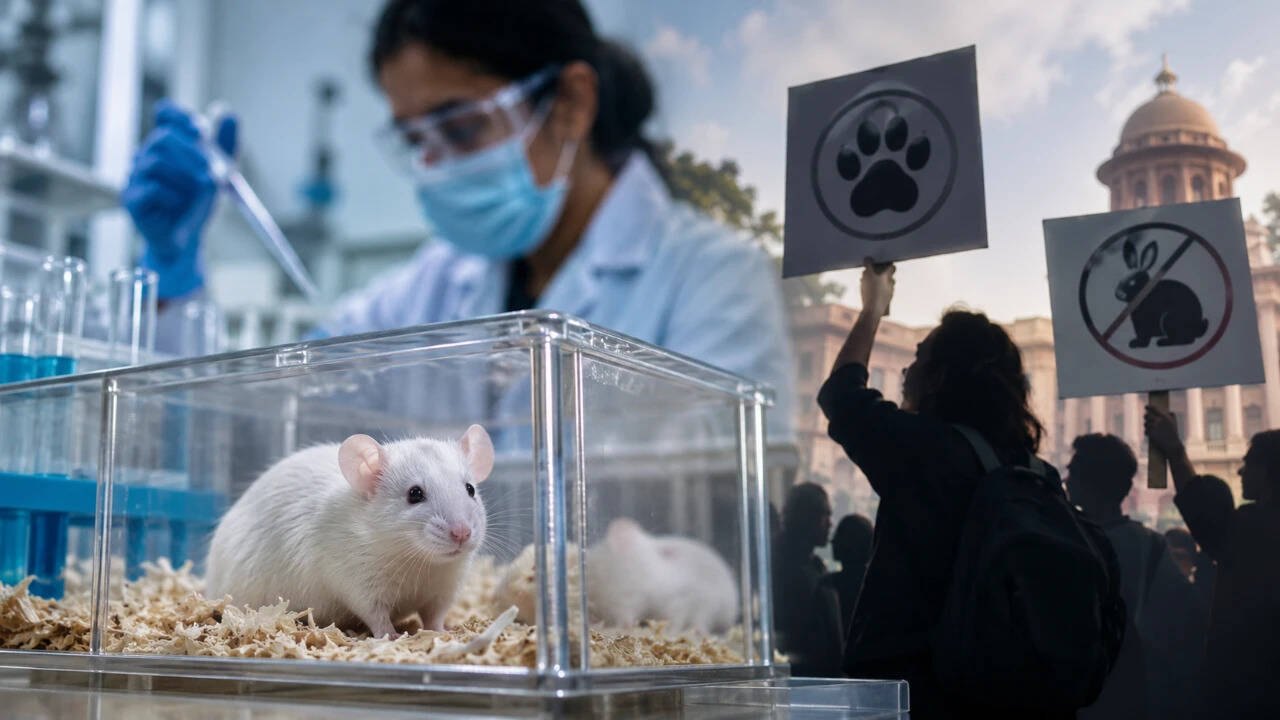
Image: The Times of India · Photo source · Resized and letterboxed to 16:9; no AI generation
Summary
India’s draft *Prevention of Cruelty to Animals (Control and Supervision of Experiment, Breeding and Trading of Laboratory Animals) Rules, 2026* seeks to modernise the approval process for laboratory animal work. While the draft introduces a severity‑based classification and gives Institutional Animal Ethics Committees (IAECs) more authority over mild‑to‑moderate studies, animal‑welfare groups warn that reduced central oversight could weaken protections.
Key Proposals
- Severity‑based classification – Experiments are placed in four categories: Mild, Moderate, Severe, Non‑recovery.
- Decentralised approvals – IAECs may approve mild and moderate procedures on any species; the central CCSEA retains authority for Severe and Non‑recovery work, especially for species above rodents and rabbits.
- Three Rs – The draft reiterates the principles of Replacement, Reduction and Refinement, urging use of alternatives where feasible.
- Registration & supervision – Mandatory registration of establishments, veterinary supervision, trained staff and periodic inspections (twice‑yearly by designated nominees, plus CCSEA spot checks).
Who Uses Animals?
Dr Surat, Senior Program Director at Humane World for Animals India, notes that animal testing spans:
- Pharmaceutical and biotech firms
- Medical research institutes and universities
- Veterinary colleges and government labs
Typical species: mice, rats, rabbits, guinea‑pigs, fish, birds and, in limited cases, non‑human primates.
Gaps in Data
India lacks a public database on annual animal use, deaths or violations. Estimates of global usage run 100‑115 million animals per year, but national figures are unavailable. Dr Ramanuj Panda (Gocarin) has called for a centralised reporting system.
Concerns from Welfare Groups
- Protected and stray animals – PETA India flags provisions that could permit use of wild‑caught, stray dogs or cats, citing a 2022 CCSEA circular (withdrawn in 2023) that allowed stray dogs in vaccine trials.
- Conflict of interest – IAECs often include five of nine members from the same institution, raising doubts about independent review.
- Regulatory dilution – Allowing IAECs to approve mild/moderate work without CCSEA sign‑off may reduce scrutiny, especially for species beyond rodents.
Scientific Reliability
Experts cite cases where animal models failed to predict human outcomes (e.g., the 2006 TGN1412 trial, gene‑therapy setbacks in dogs). While animal data remain valuable, they are not infallible predictors of safety.
Emerging Alternatives
New Approach Methodologies (NAMs) – cell‑based assays, organoids, organ‑on‑chip platforms and computational models – are gaining traction. India’s 2023 amendment to the *New Drugs and Clinical Trials Rules* already recognises several NAMs for regulatory purposes. A 2026 parliamentary response highlighted 109 non‑animal projects funded by ICMR across 71 institutions.
What Needs to Change?
- Mandatory search for alternatives before any animal protocol is submitted.
- Public annual statistics on species used, severity levels and welfare complaints.
- Clear definition of “humane endpoint” and enforceable pain‑relief requirements.
- National centre to validate and certify non‑animal methods.
Practical Implications
Researchers should prepare detailed justification documents, including literature searches for NAMs, and anticipate IAEC scrutiny on conflict‑of‑interest disclosures. Institutions must ensure veterinary oversight and maintain records for CCSEA inspections. Stakeholders can verify the draft’s status on the CCSEA website or through the Ministry of Environment, Forest and Climate Change’s public notices.
Outlook
The draft rules aim to balance scientific progress with animal welfare, but their success hinges on how strictly the severity‑based system and independent oversight are enforced. Continued dialogue between regulators, scientists and NGOs will shape whether India moves toward greater reliance on human‑relevant testing methods.
--- Keywords: animal testing India, 2026 draft rules, CCSEA, IAEC, severity classification, three Rs, PETA India, non‑animal alternatives, organoids, humane endpoint
AI-assisted reporting; source claims are attributed and have not been independently verified.
More to read
 India and U.S. Fine-Tuning Proposed Trade Agreement, Says Commerce Minister Piyush Goyal
 World Bank Report Indicates Significant Decline in India's Inequality by 2026
 India Cuts U.S. and Russian Oil Imports in September 2026, Pivoting to UAE Amid New Sanctions
 India Today Panel Examines Voter Roll Revision Debate and Election Integrity
Trending on GlobeWire Daily
Selected from recent coverage and related topics; not live search rankings.
 Madhya Pradesh Government Plans Revenue Generation from 117-Year-Old Edward Villa in Mumbai Through Leasing
 iPhone 18 Pro Named TechRadar Product of the Year 2026
 Google Project Suncatcher Runs Gemma 4 AI on Orbiting Satellite and Receives First Response
 Gender Disparities in Eye Care Access Across India Examined
 Satellite Images Show Cyclone Arnab Weakening Over India As New System Brews
 Expanding Green and Blue Spaces Crucial for India's Economic and Public Health, Reports Indicate