Katie Spicer Shapes NASA's Artemis Future as Blue Origin Lander Integration Lead
· GlobeWire Daily Editorial Desk · Source: www.nasa.gov
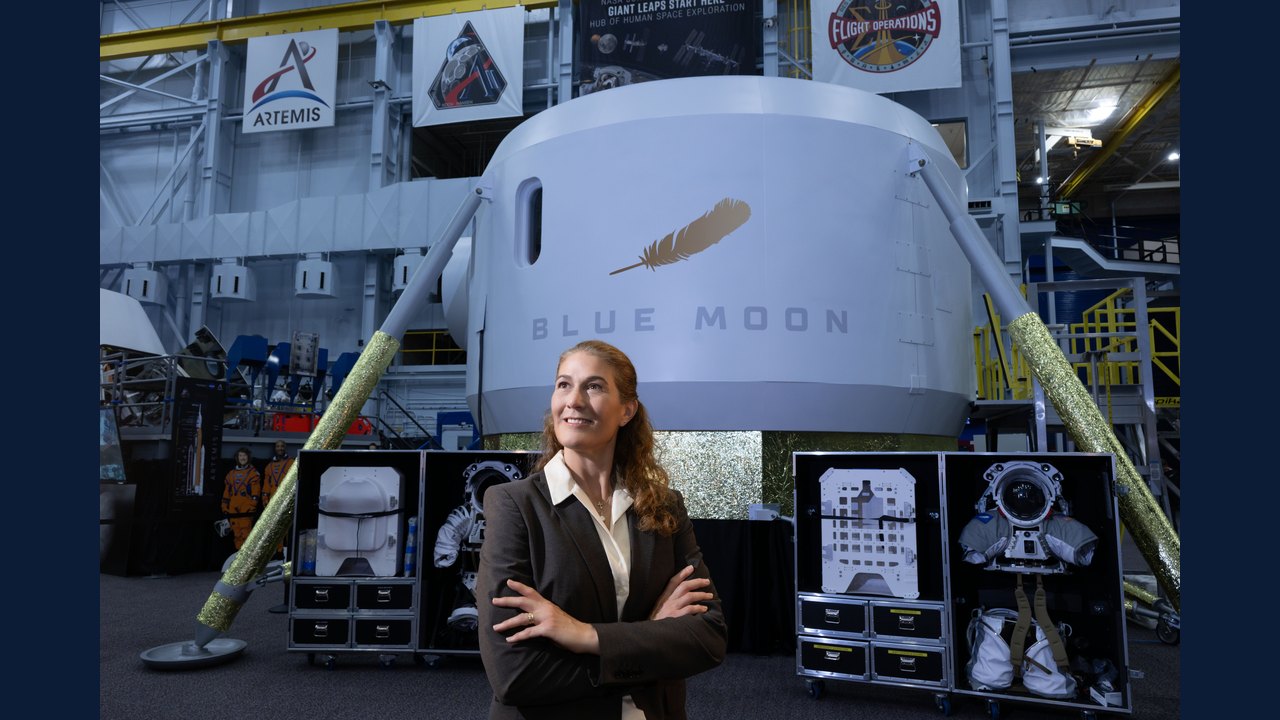
Image: NASA · Photo source · Resized and letterboxed to 16:9; no AI generation
Katie Spicer serves as the NASA lander integration lead for Blue Origin’s Blue Moon Mark 2 lander, contributing to the human landing systems supporting the Artemis program. According to NASA, Spicer evaluates and monitors the design and development of the Blue Moon lander within the Flight Operations Directorate at NASA’s Johnson Space Center in Houston.
Role in the Artemis Program
Spicer works alongside NASA and Blue Origin counterparts to monitor how the lander design supports broader Artemis mission objectives. The Blue Moon lander design is currently evolving as Blue Origin develops a streamlined test article for the planned Artemis III rendezvous and docking mission in low Earth orbit, alongside a fully functional lander intended for a crewed lunar landing in 2028.
Her responsibilities focus heavily on the astronaut crew experience. Spicer evaluates elements that astronauts will physically touch, operate, and interface with during missions.
- Human Factors: Reviewing how easily crew members can grab handles and handrails.
- Operations: Examining whether push-button displays function effectively in microgravity.
- Habitability: Assessing space utilization and user-friendliness of onboard hygiene systems.
- Procedures: Ensuring proper training protocols exist for safe system usage.
Career Journey at NASA
Spicer’s path to her current integration role involved a diverse professional background. After earning a bachelor's degree in microbiology from Pennsylvania State University and spending time raising her three children, she began working part-time in the historic Life Sciences Laboratory at NASA. Her early duties included cleaning laboratory equipment and supporting scientific tests.
She subsequently transitioned to working with science payloads on the International Space Station, helping operate Human Research Facility racks. In 2018, Spicer became a flight controller at NASA Johnson’s Mission Control Center. Over five years of study and training, she earned flight controller and instructor certifications without holding a traditional engineering degree, later serving as an Operations and Support Officer in the Mission Control flight control room.
Practical Implications and Verification
The ongoing development of commercially provided human landing systems highlights NASA's collaborative approach to returning humans to the lunar surface under the Artemis program. Observers and researchers can verify official updates, mission timelines, and partnership announcements by visiting NASA's official website at nasa.gov.
AI-assisted reporting; source claims are attributed and have not been independently verified.
More to read
 NASA Conducts RS-25 Engine Test to Support Future Artemis Moon Missions
 NASA Updates Artemis Lander Plans and Resolves Orion Propulsion Limitations
 NASA's Exploration Science Strategy Integration Office Drives Lunar Research and Artemis Missions
 How a Mentor at NASA's Johnson Space Center Shapes Future Aerospace Talent