NASA Completes Construction of the Nancy Grace Roman Space Telescope Ahead of Planned Launch
· GlobeWire Daily Editorial Desk · Source: www.nasa.gov
Original GlobeWire Daily editorial illustration — not an event photograph.
NASA has announced the successful assembly and completion of the Nancy Grace Roman Space Telescope, marking a major milestone for the upcoming mission. Technicians joined the inner and outer portions of the observatory on Nov. 25 within the largest clean room at NASA’s Goddard Space Flight Center in Greenbelt, Maryland.
Following construction, the observatory will enter a final stage of testing. It is scheduled to move to NASA’s Kennedy Space Center in Florida for launch preparations in summer 2026. The mission is slated to launch by May 2027, though project teams are currently tracking a potential launch date as early as fall 2026. A SpaceX Falcon Heavy rocket will transport the telescope to its final operating destination located one million miles from Earth.
Scientific Goals and Instruments
The Roman Space Telescope is equipped with two primary instruments designed to explore fundamental cosmic mysteries, including dark energy, dark matter, and distant exoplanets:
- Wide Field Instrument: A 288-megapixel camera capable of capturing patches of sky larger than the apparent size of a full moon. It will gather data at speeds hundreds of times faster than the Hubble Space Telescope.
- Coronagraph Instrument Technology Demonstration: A specialized tool designed to block distant starlight to directly image planets and dusty disks around nearby stars.
Core Surveys and Operations
During its five-year primary mission, 75% of Roman's time will be dedicated to three core surveys:
- High-Latitude Wide-Area Survey: Combines imaging and spectroscopy to study over a billion galaxies and probe dark matter and galaxy formation.
- High-Latitude Time-Domain Survey: Observes the same cosmic region repeatedly to track changes over time and study dark energy.
- Galactic Bulge Time-Domain Survey: Looks toward the center of the Milky Way to find exoplanets via microlensing, rogue planets, and isolated black holes.
The remaining 25% of the primary mission will be allocated to other observations, including the selected Galactic Plane Survey, determined with input from the broader scientific community. NASA plans to make all mission data publicly available with no exclusive use period to support global research teams.
How to Verify
To review original announcements and monitor updates regarding testing schedules, launch milestones, and data policies, interested readers can consult official updates published directly through the NASA website and the official Nancy Grace Roman Space Telescope mission pages.
AI-assisted reporting; source claims are attributed and have not been independently verified.
More to read
 NASA Launches Nancy Grace Roman Space Telescope to Explore Dark Universe
 NASA Invites Media and Public to View Nancy Grace Roman Space Telescope's First Images
 NASA's Nancy Grace Roman Space Telescope Named Among TIME Best Inventions of 2026
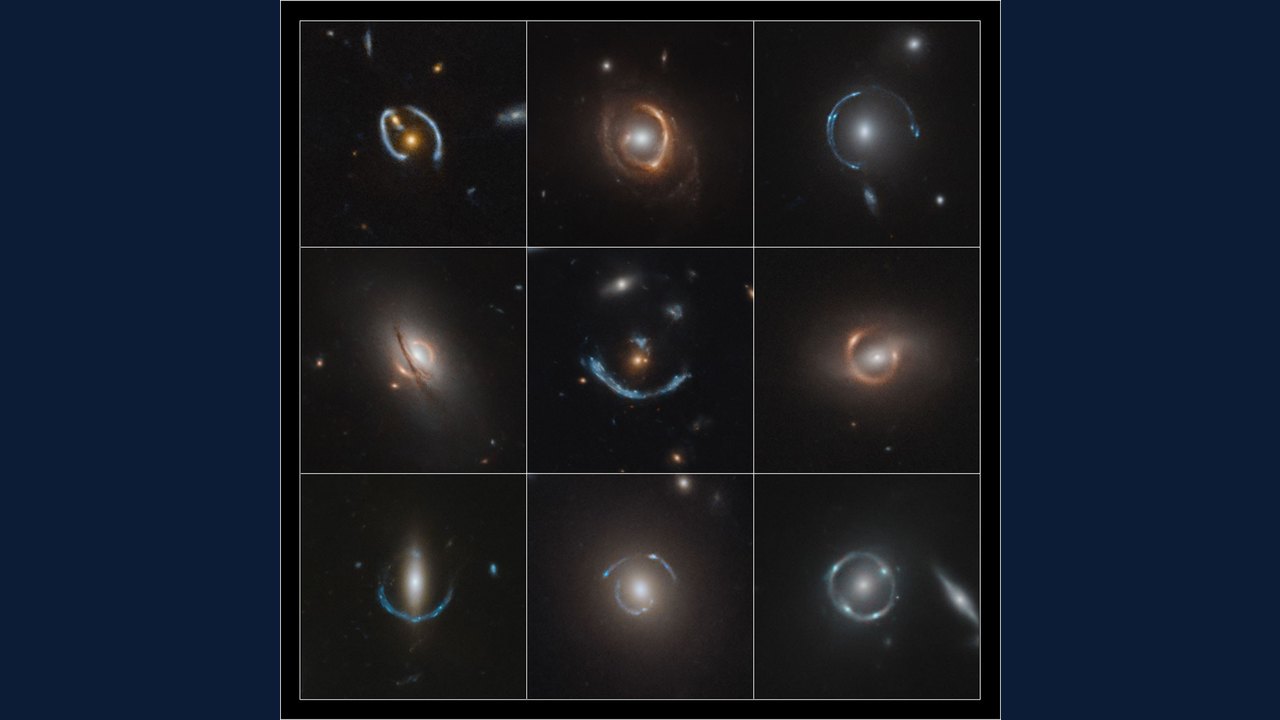 NASA's Hubble Space Telescope Surveys Cosmic Lenses for Future Roman Mission