NASA Launches Nancy Grace Roman Space Telescope to Explore Dark Universe
· GlobeWire Daily Editorial Desk · Source: www.nasa.gov
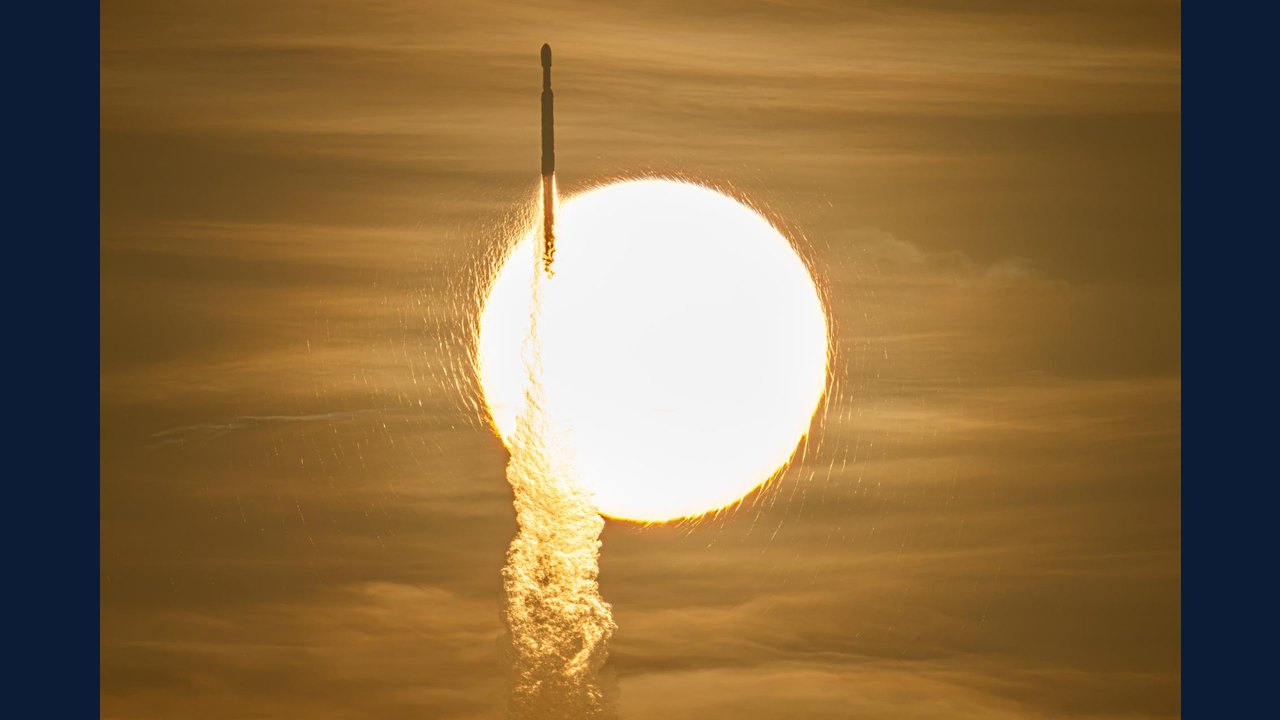
Image: NASA · Photo source · Resized and letterboxed to 16:9; no AI generation
NASA’s Nancy Grace Roman Space Telescope launched successfully at 7:26 a.m. EDT Sunday aboard a SpaceX Falcon Heavy rocket from Launch Complex 39A at the agency’s Kennedy Space Center in Florida. The observatory is currently on a three-month, million-mile journey to its final operational orbit at the second Sun-Earth Lagrange point (L2).
Mission Objectives and Technology
Designed to peer deep into cosmic history, the Roman Space Telescope combines a large field of view with advanced infrared vision. According to NASA, the mission will help astronomers investigate:
- Dark matter and dark energy
- Exoplanets beyond our solar system
- Broader cosmic structures and evolution
The spacecraft carries a 300-megapixel Wide Field Instrument featuring 18 4K detectors capable of surveying the universe up to a thousand times faster than the Hubble Space Telescope. Additionally, the Coronagraph Instrument will test advanced technology aimed at imaging Jupiter-like worlds, paving the way for future direct imaging of Earth-like planets.
Flight and Communication Milestones
Ground control at NASA’s Goddard Space Flight Center in Greenbelt, Maryland, received telemetry data seven minutes after liftoff. The Falcon Heavy rocket separated from the observatory 31 minutes into the flight, with boosters safely returning to the launch site for refurbishment.
Communications during early orbit relied on the Near Space Network before transitioning to the Deep Space Network via tracking complexes in Australia, Spain, and California. Mission controllers confirmed the successful deployment of the observatory's solar panels and lower instrument sun shade one hour and 23 minutes after launch. Upcoming milestones include deploying the high-gain antenna and deployable aperture cover, performing mid-course corrections, and powering on the Coronagraph Instrument.
Data and Future Outlook
During its three-month commissioning phase, scientists will calibrate and test the instruments. NASA anticipates releasing the telescope's first operational images by early 2027. Roman is designed to transmit 1.4 terabytes of data daily—the highest data rate of any NASA astrophysics mission to date—with machine learning, artificial intelligence, and citizen scientists assisting in processing the findings.
The mission is managed at NASA Goddard with contributions from international space agencies including ESA, JAXA, CNES, and the Max Planck Institute for Astronomy, alongside key industrial partners such as BAE Systems, L3Harris Technologies, and Teledyne Scientific & Imaging. Observers can verify official updates and learn more through NASA's public news releases and media contacts.
AI-assisted reporting; source claims are attributed and have not been independently verified.
More to read
 NASA Completes Construction of the Nancy Grace Roman Space Telescope Ahead of Planned Launch
 NASA Invites Media and Public to View Nancy Grace Roman Space Telescope's First Images
 NASA's Nancy Grace Roman Space Telescope Named Among TIME Best Inventions of 2026
 NASA's James Webb Space Telescope Reveals Detailed Map of Dark Matter's Influence