NASA's Hubble Space Telescope Surveys Cosmic Lenses for Future Roman Mission
· GlobeWire Daily Editorial Desk · Source: science.nasa.gov
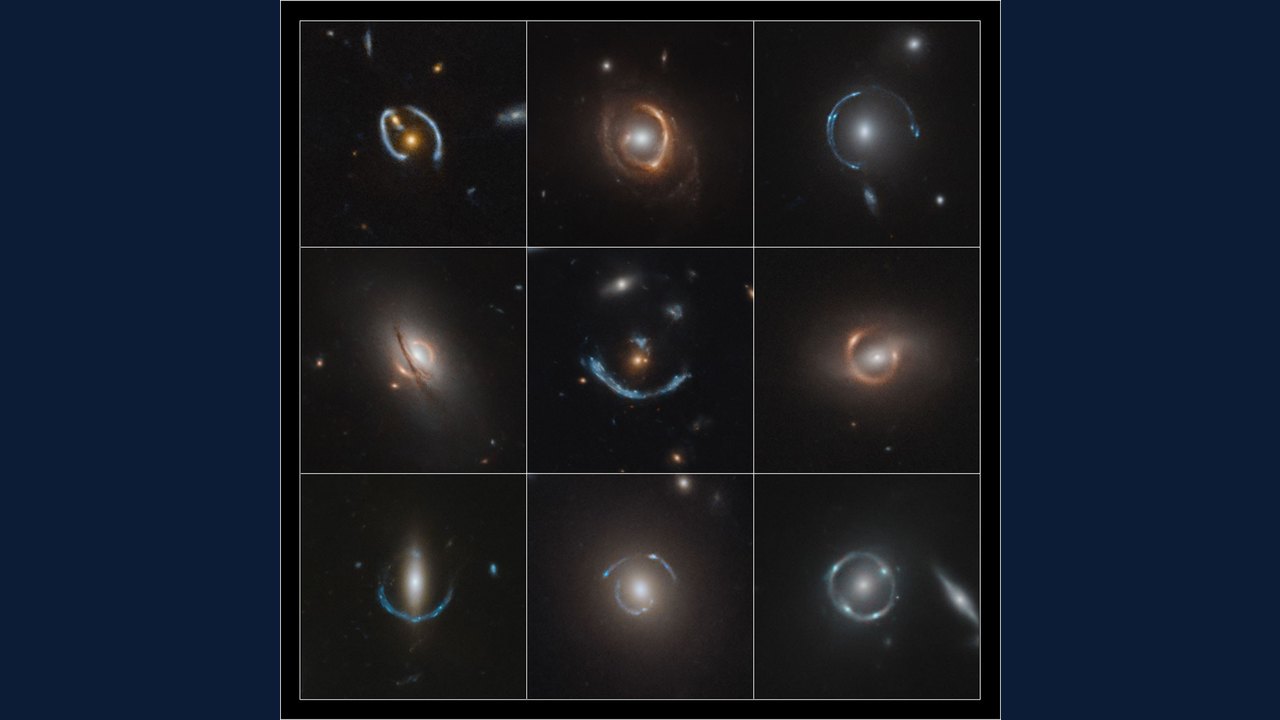
Image: NASA Science · Photo source · Resized and letterboxed to 16:9; no AI generation
A New Perspective on Gravitational Lensing
NASA’s Hubble Space Telescope has captured a diverse collection of gravitational lenses, providing a foundational resource for the upcoming Nancy Grace Roman Space Telescope. Gravitational lensing—a phenomenon predicted by Albert Einstein—occurs when the immense gravity of a foreground object bends and magnifies the light of a distant galaxy located behind it, acting as a natural telescope.
Scientific Objectives
Astronomers utilize these observations to map mass distribution and investigate the nature of dark matter. By analyzing the distortion of lensed arcs, researchers aim to:
- Construct precise mass models of foreground galaxies.
- Identify small clumps of dark matter, potentially validating the cold dark matter theory.
- Develop automated tools to identify similar lenses in future Roman datasets.
Collaborative Observational Strategy
While Hubble excels at high-resolution visible and ultraviolet observations of individual targets, the Roman Space Telescope will leverage a much wider field of view to survey the cosmos in infrared. The two missions are expected to work in tandem: Roman will identify large populations of lenses, while Hubble’s precision allows for detailed follow-up studies of particularly interesting targets. Researchers can verify these findings by comparing Hubble's visible-light data with Roman’s infrared coverage, which is less obscured by cosmic dust. These combined efforts are part of a broader collaborative framework between NASA’s Great Observatories to expand our knowledge of galactic evolution.
AI-assisted reporting; source claims are attributed and have not been independently verified.
More to read
 NASA's Hubble Space Telescope Lays Groundwork for Future Roman Space Observations
 NASA Completes Construction of the Nancy Grace Roman Space Telescope Ahead of Planned Launch
 NASA Launches Nancy Grace Roman Space Telescope to Explore Dark Universe
 NASA Invites Media and Public to View Nancy Grace Roman Space Telescope's First Images