NASA Releases Red, White, and Blue Cosmic Images to Mark America’s 250th Anniversary
· GlobeWire Daily Editorial Desk · Source: www.space.com
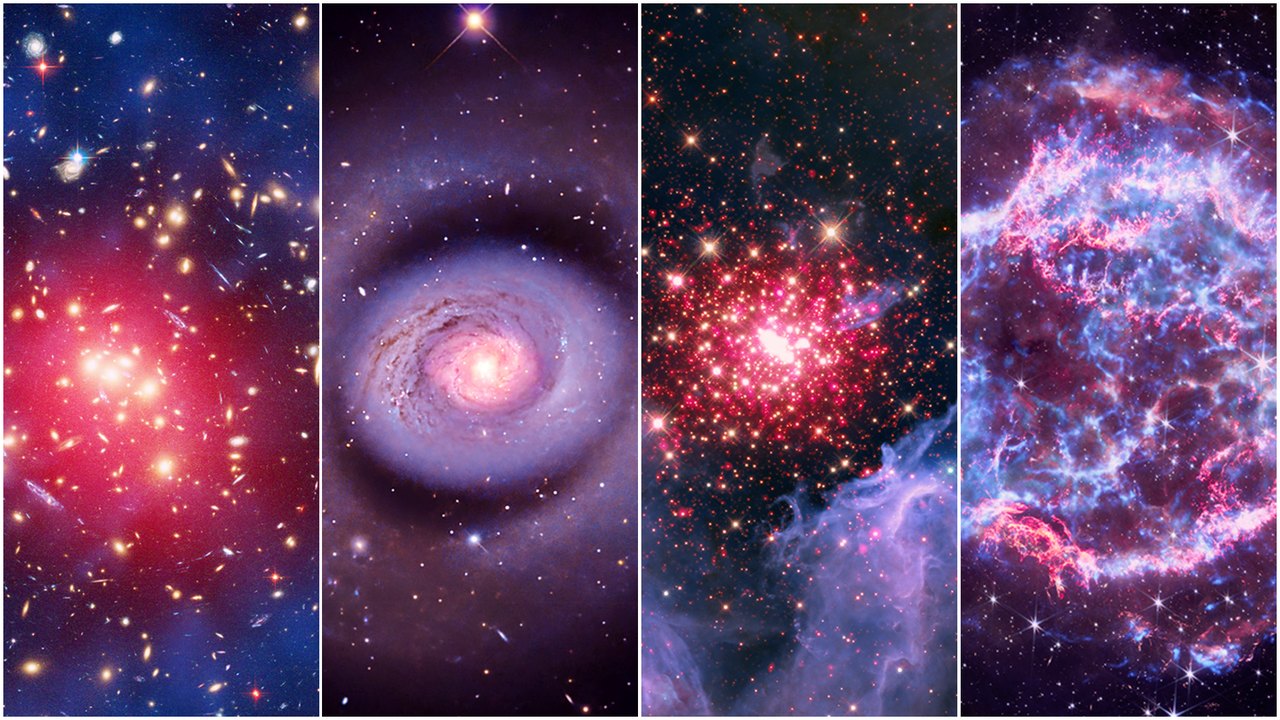
Image: Space · Photo source · Resized and letterboxed to 16:9; no AI generation
To commemorate the upcoming 250th anniversary of the United States, NASA’s Chandra X-ray Observatory has unveiled four new images of cosmic phenomena, uniquely processed in red, white, and blue hues. The project also includes “sonifications,” which translate X-ray data into musical audio frequencies.
Featured Cosmic Wonders
- Galaxy Cluster ZwCl 0024+1652: Located 4 billion light-years away, this cluster displays superheated gas in red and dark matter in blue, as detected by the Hubble Space Telescope’s influence on surrounding light.
- Messier 94 (M94): Known as the “Cat’s Eye Galaxy,” this spiral galaxy 16 million light-years away features a vibrant starburst ring. Scientists are particularly interested in its unusual lack of dark matter.
- NGC 3603: Situated 20,000 light-years away in the Milky Way, this nebula contains some of the most massive stars in the universe, surrounded by vast clouds of gas and dust.
- Cassiopeia A: The remnants of a supernova that occurred over 10,000 years ago. The image combines Chandra X-ray data with infrared observations from the James Webb Space Telescope.
Scientific Context
These images represent a collaborative effort between space-based observatories. By layering X-ray data with optical, infrared, and ultraviolet light, NASA aims to provide a more comprehensive visualization of celestial structures that are otherwise invisible to the human eye. The agency continues to study these regions to better understand dark matter and the life cycles of massive stars. Official imagery and data sets can be verified through the NASA Chandra and Hubble archives.
AI-assisted reporting; source claims are attributed and have not been independently verified.
More to read
 NASA Releases James Webb Space Telescope's First Full-Color Science Images
 ESA Releases Euclid's First Detailed Images of the Dark Universe
 Katie Spicer Shapes NASA's Artemis Future as Blue Origin Lander Integration Lead
 NASA Invites Media and Public to View Nancy Grace Roman Space Telescope's First Images