Scientists Identify ‘Astronomy’s Platypus’ with NASA’s Webb Telescope
· GlobeWire Daily Editorial Desk · Source: science.nasa.gov
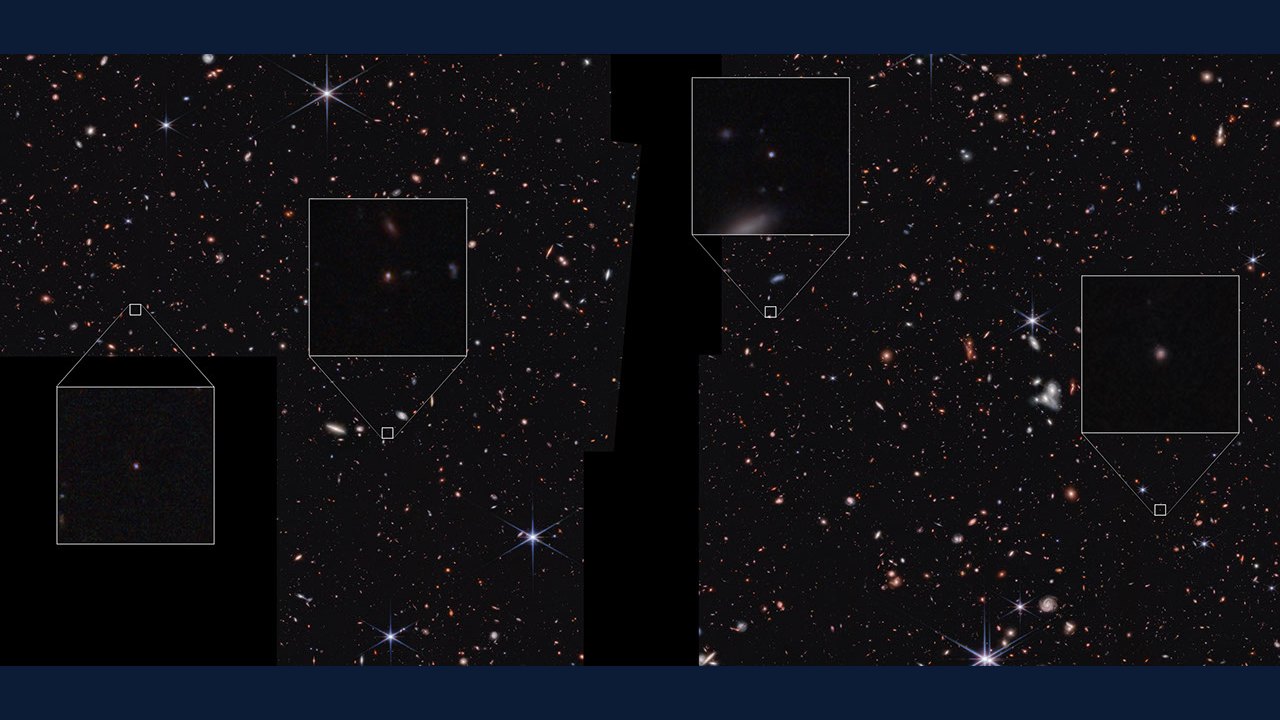
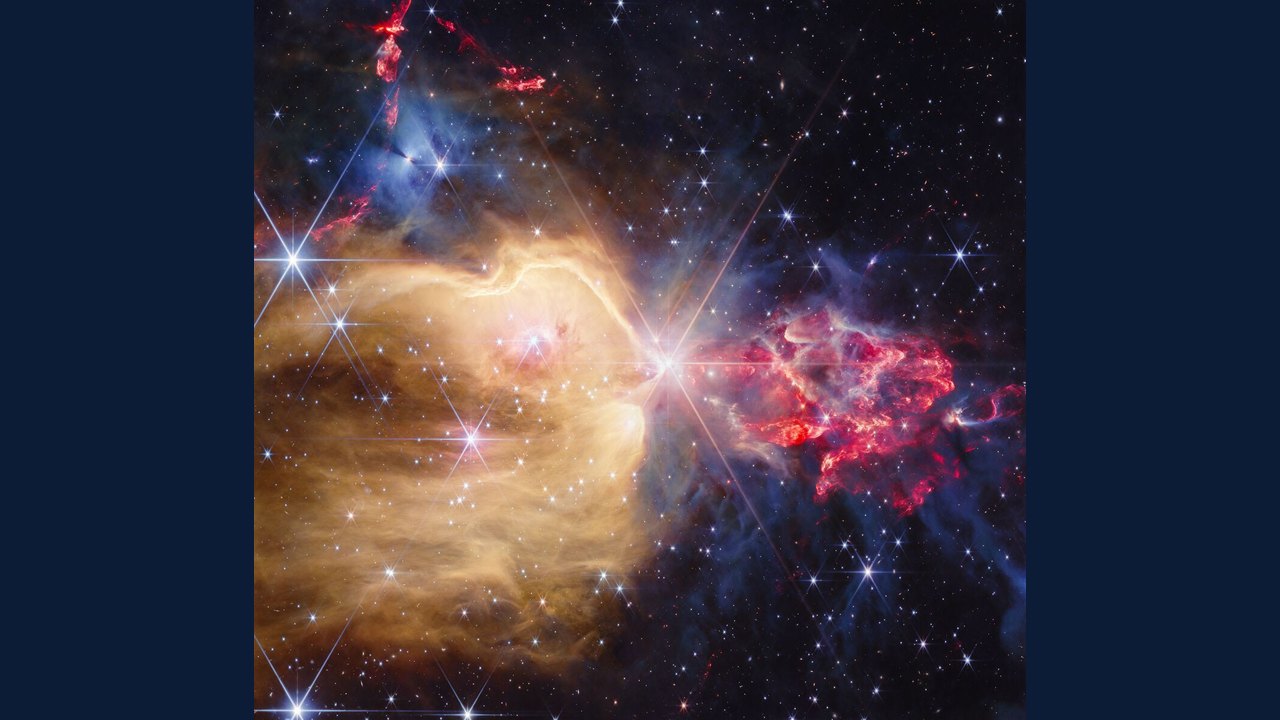
Image: NASA Science · Photo source · Resized and letterboxed to 16:9; no AI generation
A small team of astronomers at the University of Missouri has reported the identification of a group of unusual galaxies using archive data from NASA's James Webb Space Telescope. Principal investigator Haojing Yan presented the findings at a press conference during the 247th meeting of the American Astronomical Society in Phoenix, comparing the discovery to the biology taxonomy-defying platypus.
Unprecedented Galactic Features
By analyzing data across multiple Webb surveys, the researchers focused on nine point-like sources existing 12 to 12.6 billion years ago. While these objects appear extremely tiny and compact like a point source, they lack the characteristics typical of distant quasars, which feature active supermassive black holes and broad spectral emission lines indicating high-velocity gas.
- Point-like appearance: Extremely compact, resembling a star or quasar.
- Narrow spectral peaks: Unlike broad quasar lines, the emission lines are narrow and sharp, pointing to slower gas movement.
- Unusual combination: Features that challenge current categorization models.
Investigating Potential Origins
Graduate student researcher Bangzheng Sun analyzed the data to explore whether the objects could be star-forming galaxies. While low-resolution spectra do not rule out this possibility, the extreme compactness remains puzzling even given Webb's high resolving power.
The team suggests these observations might reveal earlier stages of galaxy formation and evolution than previously observed, raising questions about how galaxy formation begins before chaotic mergers occur.
Practical Implications and Verification
The researchers emphasize that a much larger sample size and higher-resolution spectra are required to determine the true nature of these objects. Interested readers can review original announcements through NASA's official science portal and examine published findings from the American Astronomical Society meeting.
AI-assisted reporting; source claims are attributed and have not been independently verified.
More to read
 NASA’s Webb Telescope Detects New Small Moon Orbiting Uranus
 NASA Releases James Webb Space Telescope's First Full-Color Science Images
 NASA's James Webb Space Telescope Reveals Detailed Map of Dark Matter's Influence
 NASA's James Webb Space Telescope Captures Star Formation in NGC 7129