NASA's James Webb Space Telescope Captures Star Formation in NGC 7129
· GlobeWire Daily Editorial Desk · Source: science.nasa.gov
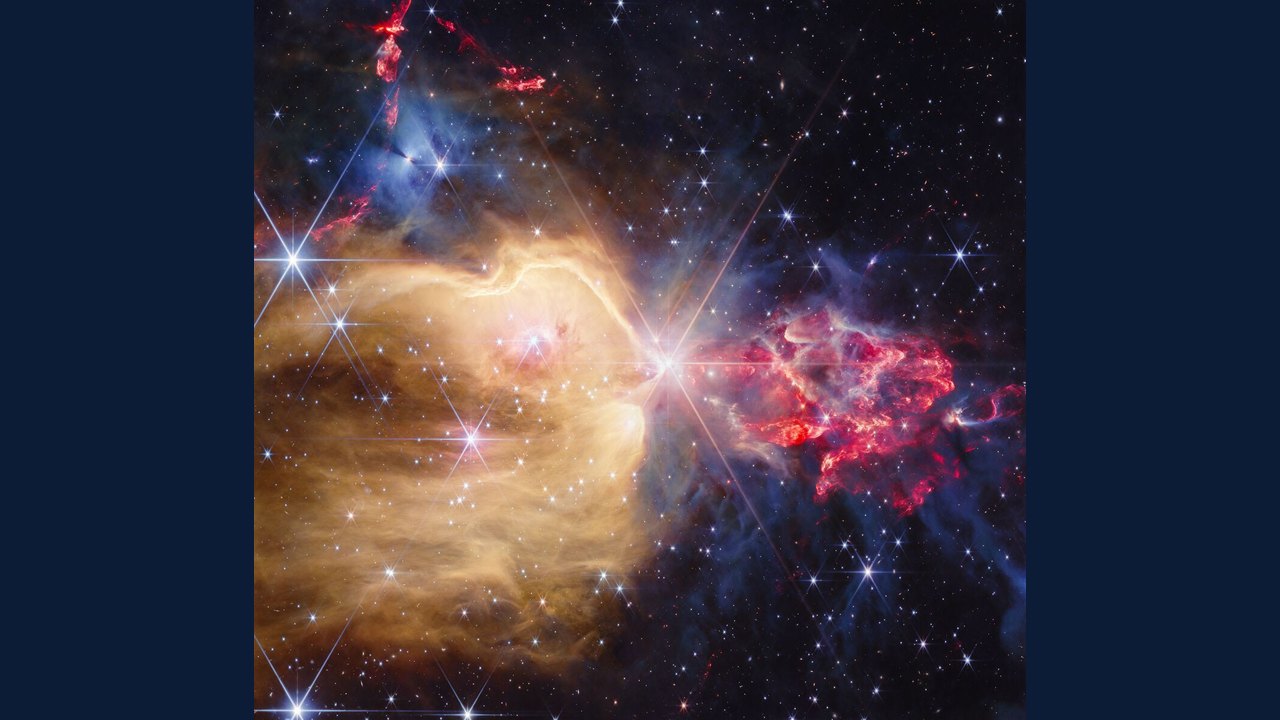
Image: NASA Science · Photo source · Resized and letterboxed to 16:9; no AI generation
NASA has featured a detailed infrared image captured by the James Webb Space Telescope of the star-forming region NGC 7129. The observation aims to help astronomers better understand the complex processes of star formation.
Understanding Star Formation
Star formation typically begins when gravity pulls together massive amounts of gas. However, the process becomes complicated as newly formed stars emit powerful jets and winds, and some eventually explode. Cool stellar atmospheres can also form opaque dust, which can later be dispersed to block visible-light views.
Observations in NGC 7129
- Stellar Maturity: Young stars visible on the left in the gold-colored gas are generally more mature than those on the right in the red region.
- Gas Filaments: Jets and stellar winds likely contribute to the filamentary structure observed in the red-colored gas.
Practical Implications and Verification
Studying stars at various developmental stages helps researchers determine which physical processes are most significant during stellar evolution. Interested observers can verify these findings and explore daily astronomy features through NASA's official Astronomy Picture of the Day (APOD) website.
AI-assisted reporting; source claims are attributed and have not been independently verified.
More to read
 James Webb Space Telescope Captures High-Energy Star Formation in N159
 NASA Releases James Webb Space Telescope's First Full-Color Science Images
 NASA's James Webb Space Telescope Reveals Detailed Map of Dark Matter's Influence
 James Webb Space Telescope Detects Ancient Interstellar Ice Around Young Star Beta Pictoris