Israel’s Election Stalemate: Four Paths Out of the Deadlock
· GlobeWire Daily World Desk · Source: www.bbc.co.uk
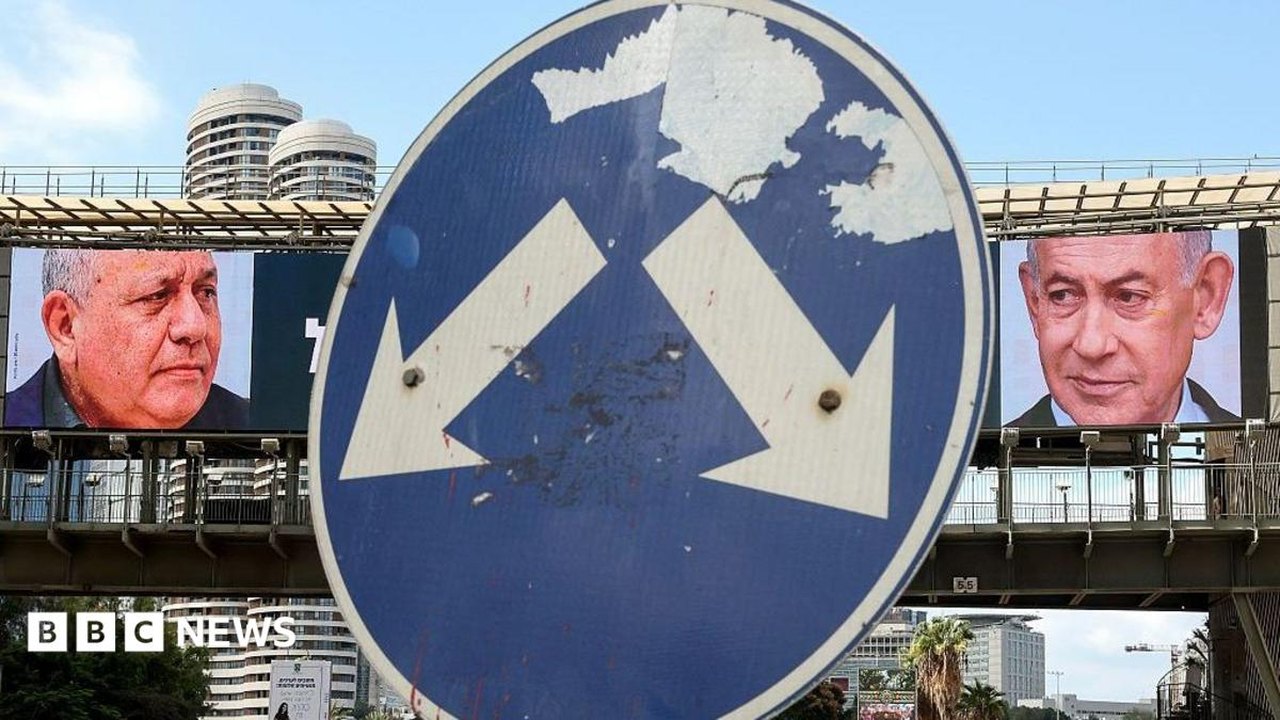
Image: www.bbc.co.uk — Creative Commons
Election Results and Immediate Outlook
With about 85 % of votes counted in Israel’s latest parliamentary election, neither incumbent Prime Minister Benjamin Netanyahu nor his main challenger Gadi Eisenkot is projected to command a majority of the 120‑seat Knesset. The vote count leaves the country in a classic deadlock: no single bloc has the 61 seats needed to form a government. Analysts therefore see four plausible routes forward, each requiring at least one party to abandon a core campaign promise.
---
Scenario 1: A Netanyahu‑Eisenkot National Unity Government
A traditional “national unity” coalition would bring Netanyahu’s Likud party together with Eisenkot’s Yashar Party. To make this work, Eisenkot would have to drop his central pledge to oust Netanyahu and his promise to present a clear alternative to the current right‑wing administration. Eisenkot’s own rally on election night urged Netanyahu to retire, underscoring how unlikely such a compromise appears.
Netanyahu, for his part, has thanked his “loyal partners” and signalled a desire for a strong right‑wing government, suggesting he intends to keep the ultra‑Orthodox and far‑right parties that helped him win the most seats. A unity government would therefore likely require Netanyahu to discard those allies, a move that would alienate a key part of his base.
A sudden external shock – for example, an escalation with Iran – could pressure leaders to set aside partisan differences, but critics argue that Netanyahu might use such a crisis to protect his own political survival rather than to foster genuine cooperation.
---
Scenario 2: An Arab‑Led Opposition Bloc
Arab‑Israeli parties performed far better than expected, potentially securing a record 19 seats. The United Arab List is projected at roughly seven seats, while the Joint List may win about twelve. Both have said they would either join an opposition government or support one from outside the coalition.
Only one Jewish‑led party, Yair Golan’s Democrats, has publicly indicated willingness to work with Arab parties. Even if such a coalition were assembled, it would be fragile, especially on security matters concerning Gaza and the West Bank, where Arab parties traditionally hold divergent views from most Jewish parties.
The scenario would mark a historic shift: only once – in 2021 – has an independent Arab party entered a governing coalition, and that arrangement collapsed quickly.
---
Scenario 3: Right‑Wing Realignment Around Netanyahu
A third possibility is that right‑wing factions from Eisenkot’s bloc – most notably Naftali Bennett (joint‑leader of the Beyachad alliance) and Avigdor Lieberman of Yisrael Beiteinu – break with Eisenkot and join Netanyahu’s camp. Both leaders campaigned on removing Netanyahu and on extending military conscription to the ultra‑Orthodox, putting them at odds with the ultra‑Orthodox parties already in Netanyahu’s coalition.
Even if Bennett and Lieberman were to switch sides, the combined seat total would still fall short of a majority, and their inclusion would likely require the removal of the ultra‑Orthodox parties – a step that could provoke backlash from Netanyahu’s core supporters.
---
Scenario 4: New Elections and a Caretaker Government
If none of the above negotiations succeed, Israel’s constitution mandates new elections. Netanyahu would remain caretaker prime minister until a fresh vote, a position that could give him a strategic advantage: the high Arab turnout that helped block a clear majority may not be replicated, and right‑wing voters who stayed home this round might be mobilised for a second poll.
Analysts note that about 70,000 Israelis who travelled abroad to vote – a group that tended to lean against Netanyahu – may be less likely to repeat that effort. Additionally, several right‑wing parties that failed to cross the 3.25 % electoral threshold this time could either consolidate their votes behind Likud or choose not to run at all, potentially boosting Netanyahu’s share in a repeat election.
---
Practical Implications for Israelis
- Policy uncertainty – Key issues such as military conscription for ultra‑Orthodox Jews, the status of settlements, and the approach to Gaza remain in limbo until a stable coalition forms.
- Economic outlook – Market participants typically react to government stability; a prolonged deadlock could keep interest rates and the shekel volatile.
- Security posture – A unity government formed under external pressure (e.g., an Iran confrontation) might adopt a more hawkish stance, while an Arab‑led opposition could push for renewed diplomatic initiatives.
- Public sentiment – The unprecedented Arab turnout signals a growing willingness among Arab citizens to influence national politics, which could reshape future campaign strategies.
---
What Remains Uncertain and How to Verify
The four scenarios outlined above are speculative; they depend on negotiations that have not yet begun. What is confirmed:
- Neither Netanyahu nor Eisenkot is projected to secure a majority with the current vote count (BBC, 85 % counted).
- Arab parties are on track for a record 19 seats, with the United Arab List and Joint List projected at roughly 7 and 12 seats respectively.
- Yair Golan is the only Jewish party leader publicly open to an Arab‑Jewish coalition.
- Bennett and Lieberman have publicly pledged to oust Netanyahu and to extend conscription to the ultra‑Orthodox, making a quick realignment unlikely.
Readers can follow the official election results on the Israeli Central Elections Committee website and watch for updates from reputable news agencies such as the BBC, Reuters, and the Times of Israel. The BBC article that forms the basis of this report is available at:
[https://www.bbc.co.uk/news/articles/cm62y46d97wwo?at_medium=RSS&at_campaign=rss](https://www.bbc.co.uk/news/articles/cm62y46d97wwo?at_medium=RSS&at_campaign=rss)
---
The situation will evolve as party leaders meet behind closed doors. Until a formal coalition agreement is announced, the deadlock and its possible resolutions remain a matter of political negotiation rather than certainty.
AI-assisted reporting; source claims are attributed and have not been independently verified.
More to read
 Israel Faces Coalition Gridlock as Netanyahu's Bloc Loses Majority and Palestinian Parties Make Historic Gains
 Israel Faces Political Deadlock After High-Turnout Election Leaves No Clear Winner
 Uttar Pradesh Legislative Council members receive ₹2.66 lakh monthly and hold limited legislative powers, official figures show
 Accessing Curated Lifestyle and Wellness Resources via Navbharat Times
Trending on GlobeWire Daily
Selected from recent coverage and related topics; not live search rankings.
 Recent Program and Project Management Openings Highlighted for Boydton and Surrounding Regions
 Administrative and Support Job Openings Highlighted in Boydton Area Listings
 Overview of Military and Protective Services Openings in the Des Moines Area
 Navigating Free Sample Promotions and Trial Offers Across India: What Consumers Should Know
 Exploring the Landscape of Fantasy Cricket Apps and Platforms in India
 NABARD Opens Grade A Officer Recruitment 2025 for 91 Vacancies: What Applicants Need to Know