Study Finds Women’s Agricultural Empowerment Strengthens Food Security in South Sudan
· GlobeWire Daily World Desk · Source: bioengineer.org
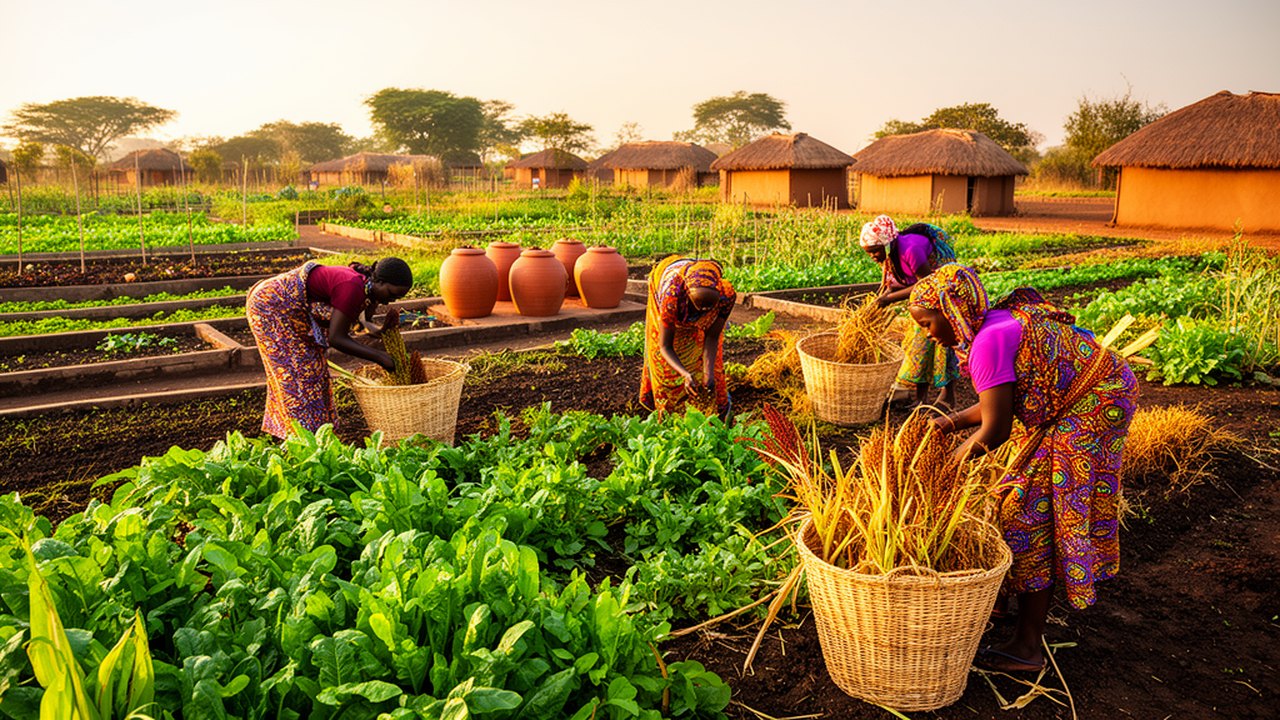
Image: BIOENGINEER.ORG · Photo source · Resized and letterboxed to 16:9; no AI generation
A newly published investigation conducted in Rejaf Payam, South Sudan, indicates that expanding women's decision-making agency is associated with improvements in household food security across varying levels of vulnerability. Authored by agricultural economist Maria Sassi and published in Agricultural and Food Economics, the empirical research examined how intrinsic, instrumental, and collective agency operates in an environment affected by institutional fragility, localized conflict, and land disputes.
Research Methodology and Scope
- Sample Size: Primary survey records from 511 smallholder farming households alongside qualitative discussions collected in February 2025.
- Location: Rejaf Payam within Juba County in South Sudan’s Central Equatoria State.
- Measurement Tool: The Project-level Women’s Empowerment in Agriculture Index (pro-WEAI), evaluating twelve operational indicators across intrinsic, instrumental, and collective domains.
- Statistical Design: Ordinary least squares paired with quantile regression models and design matrix bootstrap techniques using 1,000 sampling repetitions.
Key Findings
- Empowerment Impact: Every one-unit gain on the empowerment index corresponded to an increase of 0.136 to 0.221 units in a multidimensional latent food security metric, maintaining a positive relationship across all evaluated quantiles.
- Human Capital Limitations: Individual educational attainment demonstrated a human capital ceiling, generating significant gains at median and upper quantiles but losing statistical influence at the twenty-fifth percentile where acute structural vulnerabilities superseded formal schooling advantages.
- Geographic Disparities: Remote agrarian settlements such as Bilinyang, Nesitu, Kadoro, and Jebel Lemon registered significant negative coefficients compared to peri-urban benchmarks, which qualitative testimonies attributed to infrastructure limits, transportation distances, and recurring clashes with pastoralist cattle herders.
Methodological Considerations and Context
The authors noted potential selection bias arising from the purposive sampling of households enrolled in a donor-supported resilience initiative. Furthermore, the cross-sectional survey architecture prevents definitive causal confirmation, leaving open the possibility of a reciprocal relationship. Researchers concluded that sustainable advances in food security require combining agency-building initiatives with structural investments such as dispute mitigation, all-weather feeder roads, and vocational training.
AI-assisted reporting; source claims are attributed and have not been independently verified.
More to read
 Domestic Travel Fueled Five Measles Importations to Washington State from South Carolina, Study Finds
 AI‑Driven Security Decisions Raise Control Gap, Study Finds
 Study Finds Deaf Children Exposed to Sign Language from Birth Match Hearing Peers in Early Maths
 Weight-Loss Drugs Used in Nearly One in 10 Great Britain Homes, Study Finds