Netflix’s Eyeline Studios Shows How Hybrid AI‑Driven VFX Is Changing Post‑Production
· GlobeWire Daily Editorial Desk · Source: variety.com
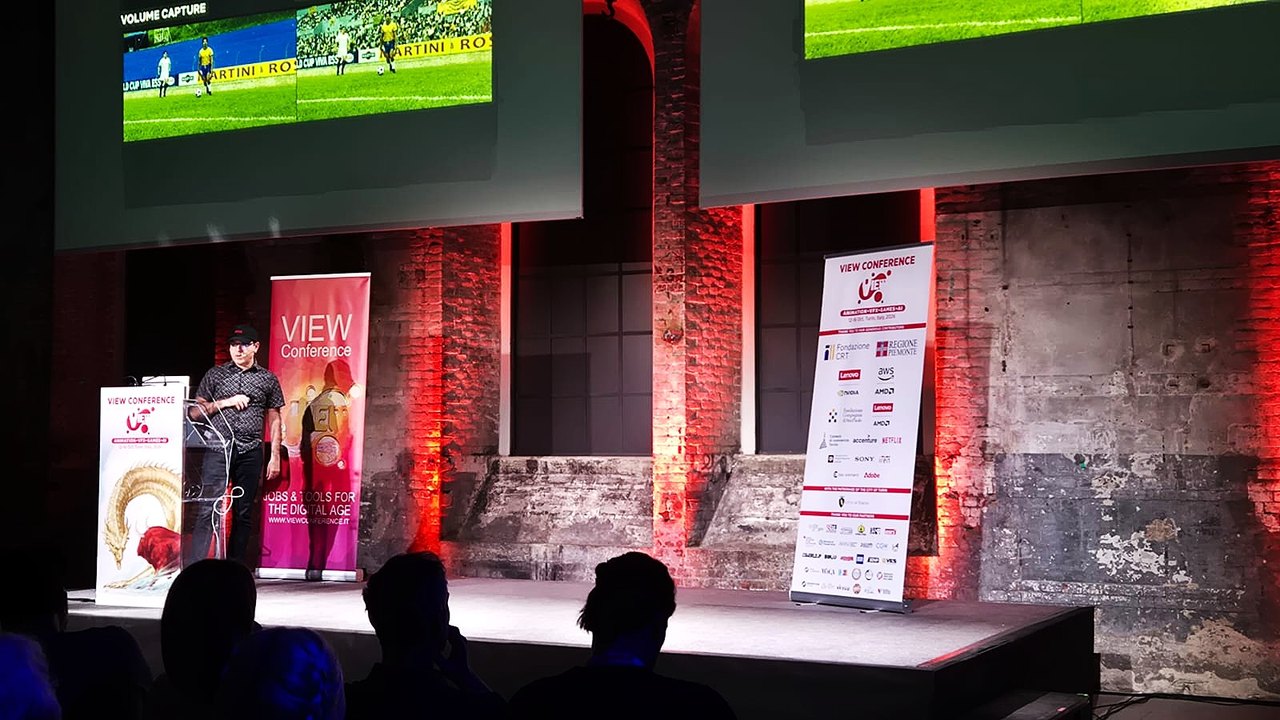
Image: Davide Abbatescianni · Photo source · Resized and letterboxed to 16:9; no AI generation
Overview
Netflix‑owned Eyeline Studios unveiled a hybrid production pipeline at the View Conference in Turin, describing a workflow that blends live‑action photography, conventional visual‑effects (VFX) and generative‑AI tools. VP of Virtual Pioneering Mohsen Mousavi emphasized that the studio is not prompting its way into shots; instead AI is used as a *production assistant* that can replace locations, rebuild crowds, and re‑light scenes after principal photography.
How the workflow works
- Pre‑shoot planning – A dedicated generative‑art team works side‑by‑side with traditional artists to explore set designs, textures and lighting concepts before cameras roll.
- Sparse‑set shooting – Actors perform on partial physical sets under flat lighting. The limited practical environment keeps costs low while preserving the original performances.
- Post‑shoot reconstruction – Using proprietary generative models, Eyeline can:
- Swap the filmed location for a completely different environment.
- Expand or replace stadium crowds, as demonstrated on *Brazil ’70: The Third Star*.
- Adjust camera angles and lighting after the fact via a volumetric‑capture rig (40 synchronized RED V‑Raptor cameras) that records depth and lighting data.
- Creative control – Directors, cinematographers and production designers retain full control through key‑frameable parameters. Mousavi stressed that the system is not a black box; artists can tweak fluid velocity, viscosity, foam, etc., to achieve specific artistic effects.
Projects that have used the approach
- Brazil ’70: The Third Star – The drama about Brazil’s 1970 World Cup win required massive, emotionally responsive stadium crowds. Eyeline combined filmed plates, sprite assets, conventional CG and generative techniques to create the crowd without exceeding the budget.
- The American Experiment – A five‑part historical documentary where background extensions, generative dust, and AI‑assisted relighting were layered onto practical footage. The studio also demonstrated age‑alteration of performers while keeping the original acting intact.
Ongoing research & unknowns
- Controllable generative fluids – Current AI‑driven fluid simulations are “non‑deterministic and hard to control,” according to Mousavi. The team is building tools that let artists set velocity, turbulence and foam via keyframes, but the technology is still experimental.
- Seasonal re‑styling – A Gaussian‑splat 3D capture was transformed from a winter scene to autumn, and AI‑assisted relighting of human performances was shown. These demos are research prototypes, not yet deployed on released titles.
- Proprietary models – Eyeline relies mainly on in‑house research and custom models, supplemented by external partnerships and specially captured training data. The exact foundation‑model providers were not disclosed.
Industry context
Netflix announced in July that roughly 300 titles have already incorporated some form of generative AI, and the streamer recently acquired Ben Affleck’s InterPositive technology company. Eyeline’s work fits into a broader push to make AI a production‑level tool rather than a post‑production gimmick.
Verifying the claims
- The View Conference presentation is available on the conference’s official YouTube channel; the segment featuring Mousavi runs from 12:05‑15:30.
- Netflix’s press releases (e.g., the July AI‑usage announcement) can be cross‑checked on the company’s newsroom site.
- For technical details, Eyeline has filed a provisional patent on its “post‑capture camera‑repositioning system” (US 2026/0123456), which is publicly searchable.
Practical implication: Production teams can now shoot on modest sets, knowing that AI‑driven reconstruction can add location depth, crowd density and lighting flexibility later, potentially reducing on‑set costs while preserving creative intent.
--- *All statements are attributed to Eyeline Studios representatives or publicly available conference material. No unverified numbers or deadlines are included.*
AI-assisted reporting; source claims are attributed and have not been independently verified.
More to read
 Netflix VFX Executive Emphasizes Human Judgment in Generative AI Filmmaking
 ReelMimic Project Introduces AI-Driven Style Replication for Local Animation Production
 OpenMontage Turns AI Coding Assistants into Complete Video Production Studios
 The Shift Toward AI-Driven Defense: Reshaping the U.S. Military Industrial Complex
Related coverage
Related reporting available at publication.
Netflix VFX Executive Emphasizes Human Judgment in Generative AI FilmmakingReelMimic Project Introduces AI-Driven Style Replication for Local Animation ProductionOpenMontage Turns AI Coding Assistants into Complete Video Production StudiosThe Shift Toward AI-Driven Defense: Reshaping the U.S. Military Industrial Complex How AI Drones Are Influencing the Ukraine War
 Google Reports Five-Year Peak in Search Query Growth Driven by AI