Automobiles
How Far Can a Fiber‑Optic Cable Run Before Signal Attenuation Becomes a Problem?
· GlobeWire Daily Editorial Desk · Source: www.engadget.com
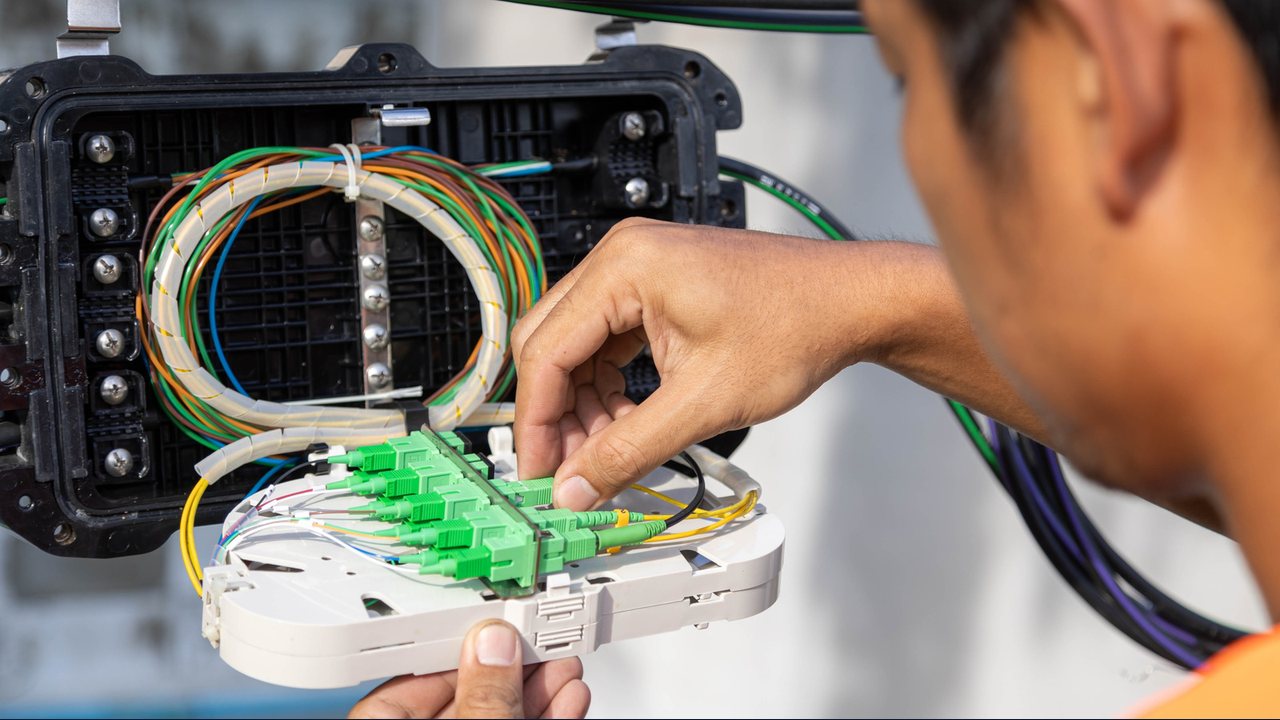
Fiber‑optic cables are the backbone of modern internet, linking continents and homes alike. While they can span many kilometres, the physics of light transmission imposes limits.
How Fiber Carries Light Over Distance
- Total internal reflection keeps light trapped inside the glass core.
- Unlike copper Ethernet (max ~100 m), fiber can travel several kilometres before noticeable loss.
Types of Fiber and Their Reach
- Single‑mode: one light beam, lower attenuation, suitable for tens to hundreds of kilometres with repeaters.
- Multi‑mode: multiple light paths, higher modal dispersion, practical for hundreds of metres to a few kilometres.
What Causes Loss?
- Attenuation – absorption and scattering gradually weaken the signal.
- Modal dispersion in multi‑mode fiber spreads pulses, limiting distance.
- Bends and micro‑cracks in a home run can cause leakage far earlier than the theoretical limit.
Real‑World Limits
- A single uninterrupted glass fiber typically carries data for 2–5 km before the signal falls below receiver sensitivity.
- Undersea systems (e.g., the 2Africa cable) use optical amplifiers placed every 70–100 km to boost the signal, so no cable is truly “uninterrupted” over oceanic spans.
Practical Takeaways
- For most residential installations, multi‑mode fiber is more than sufficient; signal loss is rarely an issue unless the cable is sharply bent.
- Enterprises needing long‑haul links rely on single‑mode fiber plus repeaters or amplifiers.
- To verify a claim about cable length, check the manufacturer’s attenuation specs (dB/km) and calculate the maximum run before the receiver’s sensitivity threshold is reached.
How to Test: Use an optical time‑domain reflectometer (OTDR) to measure loss along the installed fiber and compare it to the advertised specifications.
--- *All figures are based on typical industry specifications; actual performance varies with cable quality, wavelength, and equipment.*
Share this article
Read the original source How long can fiber optic cables be before they lose signal?