How Jet Lag Throws Foraging Seabirds Off Course, Oxford Study Reveals
· GlobeWire Daily Climate Desk · Source: www.theguardian.com
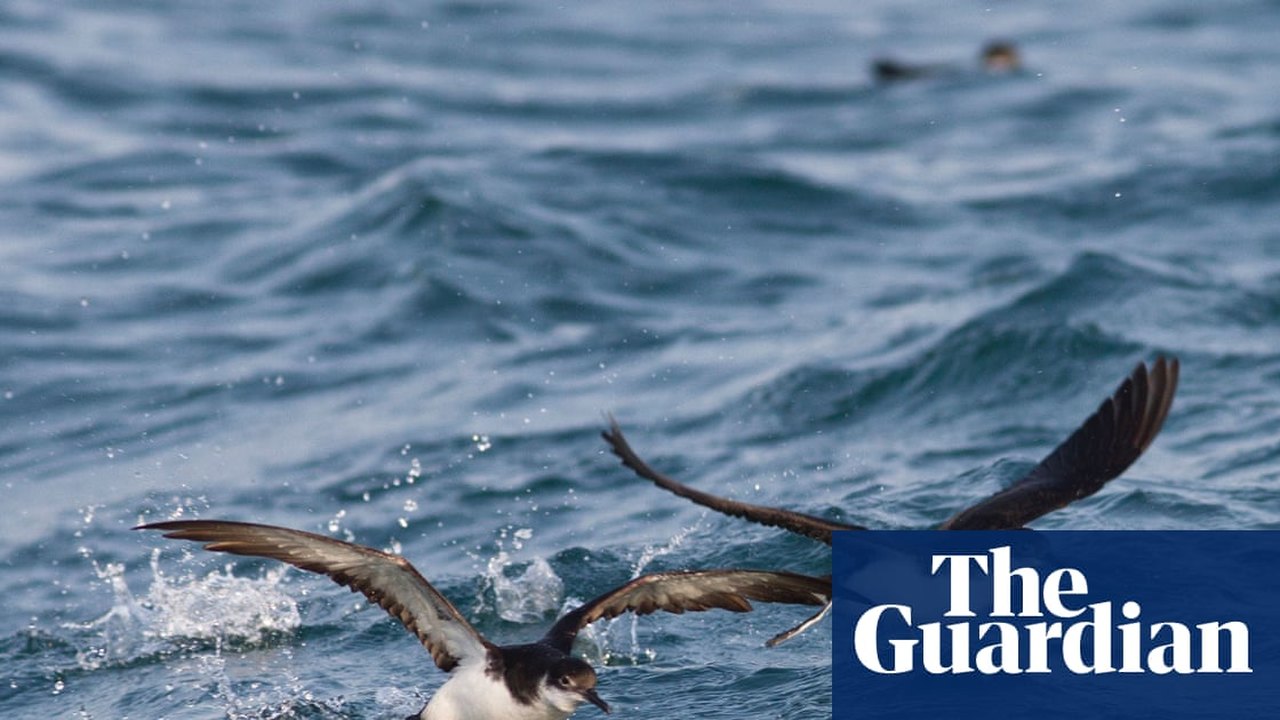
Image: www.theguardian.com — Creative Commons
New Research on Wild Manx Shearwaters
A recent study led by researchers at the University of Oxford has revealed that wild seabirds can experience a form of jet lag that disrupts their navigation, throwing them off course as they return from foraging trips.
The research, published in the journal Science, analyzed two decades of GPS tracking data collected from Manx shearwaters nesting on the west coast of the UK. Scientists discovered that rapid eastward flights across lines of longitude disrupted the birds' sense of time, causing their internal biological clocks to fall behind local time by up to an hour. Because these seabirds rely heavily on a sun compass to navigate—using their internal clocks to adjust their heading relative to the moving sun—the mismatch leads to orientation errors.
Impact on Adult versus Inexperienced Birds
The study found that the consequences of this biological clock disruption vary significantly depending on the age and experience of the bird.
For adult Manx shearwaters, the navigational impact is minimal. The adult birds are able to correct their bearings while in flight, veering off course by at most about 15 degrees. According to the researchers, this minor correction adds only an estimated 3 miles (5 kilometers) to a typical 600-mile (1,000-kilometer) journey.
However, less experienced birds face a much greater risk. First-time foragers lack the developed "map sense" that helps adults reorient themselves when they lose their way. Consequently, orientation shifts driven by sun compass errors could cause younger birds to fly off course by hundreds of miles.
Surprisingly, the tracking data showed that navigation errors persisted even when the birds flew along coastlines where geographical landmarks were available, underscoring the primary role that the sun compass plays in their directional tracking.
Expert Perspectives and Uncertainties
Independent experts have welcomed the findings. Professor Richard Holland of Bangor University, who was not involved in the research, noted that the study successfully confirms in wild animals what previous controlled laboratory experiments had indicated regarding sun compass reliance.
At the same time, researchers emphasize that certain questions remain unanswered. For instance, the exact ecological consequences of these navigational errors for inexperienced juveniles are not yet fully clear from the data, given that the studied adults successfully returned to their colonies with only minor deviations.
Practical Implications and Verification
Readers interested in the broader context of animal biology and chronobiology can review the peer-reviewed paper published in Science.
- What is confirmed: Two decades of GPS tracking data demonstrate that eastward flights cause Manx shearwaters' internal clocks to fall behind local time, leading to minor sun-compass navigation errors in adults and potentially much larger deviations in inexperienced first-time migrants.
- What remains unknown: The ultimate survival or reproductive consequences of these navigational miscalculations for juvenile birds are not yet established.
- How to verify: The original study findings are accessible via the scientific journal Science, and further reporting details can be found through major science news outlets referencing the University of Oxford research.
For more information on the original announcement, readers can consult the official coverage at [The Guardian](https://www.theguardian.com/science/2026/oct/29/jet-lag-throws-seabirds-off-course-nature).
AI-assisted reporting; source claims are attributed and have not been independently verified.
More to read
 AI and Climate Risks Converge as Corporate Power Fuels New Threats
 NSW Government Backflips on Takeaway Coffee Cup Laws Following Small Business Backlash
 Industrial Boom in Monterrey Triggers Severe Air Pollution Crisis, Investigation Finds
 US Climate Forecasting Capacity Hampered as Agency Faces Historic El Niño
Trending on GlobeWire Daily
Selected from recent coverage and related topics; not live search rankings.
 High-End Student Housing Sector Faces Financial Strain Amid Rising Costs and Falling International Demand
 How NASA's PACE Satellite Is Transforming Fall Foliage Tracking from Space
 WeMakeScholars Recruits Technical HR Professional Across Multiple Indian Cities
 Credit Saison India Recruits Relationship Manager for Secured Direct Operations in South India
 Rajasthan declares 80 tehsils across 14 districts as severely or moderately drought‑affected amid monsoon shortfall
 Ontario Teachers and Education Workers Rally Across Province Amid Contract Stalls and Upcoming Strike Votes