Astronauts Capture Dazzling Nighttime Views of Earth from the International Space Station
· GlobeWire Daily Science Desk · Source: science.nasa.gov
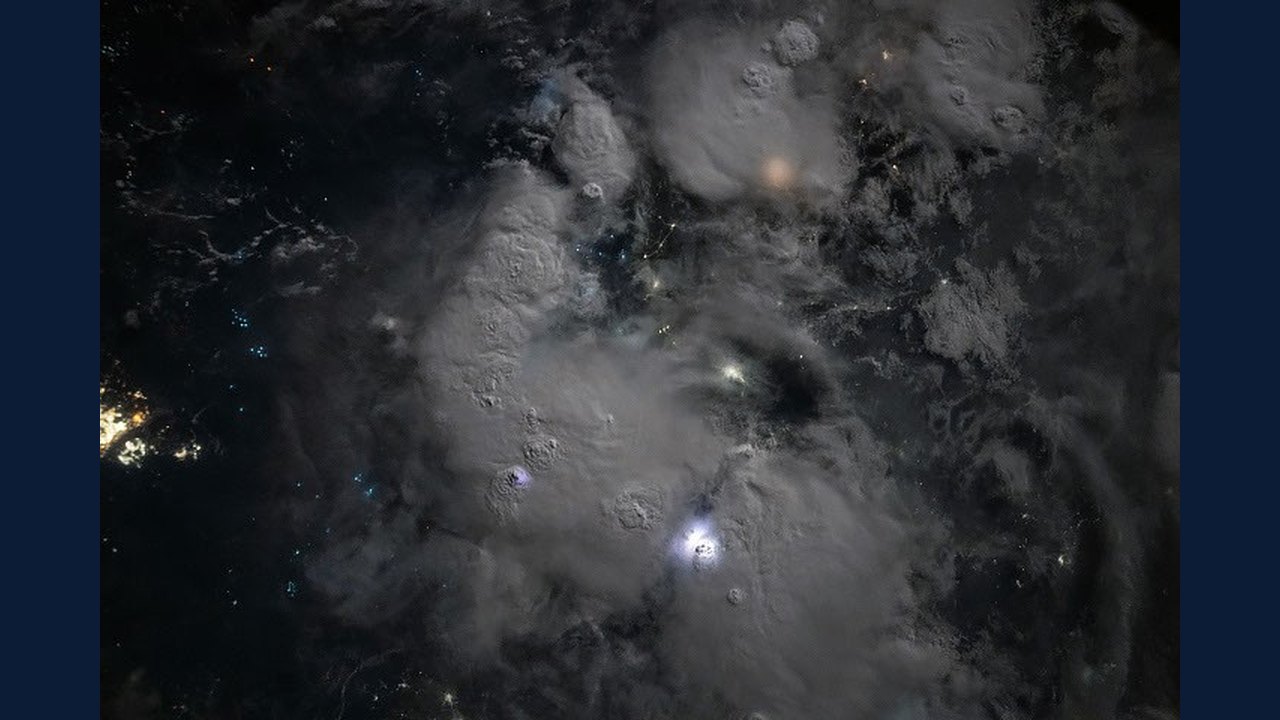
Image: NASA Science · Photo source · Resized and letterboxed to 16:9; no AI generation
Astronauts aboard the International Space Station have long described the unique perspective of viewing Earth at night from orbit. According to NASA, nighttime observations from space reveal striking phenomena, including city lights, fishing fleets, and extensive lightning activity.
Perspectives from Orbit
- Urban Glow: NASA astronauts like Donald Pettit have previously likened illuminated cities to intricate patterns outlined by theater marquees.
- Lightning from Above: The late NASA astronaut Sally Ride described seeing lightning diffused by clouds into bursting spheres of light, comparing extensive storms to a transcontinental brigade tossing fireworks between clouds.
- Recent Observations: On October 28, 2026, at 14:20 UTC, an Expedition 75 crew member photographed a notable nighttime scene over the South China Sea near Borneo using a Nikon Z9 camera.
Visual Details of the Scene
- Singapore and Surroundings: The lights of Singapore appear on the left of the captured frame, separated from Batam and Bintan islands by the Singapore Strait.
- Fishing Fleets: Clusters of blue lights west of Singapore are attributed to fishing vessels utilizing bright lights to attract squid or schooling fish.
- Offshore Flares: Scattered orange points located offshore to the northwest are identified as likely gas flares.
- Storm Activity: The image captures overshooting tops from thunderstorms, with lightning illuminating specific dome-like protrusions rising above the storm clouds.
Scientific Context and Verification
NASA scientists estimate that approximately 2,000 thunderstorms occur simultaneously on Earth, generating nearly 60 flashes per second, which totals about 5 million flashes daily.
The featured astronaut photograph, designated ISS075-E-250951, was acquired with a 14-millimeter focal length and is publicly accessible via the NASA/JSC Gateway to Astronaut Photography of Earth. Observers can verify these archival images and related scientific datasets through official NASA portals and the Earth Science and Remote Sensing Unit.
AI-assisted reporting; source claims are attributed and have not been independently verified.
More to read
 Voyager 1 Reaches One Light-Day Distance From Earth After 49 Years in Space
 Climate Change Pushes Earth's Ice Outside Its Safe Operating Space, Study Finds
 NASA Outlines Coverage Plans for Upcoming Northrop Grumman CRS-25 Space Station Resupply Mission
 NASA to Cover 35th SpaceX Resupply Mission Space Station Departure