Astronomers Identify Trigger Behind Outbursts of Massive Star AT 2016blu
· GlobeWire Daily Science Desk · Source: www.nasa.gov
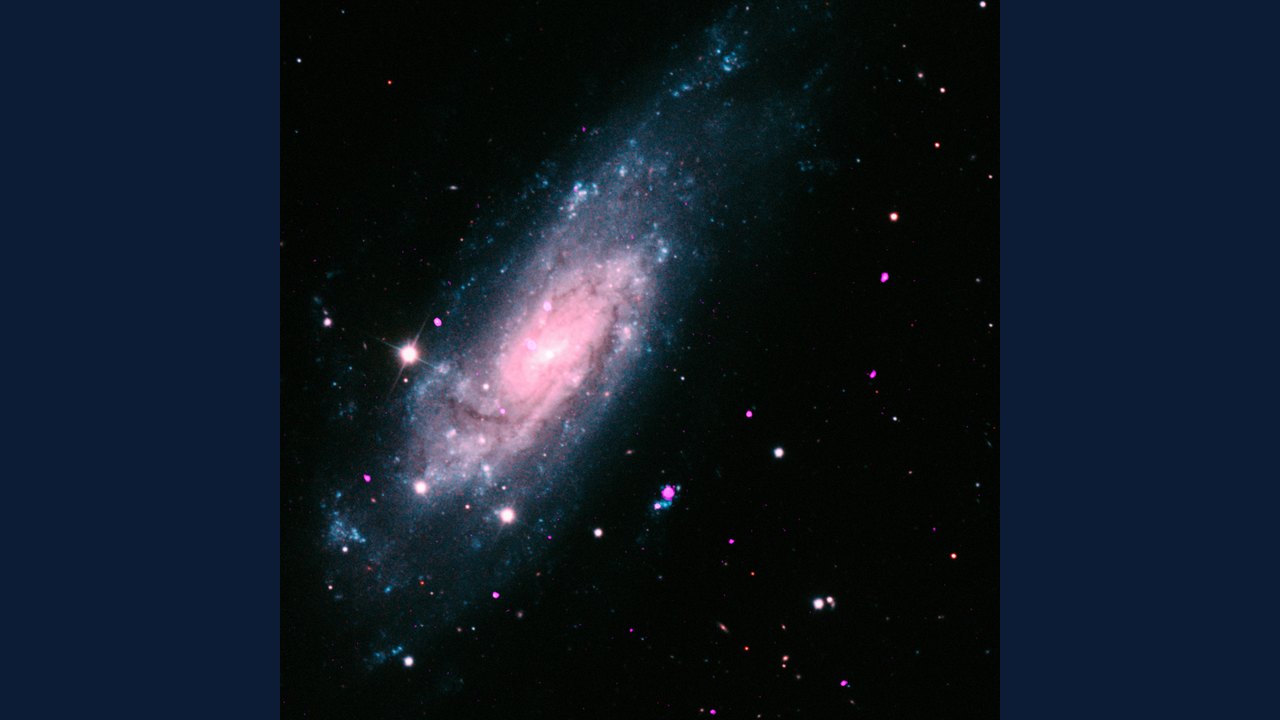
Image: NASA · Photo source · Resized and letterboxed to 16:9; no AI generation
Astronomers have identified the mechanism triggering repeated outbursts from a giant, unstable star using NASA's Chandra X-ray Observatory. The findings offer new insights into the behavior of massive stars and their volatile life cycles.
The volatile star, designated AT 2016blu, resides in the spiral galaxy NGC 4559, situated approximately 30 million light-years away from Earth. Based on astronomical estimations, the mass of this extreme star is calculated to be at least 33 times that of our Sun.
Understanding Massive Star Outbursts
- Observatory Used: NASA's Chandra X-ray Observatory alongside optical data from the Sloan Digital Sky Survey (SDSS).
- Object of Study: AT 2016blu, a giant and unstable star.
- Location: Spiral galaxy NGC 4559, roughly 30 million light-years from Earth.
- Estimated Mass: At least 33 times the mass of the Sun.
Practical Implications and Verification
This discovery helps scientists better comprehend the explosive and unstable phases that massive stars undergo before reaching the ends of their lifespans. Researchers continue to analyze X-ray and optical data to map the complex interactions driving these stellar eruptions.
To verify the original findings and view the accompanying imagery, interested readers can consult official releases from the NASA Chandra X-ray Observatory website or peer-reviewed astronomy publications detailing the research by M. Aghakhanloo and colleagues.
AI-assisted reporting; source claims are attributed and have not been independently verified.
More to read
 Astronomers Detect Regular Radio Pulses From Star System 5,000 Light-Years Away
 Astronomers Identify Large Trans-Neptunian Object 2026 ED138 Beyond Pluto
 Astronomers Trace Mysterious Radio Signals to White Dwarf and Sun-Like Star Pair
 Astronomers Trace Mysterious Radio Pulses to a Dead Star and Sun-Like Companion